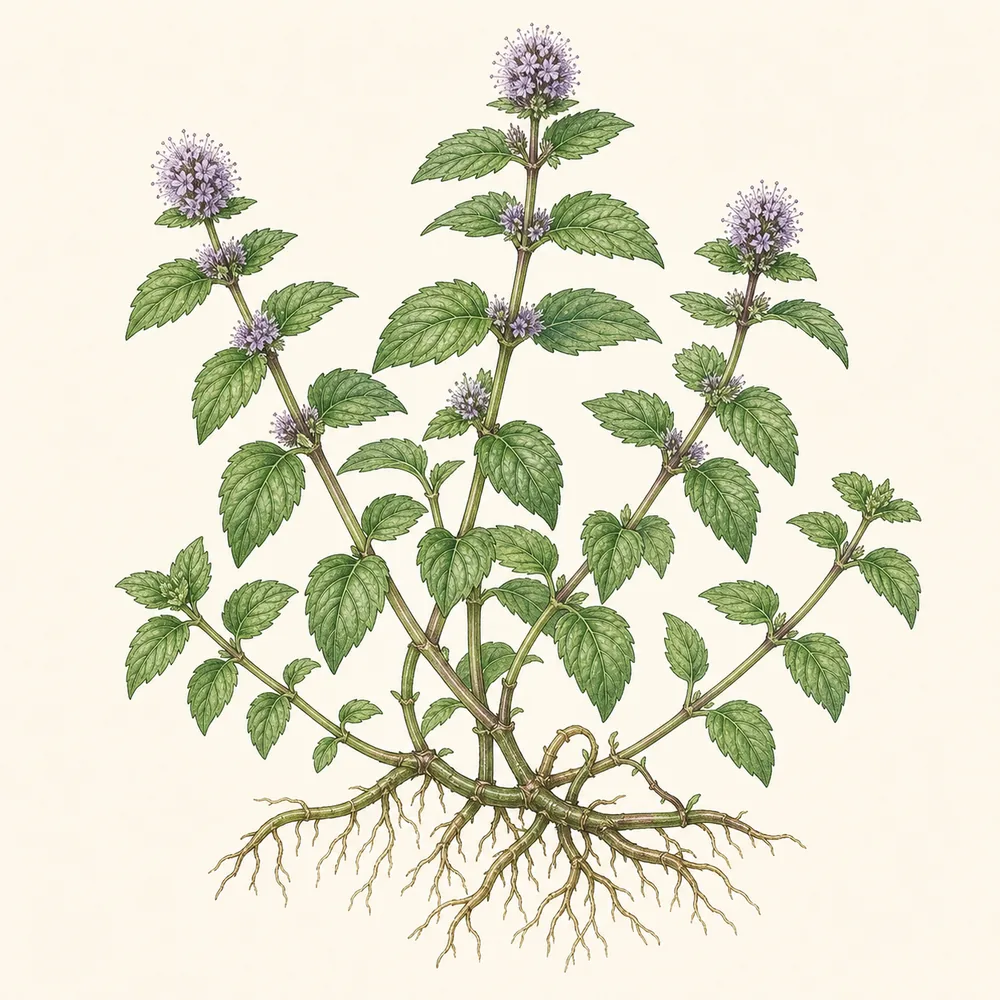
Water Mint
A native British marginal plant with aromatic foliage and lilac pompom flowers that buzz with bees and hoverflies in late summer. Water mint thrives in the shallows and boggy edges of a pond, helps keep the water healthy, and is a magnet for wildlife — but it's vigorous, so it's best grown in a basket to keep it in check.
Not listed by ASPCA
The ASPCA doesn't list water mint (Mentha aquatica), so we don't stamp it safe. It's a native mint with no recorded serious toxicity. With no database entry we flag the gap honestly rather than guess.
Care at a glance
Everything that matters, in six lines. The detail is further down.
Light
Flowers best and grows most strongly in full sun, but tolerates part shade well. An open, sunny margin gives the most flower for the pollinators.
Water
Grows in permanently wet ground: shallow water up to about 15cm deep over its crown, or a boggy, waterlogged pond edge that never dries out.
Temperature
A native plant, hardy right across the UK. It dies back to the roots in winter and reshoots vigorously each spring.
Position
Ideal for the planting shelf of a wildlife pond, a bog garden, or the damp edge of a stream. Grows 30–60cm tall and spreads by runners.
Feeding
Never feed marginal plants in a pond — added nutrients feed algae and green the water. Water mint grows perfectly well with no feeding at all.
Soil
Plant in a proper aquatic (loam-based) compost in a mesh basket, topped with gravel, or in the heavy wet soil of a bog garden. Avoid light, peat-based composts that float away.
What to do, and when
New shoots and runners appear from the crown as the water warms. Plant or divide now — split congested baskets and replant strong pieces in fresh aquatic compost topped with gravel.
Lush leafy growth builds through summer. Keep an eye on how far the runners are spreading, and thin or cut them back if the plant starts to swamp its neighbours in the pond.
The lilac flower heads finish and growth slows. Cut back dying top-growth as it collapses to keep it from rotting and fouling the water, and lift and divide overgrown clumps.
Fully dormant — the plant retreats to its roots below the waterline and needs nothing. It will reshoot vigorously in spring.
A native workhorse for a wildlife pond
Water mint is one of the best all-round plants for a wildlife pond. As a native marginal, it belongs in our ponds and supports the insects that evolved alongside it — its late-summer lilac flowers are among the most reliable bee and hoverfly magnets you can grow at the water's edge.
It works below the surface too. Like other marginals, its roots take up nutrients from the water, helping to starve out algae and keep a pond clear, while the submerged stems give cover to tadpoles, newts and pond insects.
Grow it in a basket — it spreads
Like all mints, water mint is vigorous. Left loose in a pond or bog it runs freely on underwater and creeping stems and will quickly colonise a margin, crowding out slower plants.
The answer is to grow it in a mesh aquatic basket of loam-based compost topped with gravel. This contains the roots, makes it easy to lift, divide and reposition, and lets you enjoy the plant without letting it take over. Sit the basket on the pond's planting shelf so the crown is under a few centimetres of water.
Keeping it in check
Even in a basket, water mint sends out runners over the rim and across the water. A quick tidy once or twice through summer keeps it where you want it — just pull or cut back the wandering stems.
Every couple of years, lift the basket in spring or autumn, split the congested clump, and replant a strong young piece in fresh compost. This keeps it vigorous and stops it becoming a matted, rootbound tangle.
Common problems
Spreading and swamping other plants
Its natural vigour — runners colonise fast. Grow it in a mesh basket rather than loose, and cut back wandering stems through summer to keep it contained.
Compost clouding the pond water
Light or peat-based composts wash out and muddy the water. Use a heavy loam-based aquatic compost and top the basket with a layer of gravel to hold it down.
Dead top-growth fouling the water
Collapsing autumn stems rot in the pond and release nutrients that feed algae. Cut back dying foliage before it falls into the water each autumn.
Rust or mildew on the leaves
Like other mints it can catch rust (orange pustules on the leaves). Remove and bin affected growth, and divide congested clumps to improve airflow.
Everything a water mint needs
A wet margin, a mesh basket to contain it, and the right aquatic compost.
We take no commission on anything in the "save your money" tier — if we don't think you should buy it, we don't link it. How our recommendations work
If you like this, try
Other plants with a similar temperament.
How we checked this
Care cross-checked against the RHS. The ASPCA does not list water mint (Mentha aquatica), so its pet-safety is unconfirmed and we have not stamped it safe. If our page and these sources ever disagree, believe them — and tell us.
Sources: RHS · ASPCA — toxic & non-toxic plants
Last reviewed · August 2026