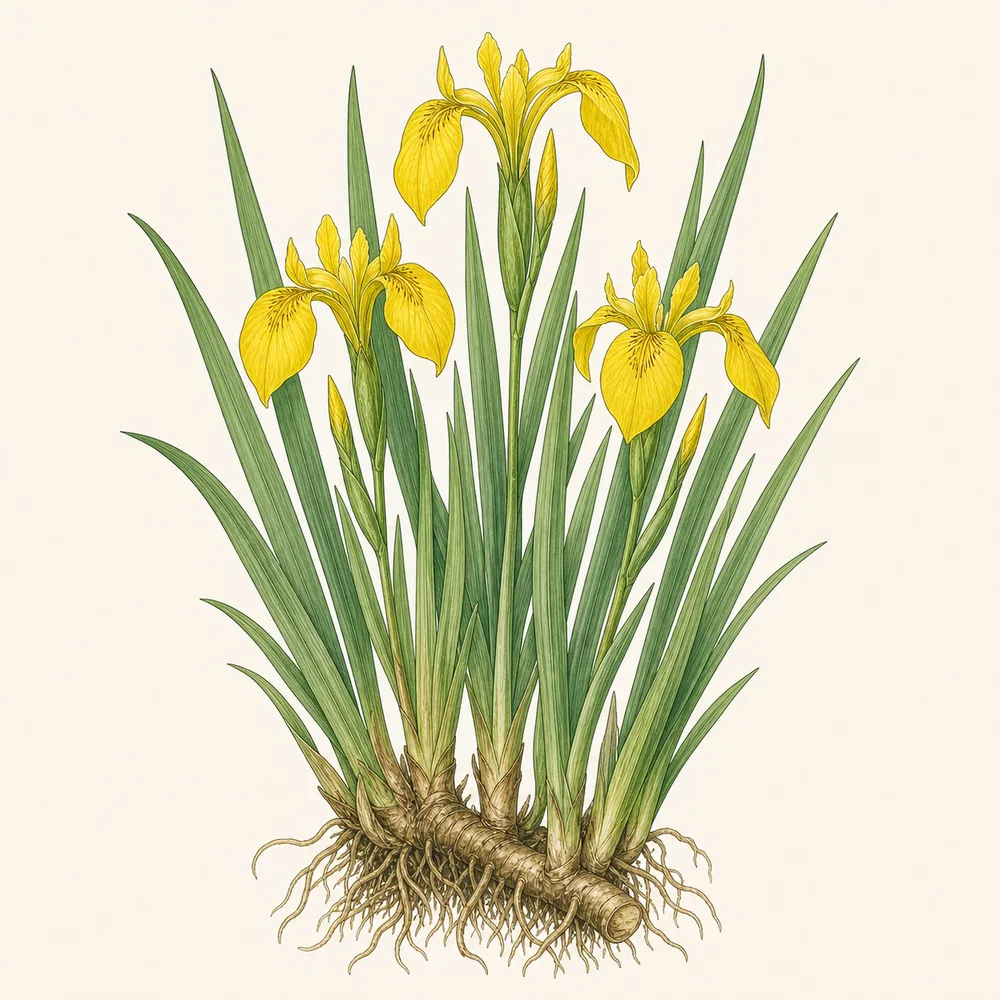
Water Iris
A tough native marginal with tall sword leaves and bright yellow early-summer flowers that lights up a pond edge. It's easy to the point of being too easy — vigorous enough to swamp a small pond, so the real skill is keeping it in check.
Toxic if chewed or handled
Water iris (Iris pseudacorus, yellow flag) is listed as toxic on the ASPCA database and features on the RHS harmful-plants list. The sap, leaves and especially the rhizomes cause drooling, vomiting and skin irritation if chewed or handled — the rhizomes are the most potent part.
Care at a glance
Everything that matters, in six lines. The detail is further down.
Light
Flowers best in full sun; it will grow in light shade but you'll get fewer of the yellow flags and leafier growth.
Water
Happiest standing in up to 15–30 cm of water at the pond edge, but it also thrives in permanently boggy ground.
Temperature
A UK native — completely hardy and needs no winter protection. It shrugs off frozen margins and cold winters.
Planting
Grow it in a mesh aquatic basket rather than free in the mud, or the creeping rhizomes will spread fast and crowd out neighbours.
Feeding
This is a vigorous plant that needs no encouraging. Skip the feed — extra nutrients only push more growth and can green the water.
Soil
Heavy, wet, nutrient-rich soil suits it perfectly; it will colonise boggy pond margins and ditch sides given the chance.
What to do, and when
Growth surges as the water warms — new sword leaves push up fast. This is the time to divide congested clumps and replant strong pieces of rhizome in fresh baskets.
The bright yellow flags open in early summer above the foliage. Deadhead spent blooms to stop it self-seeding freely around the margins and beyond.
The foliage yellows and dies down. Cut back collapsing leaves and pull them out of the water so they don't rot in the pond and rob it of oxygen.
Fully dormant and completely hardy — leave it be. Frozen margins do it no harm; growth restarts on its own once spring warms the water.
A vigorous marginal — contain it
Yellow flag is a wonderful native for wildlife, but make no mistake: it's a thug. Left free in the mud of a pond margin, its creeping rhizomes spread relentlessly and it will smother smaller marginals and choke a modest pond within a couple of seasons.
The answer is simple — always grow it in a mesh aquatic basket. The basket physically limits the roots, keeps it to a clump you can manage, and makes it easy to lift and divide when it does outgrow its space.
Planting at the pond edge
Plant into a mesh basket of heavy loam or aquatic compost, firming the rhizome in so it sits at the surface — irises like their rhizomes near the top, not buried deep. Top with gravel to stop the soil clouding the water.
Lower the basket into the shallows so the crown sits in a few centimetres of water, or sink it into boggy ground. Spring is the ideal planting and dividing time, when the plant is growing strongly and roots away quickly.
Keeping it in check
Every couple of years, lift the basket in spring and you'll usually find a congested mass of rhizomes with the old centre dying out. Slice off young, vigorous outer pieces with a knife or spade, replant one, and compost or give away the rest.
Deadheading after flowering stops it seeding around, which matters — the seeds float and it naturalises easily along wet ground. Handle the rhizomes with gloves: they're the most irritant part of an already toxic plant.
Common problems
Spreading out of control
The rhizomes creep fast in open mud. Always grow it in a basket, divide it every couple of years, and deadhead to stop it self-seeding around the margins.
Skin irritation from the rhizomes
The sap and rhizomes are toxic and irritant to skin, and toxic to pets if chewed. Wear gloves whenever you divide or handle it, and site it away from grazing animals.
Few flowers, all leaf
Too much shade or an overcrowded, congested clump. Move it into full sun and divide the rhizomes to reinvigorate flowering.
Brown blotches on the leaves
Iris leaf spot, a fungal problem worse in damp still air. Remove badly marked leaves and clear all dead foliage from the water in autumn to reduce it.
Everything a water iris needs
A sunny pond margin, a basket to contain the roots, and a knife for dividing it.
We take no commission on anything in the "save your money" tier — if we don't think you should buy it, we don't link it. How our recommendations work
If you like this, try
Other plants with a similar temperament.
How we checked this
Care cross-checked against the RHS, which lists Iris as harmful; the ASPCA also lists Iris as toxic — irritant resins concentrated in the rhizome. If our page and these sources ever disagree, believe them — and tell us.
Sources: RHS · ASPCA — toxic & non-toxic plants
Last reviewed · August 2026