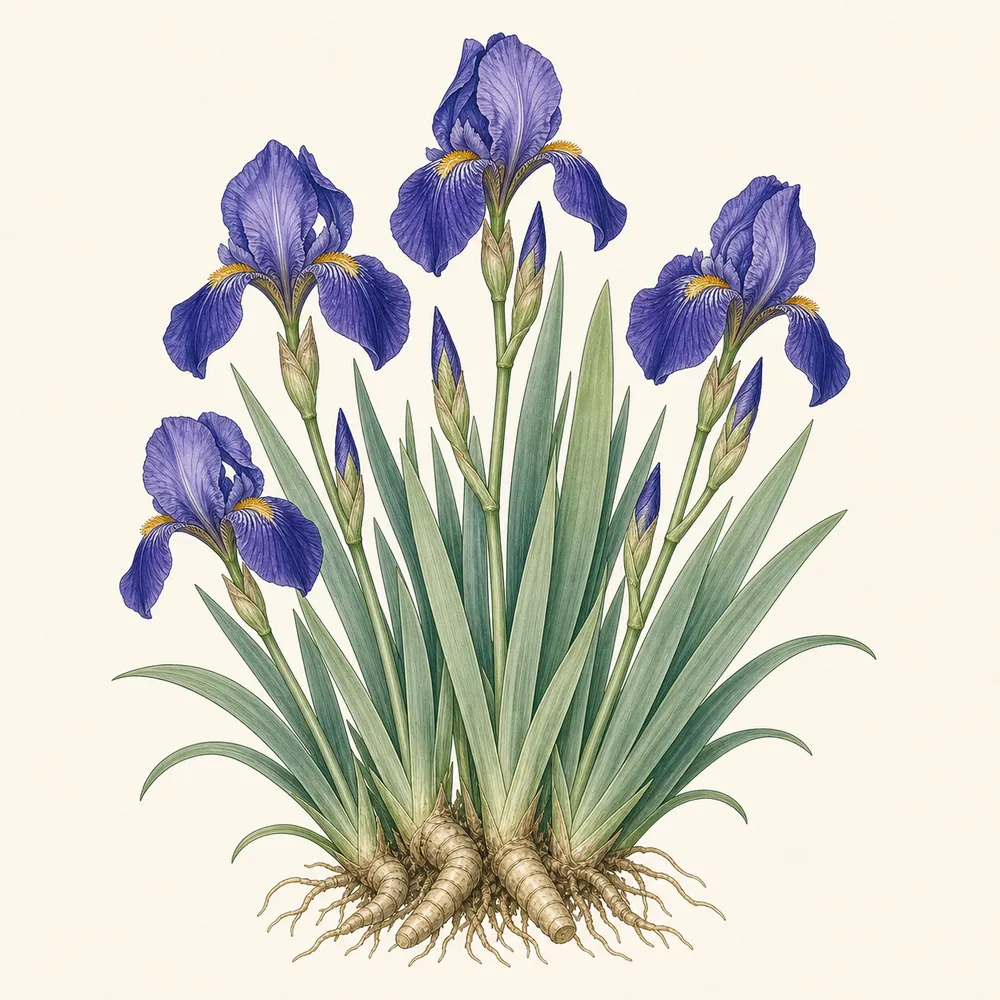
Iris
The bearded iris is a tough, sun-loving perennial grown from a fat surface rhizome, throwing up fans of sword-shaped leaves and ruffled, richly coloured flowers in early summer. Give it full sun and sharp drainage and it will thrive for years.
Toxic to cats & dogs if eaten
Iris is listed as toxic to cats and dogs on the ASPCA database. The rhizomes and roots hold the most irritant compounds; eating them causes drooling, vomiting and diarrhoea. Keep pets from digging up the rhizomes.
Care at a glance
Everything that matters, in six lines. The detail is further down.
Position
The rhizomes need to bake in open sun. Shade gives you healthy leaves but few or no flowers.
Water
Water new plantings until established; after that they shrug off dry spells and resent sitting wet.
Hardiness
Cold is rarely the problem — it is winter wet around the rhizome that rots it.
Soil
Sharp drainage is everything. On heavy clay, work in plenty of grit before planting.
Feeding
A little sulphate of potash in spring and again after flowering. Skip high-nitrogen feeds — soft growth invites rot.
Flowering
A few weeks of ruffled bloom on tall stems, best in a hot, well-drained spot.
What to do, and when
Growth resumes and buds form — feed with a little potash and keep the ground around the rhizomes weed-free and open to the sun.
Flowering finishes; six weeks or so afterwards, lift and divide congested clumps, replanting only the youngest, firmest rhizomes.
Tidy away yellowing leaves and clear fallen debris that could harbour rot over winter.
Fully dormant and hardy — just make sure the rhizomes are not sitting in waterlogged ground.
Plant the rhizome shallow
Bearded iris is grown from a thick rhizome that wants to sit half-exposed on the surface, with its back baking in the sun and only the roots buried. Bury it like a bulb and it sulks — few flowers, then rot.
Point the leaf fan the way you want the plant to face and spread the roots into the soil below. It is the single most common iris mistake: planting too deep and too shaded.
Divide after flowering
Clumps get congested every three or four years and flowering tails off. Lift them in mid to late summer, snap the rhizomes into pieces each with a fan of leaves, and discard the old woody centre.
Trim the leaves to a short fan to cut wind-rock while the divisions re-root, and replant straight away in a sunny, open spot.
Common problems
Leaves but no flowers
Usually planted too deep, too shaded, or the clump is congested. Lift, divide, and replant with the rhizome in full sun.
Soft, rotting rhizome
Winter wet or heavy soil. Improve drainage with grit and never mulch over the top of the rhizome.
Brown streaks and spots on leaves
Iris leaf spot, a fungal problem worse in wet years. Remove affected leaves and tidy debris to reduce spread.
Notches chewed in leaf edges
Slugs and snails on new growth, or iris sawfly. Clear hiding places and check the fans in spring.
Everything an iris needs
Full sun, sharp drainage, and the nerve to plant the rhizome shallow.
We take no commission on anything in the "save your money" tier — if we don't think you should buy it, we don't link it. How our recommendations work
If you like this, try
Other plants with a similar temperament.
How we checked this
Care cross-checked against the RHS. Toxicity confirmed against the ASPCA database, which lists Iris as toxic to cats and dogs — the rhizomes and roots hold the most irritant compounds, causing drooling, vomiting and diarrhoea if eaten. If our page and these sources ever disagree, believe them — and tell us.
Sources: RHS · ASPCA — toxic & non-toxic plants
Last reviewed · July 2026