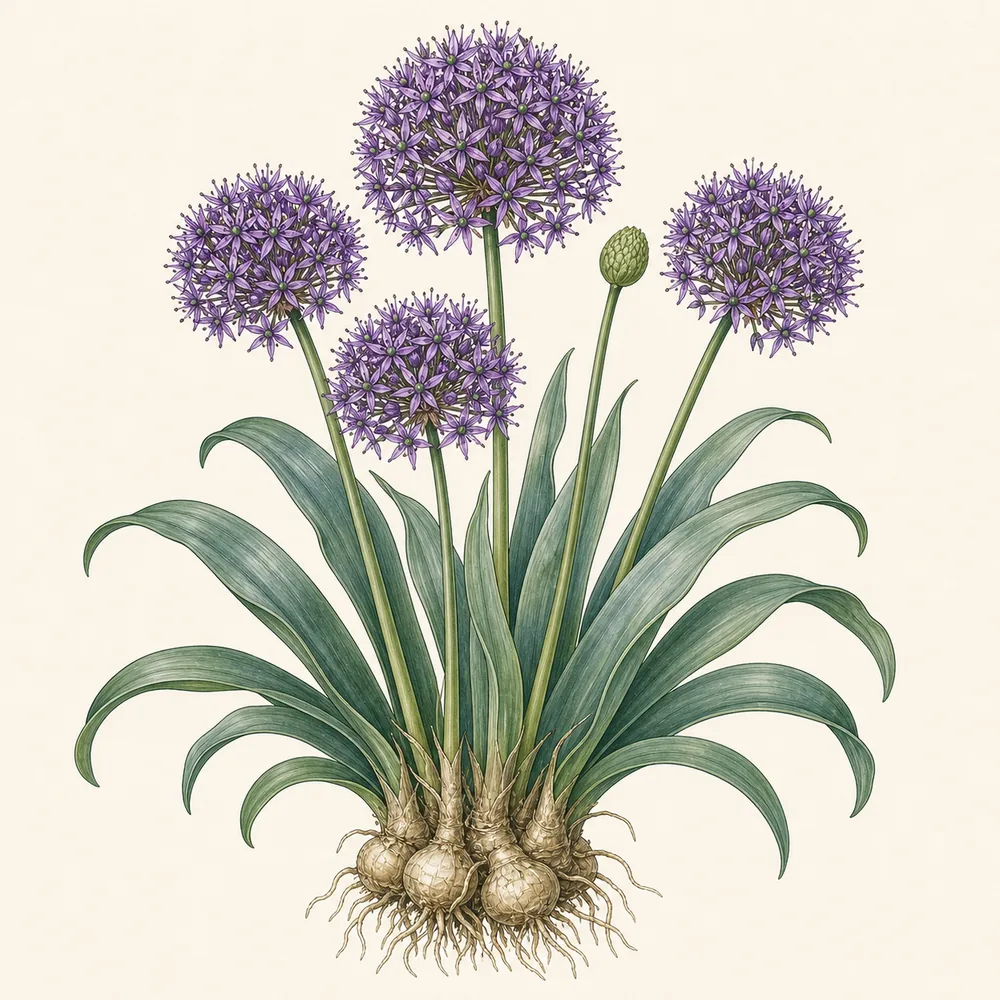
Ornamental Allium
Autumn-planted bulbs that send up drumstick globes of purple, white or blue in early summer, standing tall above the border on bare stems. Just about the easiest bulb there is — and the seedheads look good for months after the colour fades.
Toxic to cats & dogs — an allium
Ornamental alliums (Allium) are in the onion family and are toxic to cats and dogs (ASPCA). Alliums damage red blood cells and can cause haemolytic anaemia, and signs are often delayed by a day or more. Keep pets from chewing the bulbs, leaves or flowers.
Care at a glance
Everything that matters, in six lines. The detail is further down.
Position
An open, sunny spot gives the strongest stems and best flowers. Alliums dislike shade, where they grow floppy and shy to bloom.
Water
They actively prefer to stay dry once planted, especially in summer. Only water in a prolonged drought while in growth.
Hardiness
Hardy across the UK and left in the ground year-round. A cold winter is part of what triggers good flowering.
Soil
Sharp drainage is the one real requirement — the bulbs rot in heavy, wet ground. They thrive on ordinary or even poor soil.
Feeding
Not hungry. A light general feed as growth appears is plenty on poorer soils; over-rich ground gives leaf over flower.
Aftercare
Let the foliage die down naturally to feed the bulb, and leave the sculptural seedheads standing — they're half the point.
What to do, and when
Strappy leaves push up, then the flower stems rise and buds swell — a light feed helps, and expect the leaves to yellow as flowers open.
The globes open in early summer, then fade to straw-coloured seedheads worth leaving on into late summer.
Planting time: get the bulbs in from September to November, three times their own depth in free-draining soil.
Dormant underground; the cold spell is doing useful work setting up next year's flowers. Nothing to do.
Plant in autumn, forgive the leaves
Alliums are about as foolproof as bulbs get: plant them in autumn, three times their own depth, in a sunny spot with decent drainage, and they'll do the rest. They ask for almost nothing afterwards and come back reliably year after year.
The one quirk to expect is scruffy foliage — the strappy leaves start to yellow and flop just as the flowers open. Resist tidying them off; the dying leaves are feeding next year's bulb. Plant alliums to rise behind bushier neighbours that hide those tatty leaves.
The seedheads are half the value
Most people buy alliums for the early-summer globes, but the dried seedheads that follow are just as good — architectural, long-lasting, and a magnet for low light in the border well into late summer.
Leave them standing rather than deadheading. They hold their shape for months, catch frost beautifully if left even longer, and some alliums will gently self-seed around to give you more for free.
Common problems
Floppy stems or few flowers
Too much shade or too rich a soil. Move them to full sun and hold back on feeding for stronger, more upright flowers.
Bulbs rotting over winter
Wet, heavy ground. Improve drainage with grit before planting, or grow them in raised beds or pots that drain freely.
Yellowing leaves at flowering
Normal, not a problem — the foliage always fades as the flowers open. Leave it to die back to feed the bulb.
Fewer flowers over time
Clumps can get congested or bulbs may be too shallow. Lift and divide crowded clumps, and plant at three times their depth.
Everything an allium needs
Autumn planting, full sun, sharp drainage — and the restraint to leave the seedheads.
We take no commission on anything in the "save your money" tier — if we don't think you should buy it, we don't link it. How our recommendations work
If you like this, try
Other plants with a similar temperament.
How we checked this
Care cross-checked against the RHS. Toxicity taken from the ASPCA database, which lists Allium as toxic to cats and dogs — onion-family compounds that damage red blood cells and can cause haemolytic anaemia. If our page and these sources ever disagree, believe them — and tell us.
Sources: RHS · ASPCA — toxic & non-toxic plants
Last reviewed · July 2026