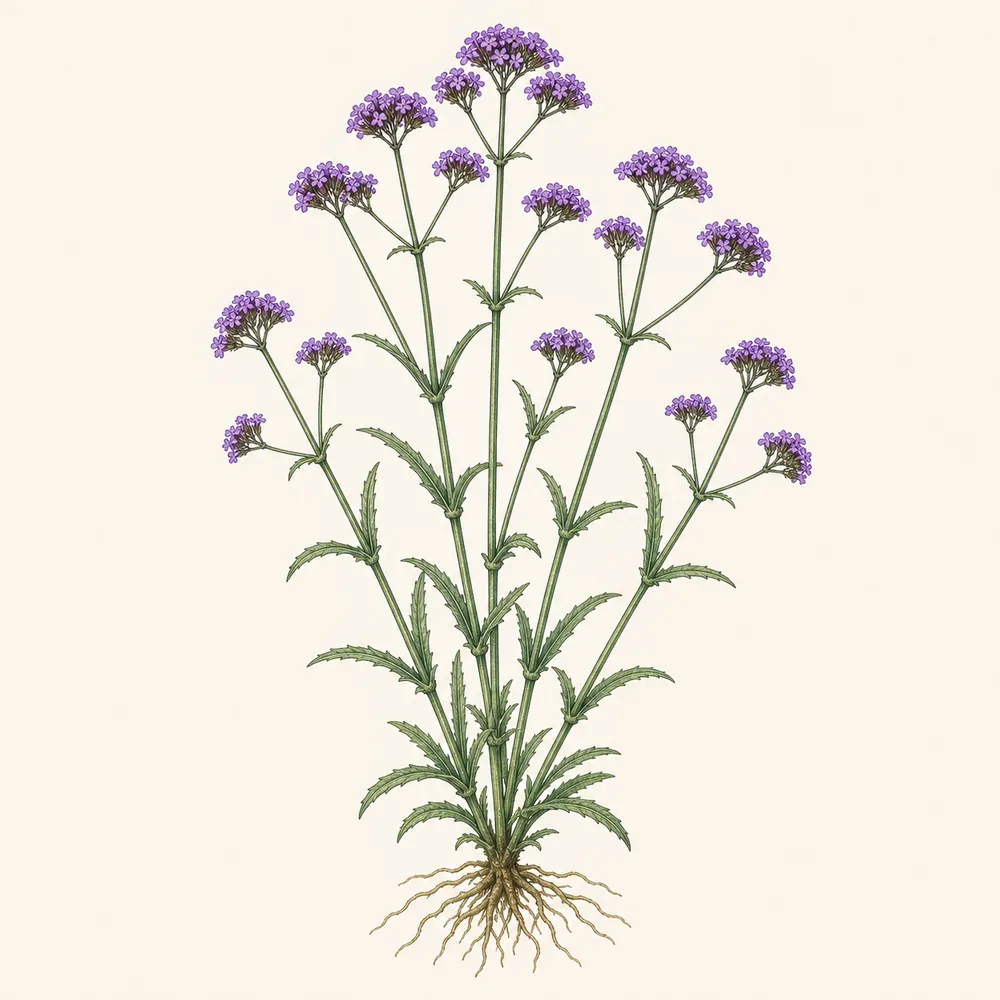
Verbena
The great see-through perennial — Verbena bonariensis floats clusters of purple flowers on tall, airy stems from midsummer to the frosts, weaving through a border and drawing in bees and butterflies without ever blocking the view.
Not listed by ASPCA
The ASPCA doesn't list garden verbena, so we don't stamp it safe. There's no known serious toxicity reported, but without a database entry we flag the gap rather than assume safety.
Care at a glance
Everything that matters, in six lines. The detail is further down.
Position
Wants an open, sunny spot to flower well and stand tall; in shade it grows sparse, flops and flowers poorly.
Water
Water new plants their first summer; established ones are notably drought-tough and much prefer dry to waterlogged ground.
Hardiness
Verbena bonariensis is only borderline hardy but self-seeds freely, so it often returns even after a hard winter takes the parent.
Soil
Not fussy about fertility, but drainage matters — winter wet is the main killer, so add grit on heavy clay.
Feeding
A spring mulch is plenty for the perennial types. Bedding verbenas in pots benefit from a regular liquid feed through summer.
Pruning
Leave the stems standing through winter for structure and frost protection, then cut back to the base in spring.
What to do, and when
Cut last year's stems to the base as new growth appears. Plant out young verbenas once frost has passed, and pot on any self-sown seedlings.
Long flowering season gets going. Deadhead or leave the airy heads to self-seed; keep bedding types in pots fed and watered.
Flowering runs on to the frosts, feeding late bees and butterflies. Leave the seedheads to scatter seed for next year's free plants.
Leave the tall stems standing — they hold frost beautifully and shelter the crown. Cut back in spring, not now.
The see-through border plant
Verbena bonariensis broke the old rule that tall plants belong at the back. Its flowers sit on slender, near-leafless stems, so you can plant it right at the front and still see straight through it to whatever's behind — a rare trick that adds height without weight.
Dot it in drifts through a sunny border and it knits the whole scheme together, waving at the slightest breeze and pulling bees and butterflies in from midsummer to the first frosts. Few perennials give so much for so little bulk.
Let it self-seed
The upside of verbena being only borderline hardy is how freely it self-seeds. Leave the faded flowerheads on over autumn and winter and it scatters seed around the border, so fresh young plants appear each spring even if a hard winter kills the parent.
It rarely becomes a nuisance — unwanted seedlings pull out easily and spare ones transplant well. Effectively you get a self-renewing colony for the price of one plant, which is the smart way to grow it.
Perennial or bedding — know which you have
The name covers two very different plants. Verbena bonariensis and its kin are tall, airy border perennials grown as described here. The low, spreading bedding verbenas sold for pots and baskets are treated as annuals — bright, trailing, and lasting a single season.
For the bedding types, keep them deadheaded, fed and watered through summer for a non-stop show, and don't expect them to overwinter outdoors. Check which you're buying so you give it the right treatment.
Common problems
Doesn't return after winter
Verbena bonariensis is only borderline hardy. Leave stems on for protection, improve drainage, and let it self-seed so replacements come free.
Tall, floppy or sparse
Too much shade or too rich, wet soil. Grow in full sun on free-draining ground and plant in groups for mutual support.
Powdery white coating on leaves
Powdery mildew, worse in dry roots and stagnant air. Improve air flow, water the roots in prolonged drought, and remove affected growth.
Bedding verbena stops flowering
Spent flowers left on, or short of food and water. Deadhead regularly and keep pots fed and watered through the summer.
Everything a verbena needs
Full sun, free drainage, planting in groups, and letting it self-seed.
We take no commission on anything in the "save your money" tier — if we don't think you should buy it, we don't link it. How our recommendations work
If you like this, try
Other plants with a similar temperament.
How we checked this
Care cross-checked against the RHS. The ASPCA does not list garden verbena, so its pet-safety is unconfirmed and we have not stamped it safe. If our page and these sources ever disagree, believe them — and tell us.
Sources: RHS · ASPCA — toxic & non-toxic plants
Last reviewed · July 2026