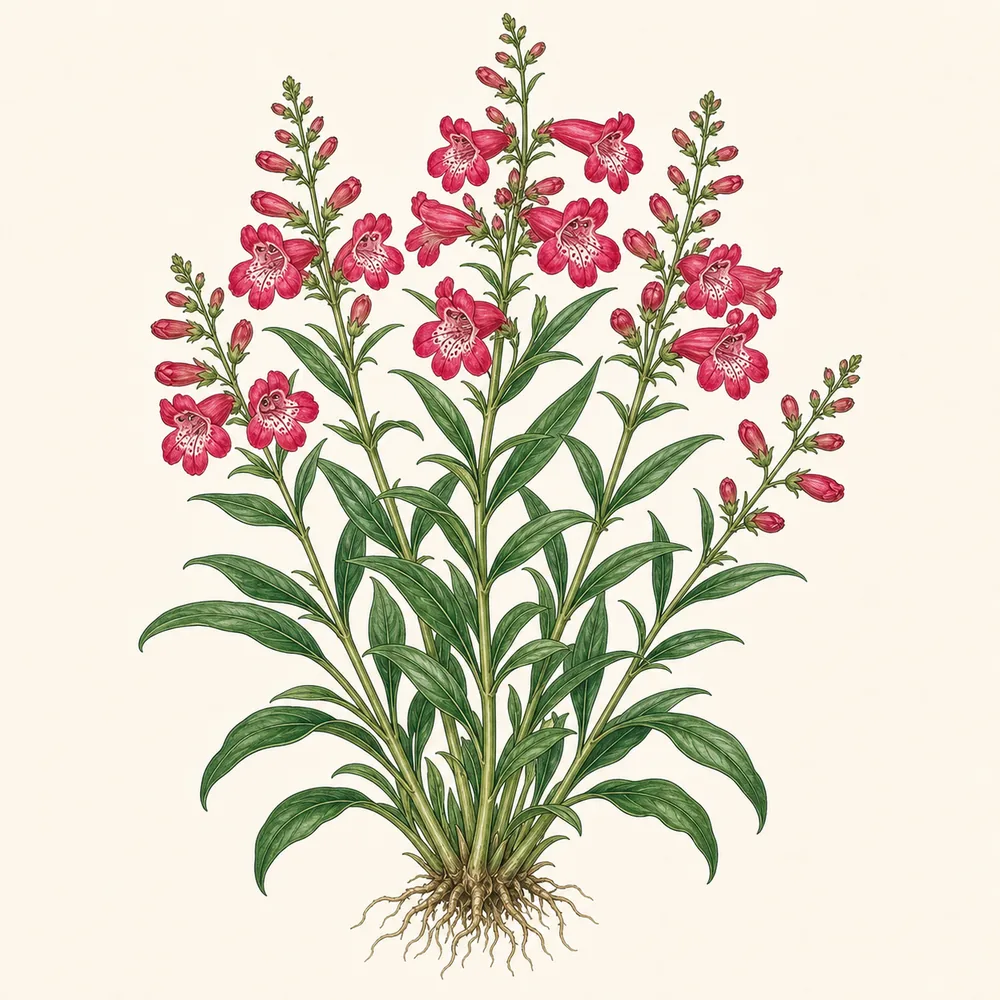
Penstemon
One of the longest-flowering perennials you can grow — spires of foxglove-like bells in wine reds, purples, pinks and whites from early summer until the first frosts, adored by bees and easy in a sunny border.
Not listed by ASPCA
The ASPCA doesn't list penstemon, so we don't stamp it safe. There's no known serious toxicity reported, but without a database entry we flag the gap honestly rather than assume.
Care at a glance
Everything that matters, in six lines. The detail is further down.
Position
Give them a warm, sunny, sheltered spot; they flower far better in sun and appreciate protection from cold, drying winds.
Water
Water new plants in dry spells; established ones cope with moderate dryness but resent waterlogged soil, especially in winter.
Hardiness
Most border penstemons are only borderline hardy. In cold gardens a harsh winter can kill them, so leave old growth on and take cuttings as insurance.
Soil
Any reasonable, well-drained soil suits them. On heavy clay, add grit — winter wet is a bigger risk than cold.
Feeding
A general feed and a mulch in spring is enough. Deadheading matters far more than feeding for a long display.
Pruning
Deadhead spent spikes all season to prolong flowering, then cut the old stems back to fresh basal growth in mid-spring.
What to do, and when
Cut last year's stems back to the new shoots low down once frosts ease. Plant new penstemons now and take basal cuttings from the fresh growth.
Long flowering season begins — deadhead each spike as it fades to keep new ones coming right through to autumn.
Flowering continues until the frosts. Leave the top growth standing rather than cutting back — it shelters the crown over winter.
Leave old stems on for frost protection. In cold gardens, overwintered cuttings under glass are your insurance against losses.
Don't cut back until spring
The single most important penstemon rule is timing the cut-back. It's tempting to tidy the fading stems in autumn, but that old top growth is doing a job: sheltering the crown from frost through winter. Cut too early and a hard winter can finish the plant.
Wait until mid-spring, when you can see fresh shoots pushing from the base, then cut the old stems right back to that new growth. This one habit is the difference between penstemons that sail through winter and ones that don't.
Deadhead for months of flower
Penstemons are among the longest-flowering border perennials, but only if you keep on top of the deadheading. As each spike goes over, snip it back to a lower side-shoot or leaf and the plant channels its energy into more buds rather than seed.
Keep it up and a healthy plant will flower from June until the frosts cut it down — few perennials give such a long, generous season for so little effort.
Take cuttings as insurance
Because most named penstemons are only borderline hardy, seasoned gardeners never rely on a plant surviving winter — they take cuttings every year. Short non-flowering shoots root quickly from late summer into early autumn.
A few rooted cuttings kept frost-free over winter cost nothing and mean that even if the parent is lost, you've a ready replacement. It's also the easiest way to bulk up a variety you love.
Common problems
Plant killed over winter
Most border penstemons are only borderline hardy. Leave old growth on for protection, improve drainage, and keep rooted cuttings frost-free as backup.
Flowering tails off early
Spent spikes setting seed. Deadhead each faded spike back to a lower shoot and the plant keeps producing new flowers for months.
Leggy, sparse, few flowers
Too much shade or an old, woody plant. Grow in full sun, and refresh tired plants from cuttings every few years.
Slugs shredding the spring shoots
Fresh basal growth is a target as it emerges. Protect the new shoots in spring with your usual slug defences until they toughen up.
Everything a penstemon needs
Sun, free drainage, steady deadheading, and cuttings for insurance.
We take no commission on anything in the "save your money" tier — if we don't think you should buy it, we don't link it. How our recommendations work
If you like this, try
Other plants with a similar temperament.
How we checked this
Care cross-checked against the RHS. The ASPCA does not list penstemon, so its pet-safety is unconfirmed and we have not stamped it safe. If our page and these sources ever disagree, believe them — and tell us.
Sources: RHS · ASPCA — toxic & non-toxic plants
Last reviewed · July 2026