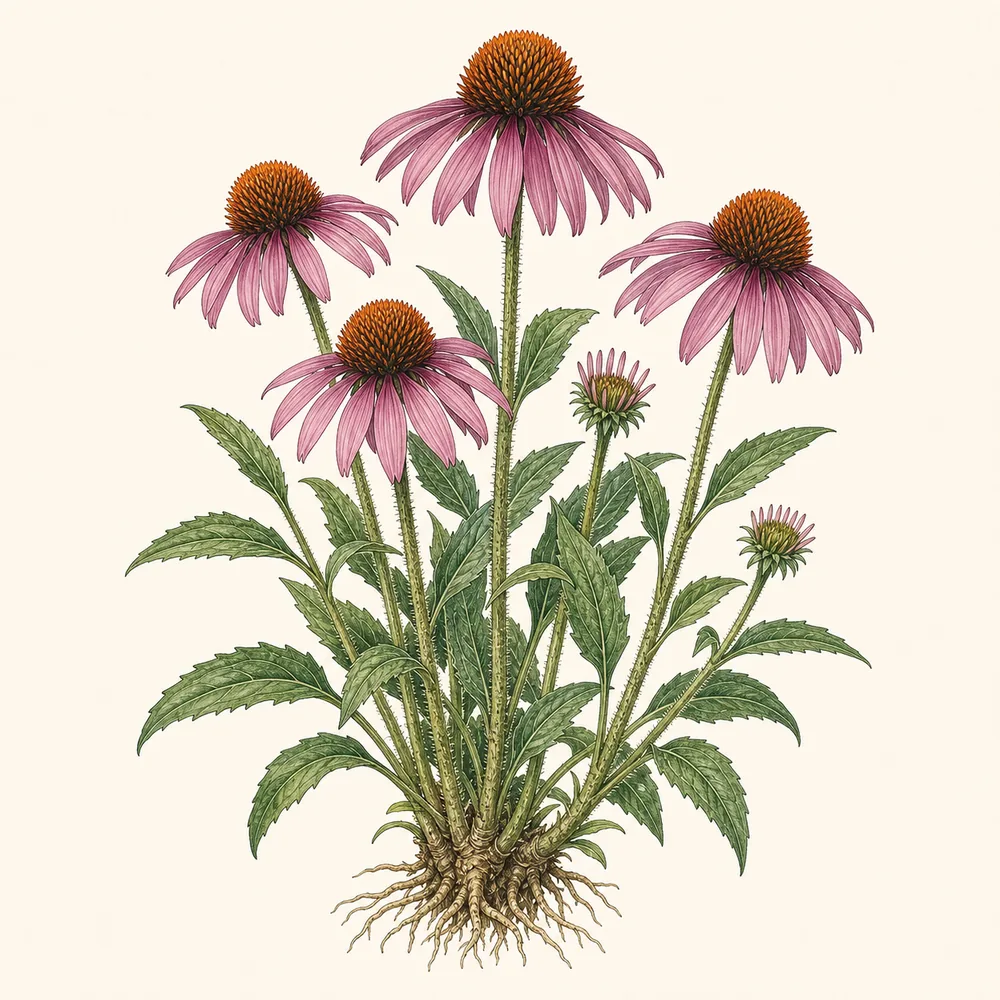
Coneflower
A prairie perennial that earns its place twice over — big daisy flowers with a bristly central cone that feed bees and butterflies all summer, then seedheads that stand through winter and feed the birds.
Not listed by ASPCA
The ASPCA doesn't list the coneflower (Echinacea), so we don't stamp it safe. There's no known serious toxicity, but with no database entry we note the gap rather than guess.
Care at a glance
Everything that matters, in six lines. The detail is further down.
Position
A prairie plant at heart — it needs full sun to flower well and stand upright. In shade it flops and sulks.
Water
Water through the first season to establish the deep roots; after that it's genuinely drought-tough and dislikes wet feet.
Hardiness
Reliably hardy across the UK. Losses are almost always down to winter wet, not cold, so drainage is the thing to get right.
Soil
Likes a decent, free-draining soil with some body to it. On heavy clay, add grit and organic matter — it hates sitting wet in winter.
Feeding
A spring mulch of compost is enough. Over-rich soil gives soft growth and fewer of the sturdy stems the plant is known for.
Pruning
Deadhead for more flowers if you like, but leaving the cones feeds birds and looks good in frost. Cut back in spring.
What to do, and when
Plant new coneflowers and divide congested clumps as growth appears. Cut down last year's stems and seedheads to make way for fresh shoots.
Peak flowering for bees and butterflies. Deadhead spent flowers for a longer show, or leave some to form seedheads for autumn.
Flowering winds down. Leave the seedheads standing — goldfinches work them over and they hold structure into winter.
Frosted seedheads earn their keep for structure and birds. Hold off cutting back and dividing until spring.
Leave the seedheads standing
It's second nature to cut a perennial back once it's finished, but coneflowers are one to leave standing over winter. The bristly central cones are packed with seed that goldfinches and other birds work through in the cold months, and frost turns the whole plant into border structure.
Cut them down in early spring instead, as the new basal growth appears. You get months of extra interest, free bird food, and the plant self-sows a few seedlings to boot — a properly earned rest before the spring tidy.
Sun and sharp drainage keep it alive
Coneflowers are perfectly hardy, so when one fails to reappear in spring it's almost never the cold that did it — it's winter wet. Their deep prairie roots rot in cold, soggy ground.
Give them the sunniest spot you have and, on heavy soil, work in plenty of grit and organic matter before planting. Sharp drainage and full sun are what turn a short-lived coneflower into a long-lived one.
Divide to keep clumps vigorous
Established coneflowers can be lifted and divided in spring every three or four years to keep them vigorous and to make more plants for free. Do it as growth begins, replanting the strong outer sections and discarding any tired, woody centre.
A word of caution on the fancy orange, red and double kinds: many are less reliably perennial than the plain purple Echinacea purpurea, which remains the toughest and most dependable of the family.
Common problems
Doesn't come back in spring
Almost always winter wet rotting the crown, not cold. Improve drainage with grit, plant in full sun, and avoid cutting back too early.
Fancy varieties fade away after a year or two
Many orange, red and double hybrids are short-lived. For long-term reliability, stick with the plain purple Echinacea purpurea.
Flops and flowers poorly
Too much shade or over-rich soil. Move to full sun and ease off feeding for sturdier stems and more flowers.
Black, distorted or stunted flowers
Could be aster yellows, a disease with no cure. Dig up and bin affected plants promptly to stop it spreading.
Everything a coneflower needs
Full sun, sharp drainage, and the confidence to leave seedheads standing.
We take no commission on anything in the "save your money" tier — if we don't think you should buy it, we don't link it. How our recommendations work
If you like this, try
Other plants with a similar temperament.
How we checked this
Care cross-checked against the RHS. The ASPCA does not list the coneflower (Echinacea), so its pet-safety is unconfirmed and we have not stamped it safe. If our page and these sources ever disagree, believe them — and tell us.
Sources: RHS · ASPCA — toxic & non-toxic plants
Last reviewed · July 2026