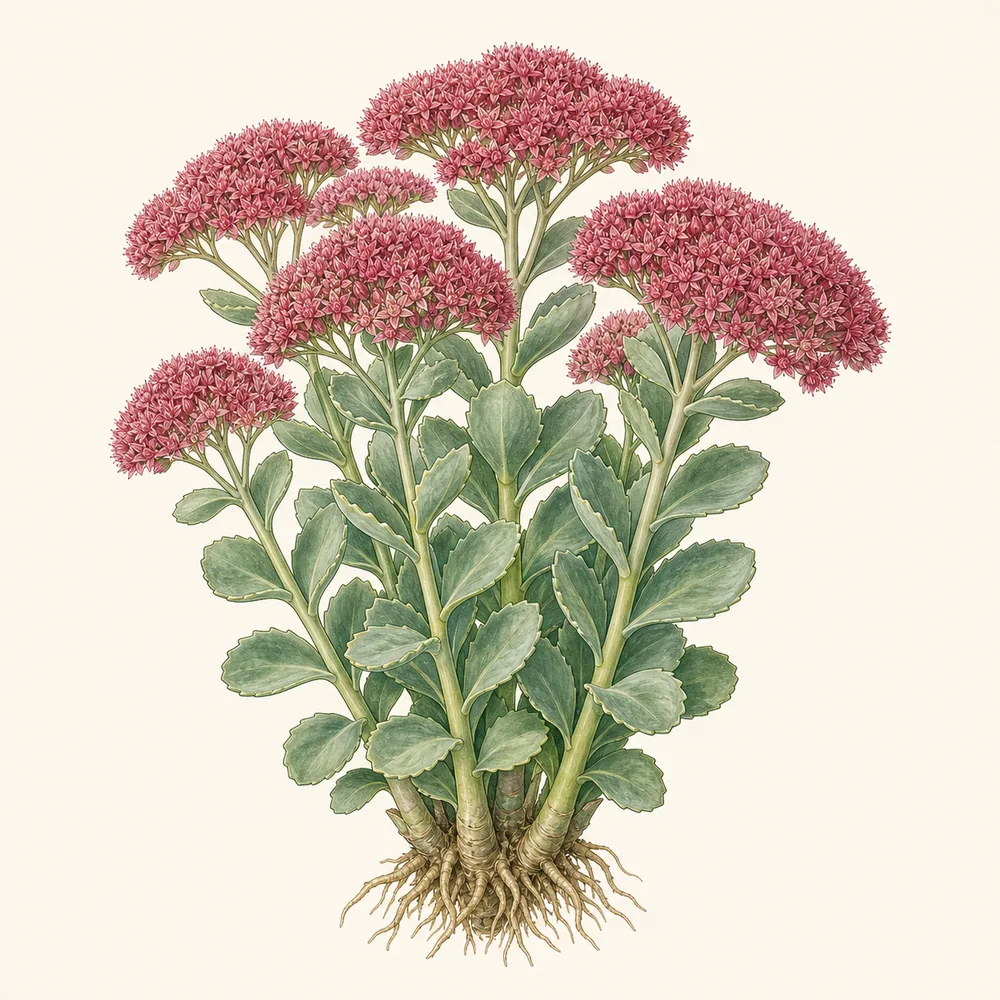
Sedum
One of the last great feasts for pollinators — flat heads of tiny star flowers open in late summer over fleshy grey-green leaves, smothered in bees and butterflies, then dry to russet seedheads that stand all winter.
Not listed by ASPCA
The ASPCA doesn't list garden sedum (stonecrop), so we don't stamp it safe. There's no known serious toxicity for the common border types, but with no entry we flag the gap honestly.
Care at a glance
Everything that matters, in six lines. The detail is further down.
Position
Full sun keeps the stems short and self-supporting; in shade or on rich soil it grows tall, floppy and splits open in the middle.
Water
The succulent leaves store water, so once established it rarely needs watering. Overwatering is far more likely to harm it than drought.
Hardiness
Thoroughly hardy and unfussy — the border stonecrops sail through UK winters with the seedheads left standing.
Soil
Actively prefers lean, well-drained soil. Rich ground and heavy feeding cause the floppy, splayed growth these plants are prone to.
Feeding
Don't feed. Extra fertility makes the growth soft and top-heavy — poor soil gives the sturdiest, most upright plants.
Pruning
Leave the dried heads standing all winter for structure and wildlife, then cut back to the ground in early spring.
What to do, and when
Cut last year's stems to the ground as new rosettes appear. Divide congested clumps now, and try the Chelsea chop on tall types to curb flopping.
Fleshy foliage builds up through summer. Give tall varieties the 'Chelsea chop' in late May or June to keep them compact and upright.
The star flowers open now and hum with bees and butterflies — one of the season's best late nectar sources as other flowers fade.
Leave the russet seedheads standing; frost picks them out beautifully and they shelter insects. Cut back in spring, not now.
The late-summer pollinator magnet
Where most border perennials are winding down, the tall stonecrops are just getting going. Their flat flowerheads open in late summer and autumn exactly when bees and butterflies most need a top-up before winter — a plant like 'Autumn Joy' can be so covered in insects the heads seem to move.
That late timing is the whole point of growing them. Plant sedum for the tail end of the season, alongside earlier-flowering perennials, and you extend your garden's value to pollinators by weeks.
Stop the flop with the Chelsea chop
The classic complaint with tall sedums is that they splay open in the middle, leaving an ugly gap. Two things cause it: soil that's too rich, and too much shade. Grow them hard — full sun, poor soil, no feed — and they stay far sturdier.
For extra insurance, give the plant the 'Chelsea chop': cut all the stems back by a third to a half in late May or early June. It flowers a touch later on shorter, self-supporting stems that hold up without staking.
Divide every few years — and it's free
Sedums are among the easiest of all perennials to increase. Lift and divide the clump in spring every three or four years to keep it vigorous and stop the middle dying out; each section grows away readily.
They're so willing that even a single leaf or stem cutting pushed into gritty compost usually roots. If a clump splits or a stem snaps off, don't bin it — pot it up and you've a new plant for nothing.
Common problems
Stems flop open in the middle
Soil too rich or too shady. Grow in full sun on poor soil, don't feed, and give a 'Chelsea chop' in late spring for shorter, sturdier stems.
Rots or turns mushy
Too much water or badly drained soil. Ease right off watering — the succulent leaves store their own — and add grit on heavy ground.
Bare, dead centre to the clump
An old, congested plant. Lift and divide in spring, replanting the strong outer pieces and discarding the worn-out middle.
New shoots eaten in spring
Slugs and snails favour the soft young rosettes. Protect the emerging growth in spring with your usual defences until it firms up.
Everything a sedum needs
Full sun, poor soil, no fuss — and a spring chop for the tall ones.
We take no commission on anything in the "save your money" tier — if we don't think you should buy it, we don't link it. How our recommendations work
If you like this, try
Other plants with a similar temperament.
How we checked this
Care cross-checked against the RHS. The ASPCA does not list garden sedum (stonecrop), so its pet-safety is unconfirmed and we have not stamped it safe. If our page and these sources ever disagree, believe them — and tell us.
Sources: RHS · ASPCA — toxic & non-toxic plants
Last reviewed · July 2026