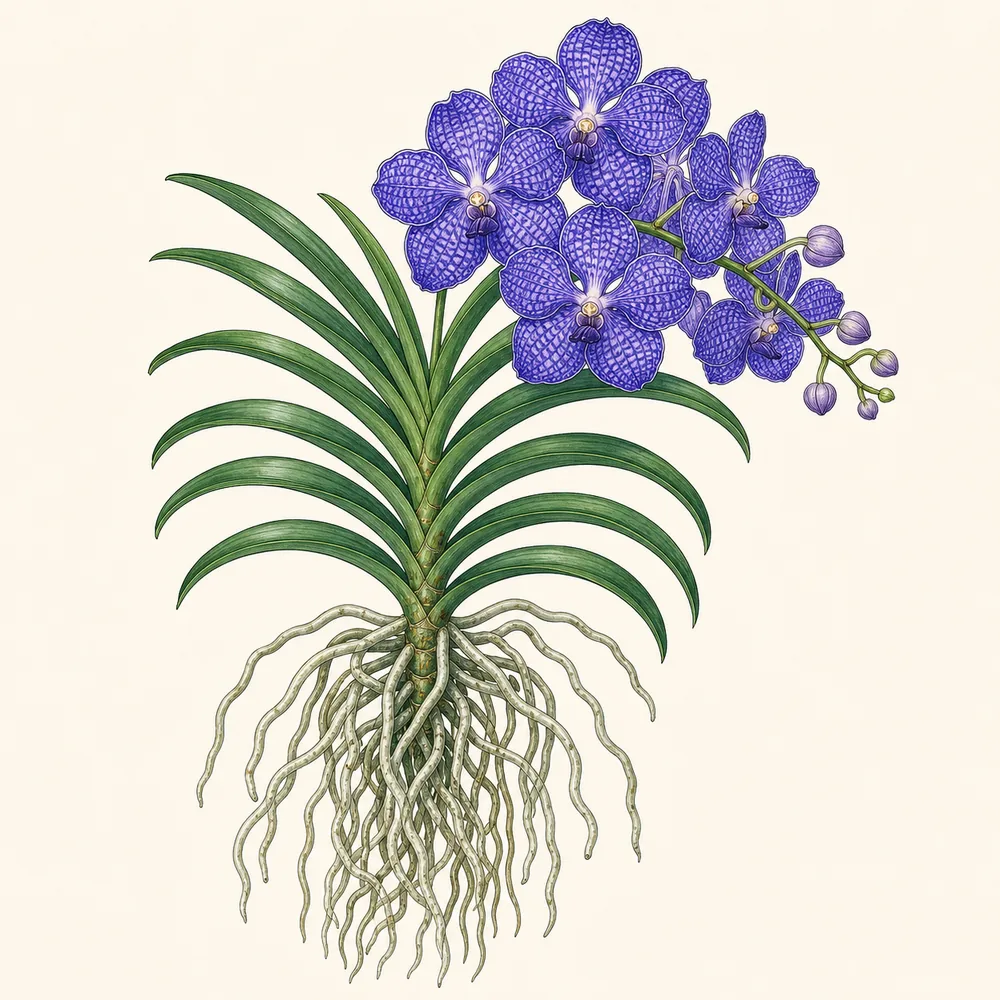
Vanda Orchid
The showstopper orchid you'll often see hanging bare-rooted in a glass vase, trailing a curtain of silvery roots. The flowers are enormous and come in colours no other houseplant can match — but a vanda demands blazing light, high humidity and, most days, a proper drench of the roots. It's a commitment, not a windowsill afterthought.
Not listed by ASPCA
The ASPCA doesn't list the vanda orchid specifically, so we don't stamp it safe. No toxic principle is recorded for it and close relatives are listed non-toxic, but with no database entry for this species we flag the gap honestly rather than assume.
Care at a glance
Everything that matters, in six lines. The detail is further down.
Light
The highest-light orchid most people grow. A south or west window, or a conservatory — starved of light it simply won't flower.
Water
Grown bare-rooted, it needs its roots soaked or heavily misted most days — they turn green when wet and silver when dry. Skip it and the roots shrivel fast.
Temperature
A warm-growing tropical orchid. Keep it above about 15 °C and out of cold draughts; it hates a chill.
Humidity
With no pot of bark to hold moisture, humidity does the work. A bright bathroom, a humidifier, or frequent root misting all help enormously.
Feeding
Add a dilute orchid feed to the water two or three times a week in the growing season — bare roots have no compost to draw on.
Soil
Grown with roots free in an open slatted basket or glass vase, not potted. Cram it into bark and the roots suffocate and rot.
What to do, and when
Growth restarts as light and warmth build. Step up watering to most days and begin feeding regularly again with a dilute orchid feed.
Peak season. Drench the roots daily in the heat, feed often, and keep humidity high — this is when a well-fed vanda flowers most freely.
Ease back watering and feeding as light drops. Keep it in your brightest spot and well away from cold windows and draughts.
Rest. Water less but never let the roots stay shrivelled for long, keep it warm and bright, and watch for cold snaps near the glass.
Why it hangs there with bare roots
A vanda is the ultimate air orchid. In the wild it clings high in tree canopies with its roots dangling free, catching rain and drying in the breeze — which is why it's sold hanging bare-rooted in a basket or glass vase, with no compost at all.
Those thick silvery roots aren't just for anchoring; they drink and photosynthesise. Their colour is your watering gauge: bright green means wet and satisfied, chalky silver means it's time to drench them again.
Watering: the daily job
This is the part that catches people out. With no medium to hold moisture, a vanda needs its roots wetted most days — either a long mist until they run green, or by lowering the whole root mass into a bucket of water for fifteen minutes and letting it drain.
In hot weather that can mean every single day; in winter, less. Add a weak orchid feed to the water a couple of times a week in growth, because bare roots have nothing else to feed on.
Light and humidity, together
Vandas want more light than almost any other houseplant orchid — a bright south or west window, or better still a conservatory. But that much light and warmth dries the roots quickly, so the humidity has to keep pace.
Pair the bright spot with real humidity — a humidifier, a bright bathroom, or a grouped display of plants. Bright and dry alone will shrivel it; bright and humid is where a vanda thrives and flowers.
Common problems
Shrivelled, wrinkled roots
Not enough water or humidity for a bare-rooted plant. Drench the roots daily in warm weather and raise the humidity around it.
No flowers
Almost always too little light. Vandas need your brightest spot — move it to a south or west window or under a grow light.
Limp, yellowing leaves
Cold, draughts, or root loss from staying wet in a stagnant pot. Keep it warm, airy and bare-rooted, and check the roots are firm.
Rotting roots or base
Water trapped against the roots, often from being enclosed. Keep them open to air so they dry between waterings.
Everything a vanda needs
Bright light, high humidity, and daily attention to the roots.
We take no commission on anything in the "save your money" tier — if we don't think you should buy it, we don't link it. How our recommendations work
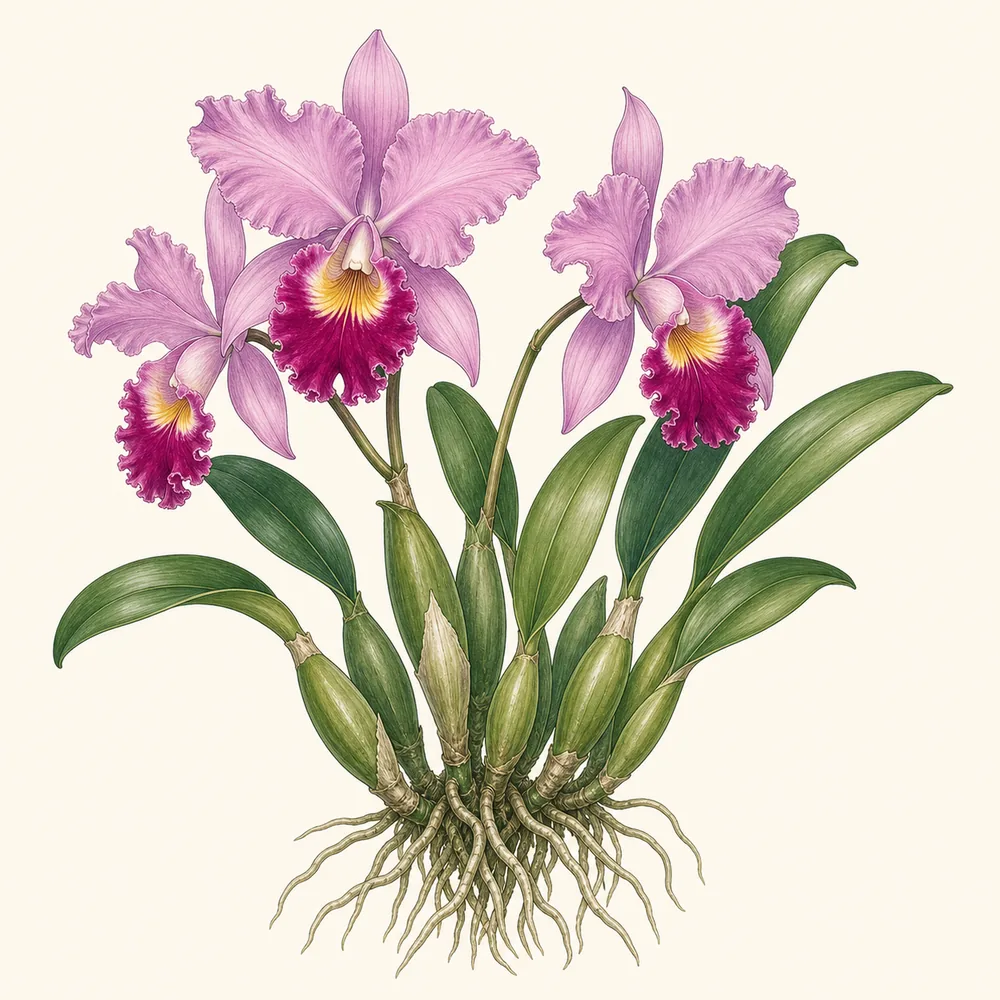
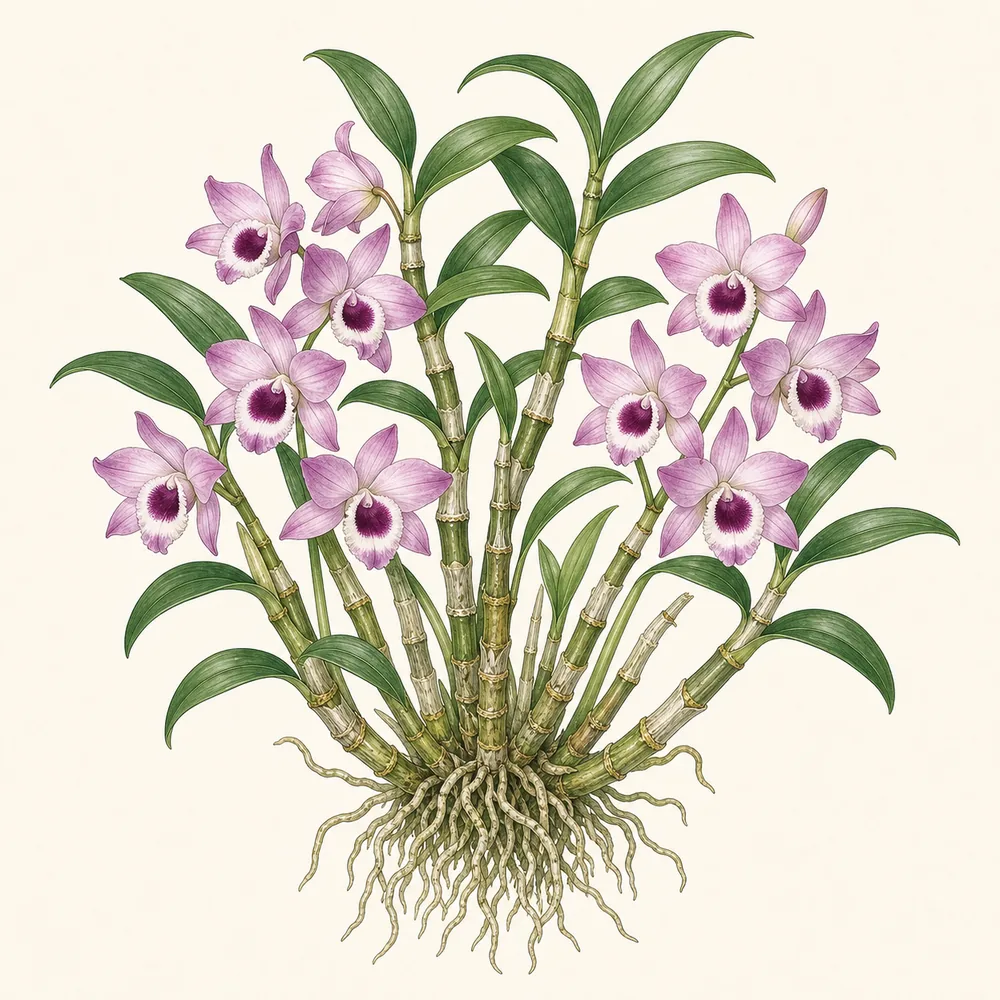
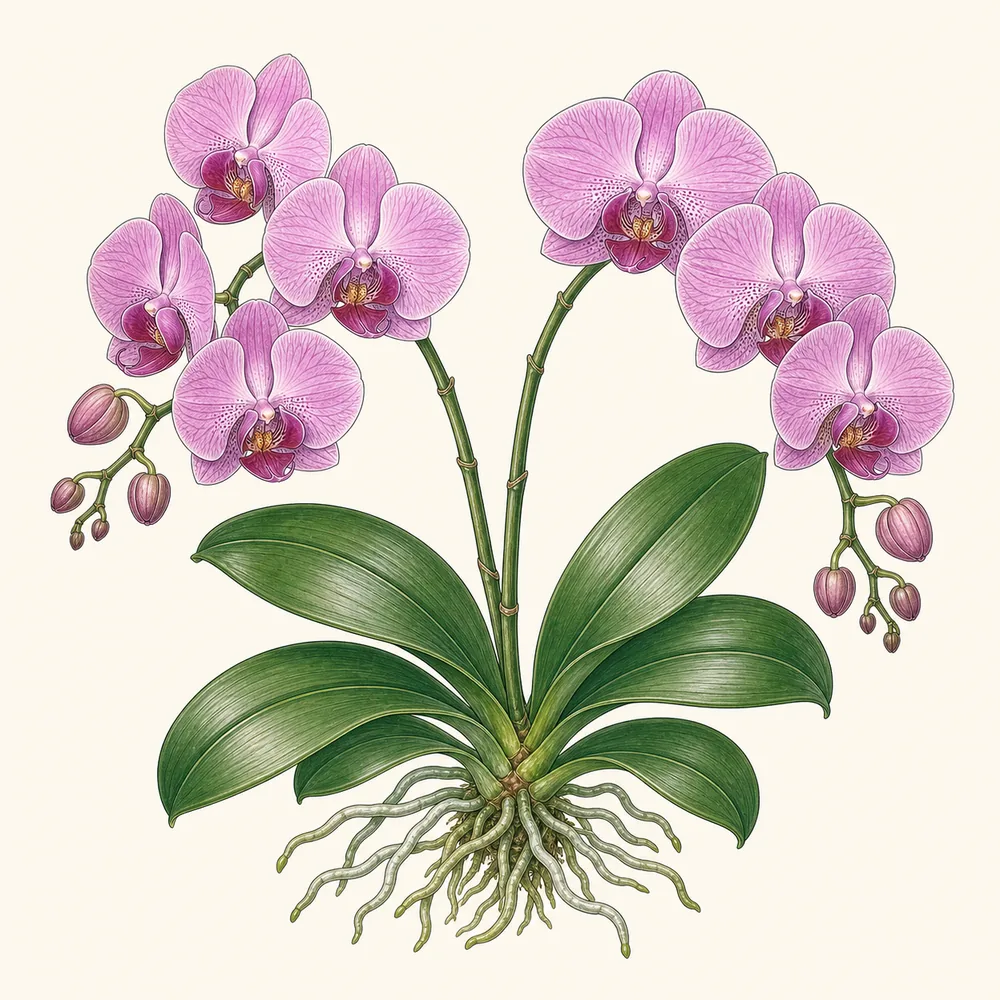
If you like this, try
Other plants with a similar temperament.
How we checked this
Care cross-checked against the RHS. The ASPCA does not list the vanda orchid, so its pet-safety is unconfirmed and we have not stamped it safe. If our page and these sources ever disagree, believe them — and tell us.
Sources: RHS · ASPCA — toxic & non-toxic plants
Last reviewed · July 2026