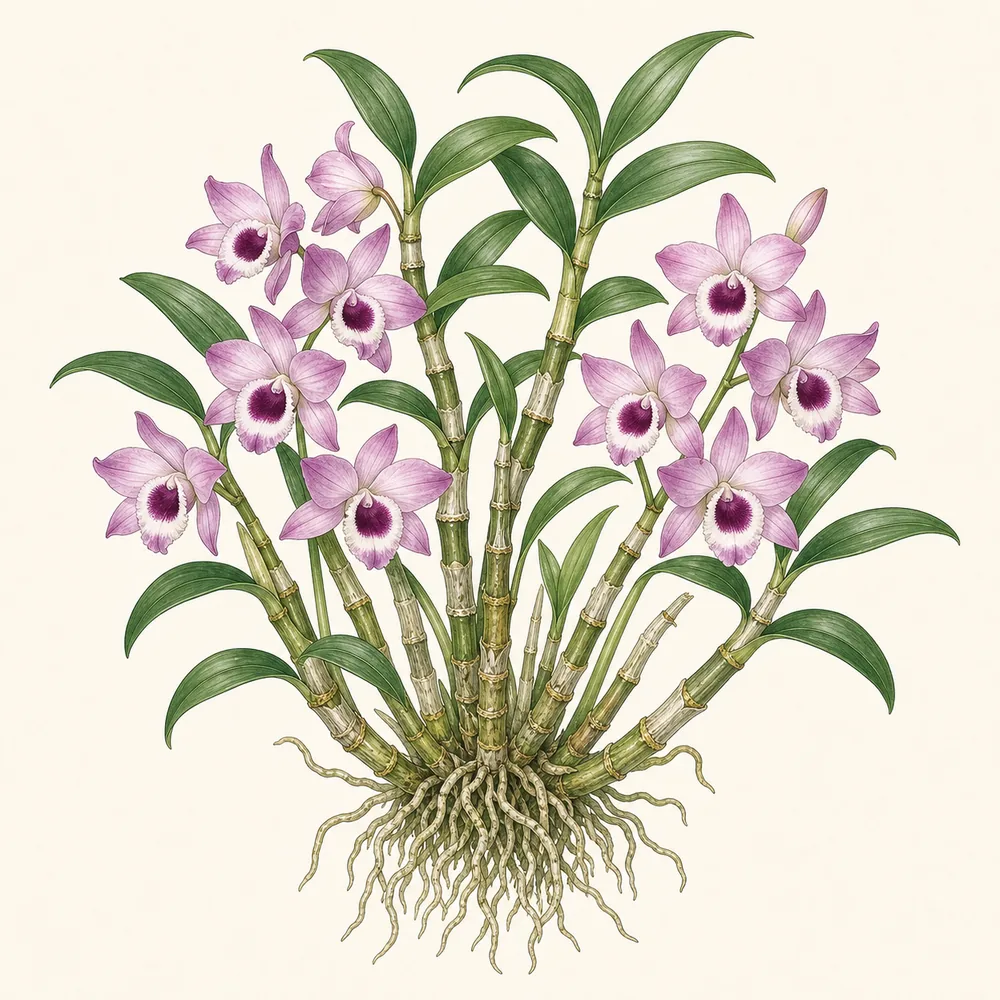
Dendrobium Orchid
The tall, cane-stemmed orchid that lines its upright pseudobulbs with flowers, sometimes from top to bottom. It's a rewarding grower once you learn its rhythm: plenty of water and light in summer, then a cool, bright, near-dry winter rest that's what actually sets the buds.
Not listed by ASPCA
The ASPCA doesn't list the dendrobium orchid specifically, so we don't stamp it safe. No toxic principle is recorded for it and close relatives are listed non-toxic, but with no database entry for this species we flag the gap honestly rather than assume.
Care at a glance
Everything that matters, in six lines. The detail is further down.
Light
One of the brighter orchids — an east or lightly shaded south window suits it, with gentle morning sun tolerated. Good light is essential for the canes to flower.
Water
Water freely while it's actively growing in the warmer months, letting the bark approach dry between soaks; then water much less through the winter rest.
Temperature
Warm room temperatures in growth, then a distinctly cooler, brighter spell in winter with a good night drop — this seasonal change is what triggers flowering.
Humidity
Enjoys humid air with gentle movement around the canes. A pebble tray or humidifier helps in dry, heated rooms.
Feeding
A dilute orchid feed with most waterings through spring and summer; stop feeding entirely during the cool, dry winter rest.
Soil
A free-draining bark mix in a snug pot with plenty of drainage. Ordinary compost stays too wet and airless and rots the roots.
What to do, and when
The rest ends and growth restarts. Increase watering and start weak feeding as new canes and roots appear; repot now if needed, just as roots emerge.
Full growth — water freely, feed weakly and give bright light with humidity and airflow to build tall, strong canes.
Growth ripens and feeding tails off. Begin easing back the water as temperatures fall to lead the plant into its rest.
The crucial rest: keep it cool, bright and much drier, with little or no water and no feed. This dry, cool spell is what sets next year's flowers.
Bark, not compost — and a snug pot
Dendrobiums are epiphytes that grow perched on trees, so like other orchids they live in free-draining bark, not soil, where the roots get the air they need. Compost holds too much water and rots them.
They flower best a little pot-bound, so don't over-pot — a snug container is fine. Repot only every couple of years, in spring just as new roots appear, once the bark has broken down. The tall canes can get top-heavy, so a weightier pot or a discreet stake keeps them upright.
Watering follows the seasons
A dendrobium's watering swings with the year. In spring and summer, while it's building new canes, water freely — a good soak-and-drain, then water again as the bark nears dry.
Come autumn and winter, ease right back to a near-dry rest, giving only the occasional drink to stop the canes shrivelling badly. Getting this wet-then-dry rhythm right is the heart of growing them well.
Getting it to flower again
This is where dendrobiums catch people out. They need a proper winter rest — cool temperatures, bright light and very little water for several weeks — to set flower buds. Keep one warm and well-watered all year and you'll get lush canes but few or no flowers.
One warning: on some types, warmth and moisture during the rest make the plant grow leafy plantlets, called keikis, along the canes instead of flowers. Keeping it cool and dry through winter steers that energy into buds.
Light: bright is best
Dendrobiums want more light than a moth orchid. A bright east window, or a south one softened by a net curtain, is ideal, and they'll take a little gentle direct sun. That brightness both ripens the canes and, with the cool rest, brings on the flowers.
Read the canes and leaves: a healthy mid-green means it's getting enough light, while soft, dark, floppy growth usually means it needs a brighter spot to flower well.
Common problems
Limp, shrivelled canes
Either too dry for too long, or roots lost to overwatering. Check the roots, refresh the bark if they're rotten, and match watering to the season — free in growth, sparing in rest.
Won't reflower
Almost always no winter rest, or too little light. Give it a cool, bright, near-dry spell over winter and a brighter spot in growth.
Root rot
Wet, airless bark, especially over winter. Use free-draining bark and a well-holed pot, and cut watering right back during the cool rest.
Keikis instead of flowers
Baby plantlets along the canes rather than buds, usually from a too-warm, too-wet winter. Keep it cool and dry through the rest to encourage flowers; the keikis can be potted up separately once rooted.
Everything a dendrobium needs
Bright light, free-draining bark and a cool winter rest.
We take no commission on anything in the "save your money" tier — if we don't think you should buy it, we don't link it. How our recommendations work
If you like this, try
Other plants with a similar temperament.
How we checked this
Care cross-checked against the RHS. The ASPCA does not list the dendrobium orchid, so its pet-safety is unconfirmed and we have not stamped it safe. If our page and these sources ever disagree, believe them — and tell us.
Sources: RHS · ASPCA — toxic & non-toxic plants
Last reviewed · July 2026