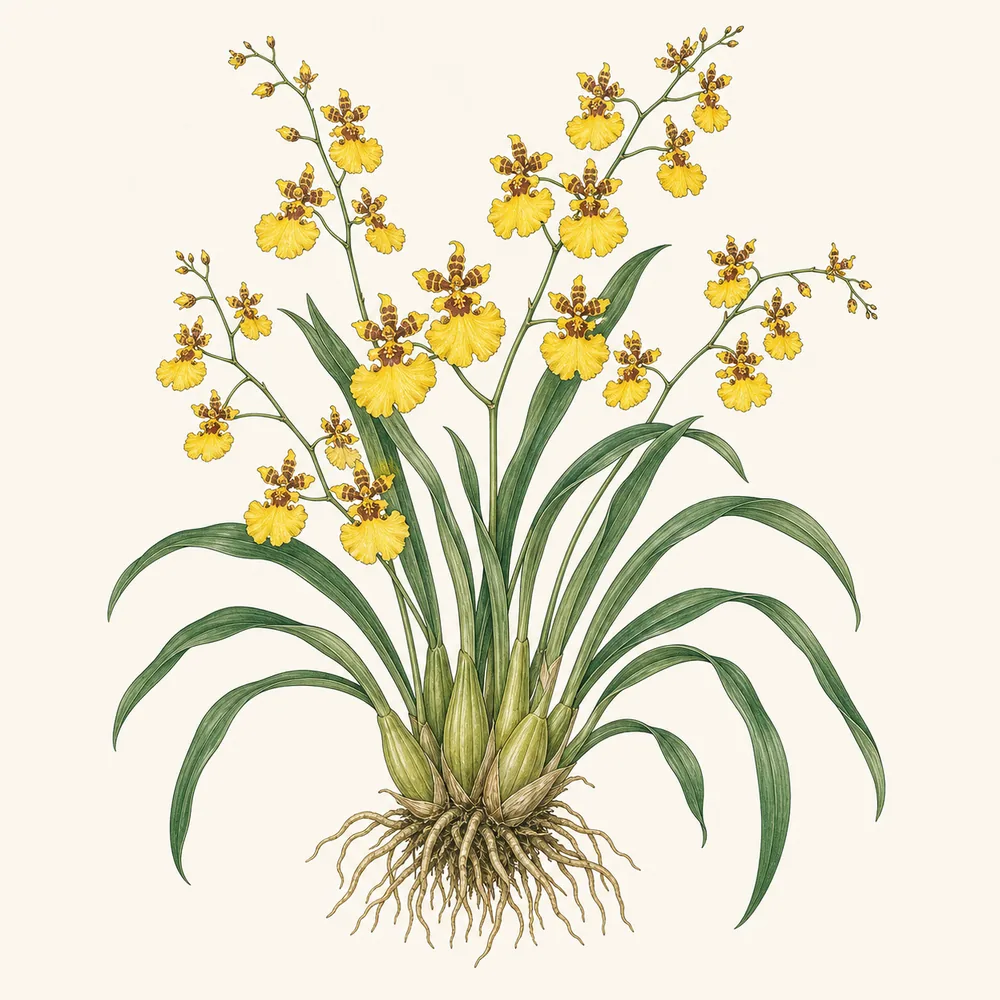
Oncidium Orchid
The orchid that throws up airy sprays of dozens of small blooms, often a cheerful yellow, that really do look like tiny dancing figures. It's pet-safe and not difficult — the two things it insists on are steady moisture at the roots and good airflow around them.
Non-toxic to cats, dogs & horses (ASPCA)
The oncidium or 'dancing lady' orchid is listed as non-toxic to cats, dogs and horses on the ASPCA database (under 'Dancing Doll Orchid', Oncidium flexuosum). It's a genuinely pet-friendly flowering houseplant, with sprays of small bright blooms.
Care at a glance
Everything that matters, in six lines. The detail is further down.
Light
A bright spot out of harsh midday sun — an east window is ideal. Good light drives the strong new growth that carries the flower sprays.
Water
The fine roots dislike drying out fully. Soak and drain, then water again as the surface bark approaches dry — more often than a cattleya, never sitting wet.
Temperature
Ordinary room warmth suits it, with a slight night drop. Keep it away from cold draughts and hot radiators alike.
Humidity
Loves humid air but hates stagnant air on its thin roots. Pair a pebble tray or humidifier with gentle ventilation to keep rot away.
Feeding
A dilute orchid feed with most waterings while it's growing; ease right off once growth finishes and through winter.
Soil
A finer-grade orchid bark holds a little more moisture for the delicate roots. Never ordinary compost, which smothers them.
What to do, and when
Fresh growths and roots appear. Increase watering and start weak feeding; repot into fresh bark now if last year's has broken down.
Full active growth, forming the new pseudobulbs that will flower. Keep bark evenly moist, feed weakly and keep the air moving.
Flower spikes often rise from the base of the newest bulbs. Support tall sprays and keep watering while it's in growth and bloom.
A quieter spell. Water enough that the pseudobulbs don't shrivel, hold off feeding, and keep it bright and frost-free.
Bark, not compost — and the finer the better
Like other orchids, an oncidium is an epiphyte that grows perched on trees, so it lives in bark, not soil. Its roots are noticeably finer than a cattleya's, so a slightly finer bark grade suits it, holding a touch more moisture without ever going soggy.
Repot every year or two in spring, as new roots start, once the bark has decayed. Fresh, open bark is what keeps those thin roots alive — tired, sludgy mix is the usual reason an oncidium goes downhill.
Watering: even moisture, never stagnant
The fine roots want to stay evenly moist but never waterlogged. Give a proper soak-and-drain, let the top of the bark approach dry, then water again — usually more often than you'd water a cattleya or a moth orchid.
The catch is airflow. Those thin roots rot fast in still, wet conditions, so pair the moisture with a moving airy spot and always tip away water left standing in the cover pot.
Getting it to flower again
Oncidiums flower off their newest, ripened pseudobulb, so the route to more blooms is simply to grow a big, healthy new bulb each year with good light and steady feeding. Starve it or keep it too dim and the bulbs stay small and flowerless.
The flower spike rises from the base of that fresh bulb. Once it's finished, cut the spent spike right down and let the plant build its next growth — it won't rebloom from the old, shrivelled bulbs.
Light: bright but not scorched
Give it a genuinely bright spot — an east-facing window, or a south one softened by a net curtain. Enough light produces plump pseudobulbs and strong spikes; too little gives lush leaves and no flowers.
Leaves should be a fresh mid-green. Hard, dark leaves mean move it brighter; yellowing or scorched patches mean the direct sun is too fierce and it needs shading.
Common problems
Limp, pleated leaves and bulbs
Either thirst on those fine roots or, more often, roots lost to sogginess. Check the roots, refresh the bark if needed, and keep it evenly moist with good airflow.
Won't reflower
Too little light or feed to build a strong new pseudobulb. Move it brighter and feed weakly through the growing season.
Root rot
The commonest oncidium problem: fine roots in stale, wet bark with no air. Repot into fresh bark, add ventilation and let the surface dry between waterings.
Bud blast
Buds shrivel and drop before opening, usually from dry air, a hot draught or letting it dry out while in bud. Hold humidity and moisture steady as it flowers.
Everything an oncidium needs
Finer bark, even moisture and moving air.
We take no commission on anything in the "save your money" tier — if we don't think you should buy it, we don't link it. How our recommendations work
If you like this, try
Other plants with a similar temperament.
How we checked this
Care cross-checked against the RHS. Non-toxicity taken from the ASPCA database, which lists Oncidium ('Dancing Doll Orchid') as non-toxic. If our page and these sources ever disagree, believe them — and tell us.
Sources: RHS · ASPCA — toxic & non-toxic plants
Last reviewed · July 2026