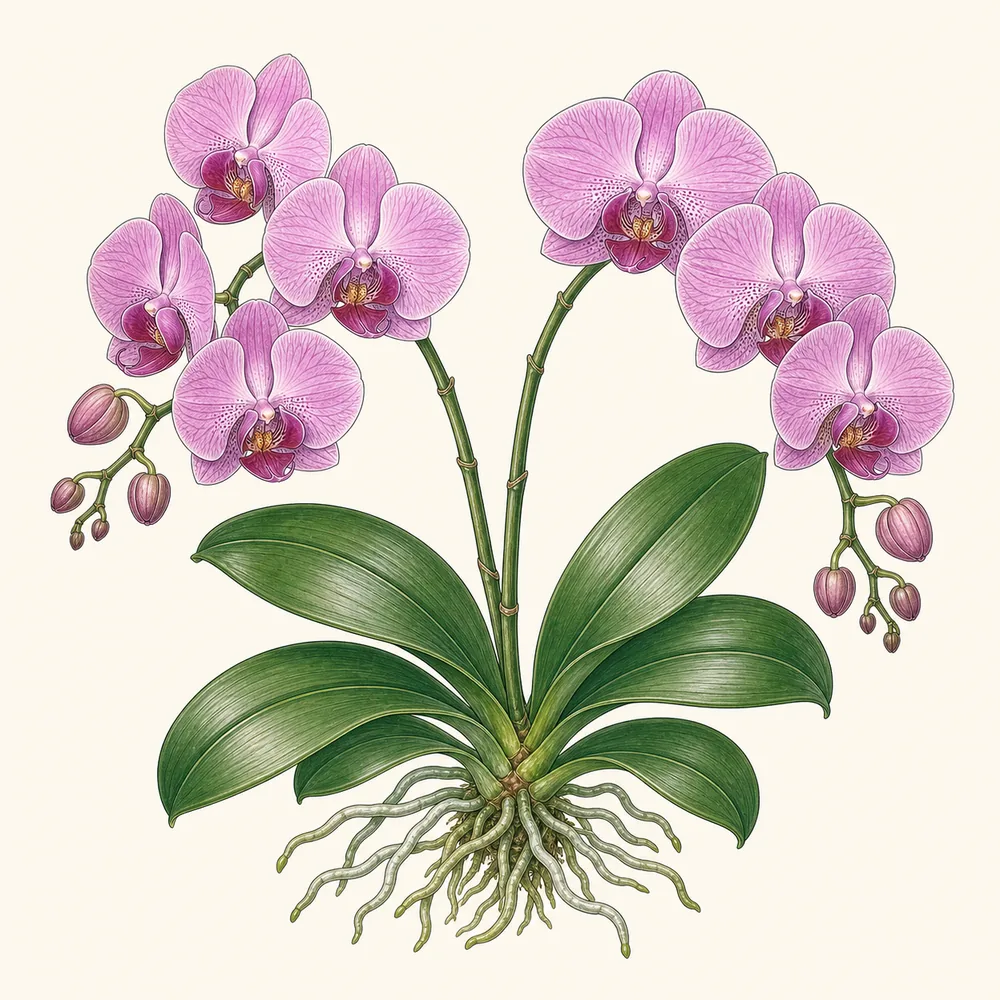
Moth Orchid
The supermarket orchid that flowers for months and is far tougher than it looks — once you realise it isn’t really a potted plant at all, but an air-loving epiphyte. And it’s completely pet-safe.
Safe around cats & dogs
Listed <strong>non-toxic to cats, dogs and horses</strong> by the ASPCA. One of the very few long-flowering houseplants you can keep with complete confidence around pets. Source: ASPCA.
Care at a glance
Everything that matters, in six lines. The detail is further down.
Light
An east-facing window is ideal. No harsh direct midday sun — it scorches the leaves.
Water
Water the bark, let it drain completely, and never leave it standing — sitting wet rots the roots.
Temperature
A drop to cooler nights (~16 °C) in autumn is what triggers a new flower spike.
Humidity
Enjoys a humid spot like a bright bathroom; a pebble tray helps in dry rooms.
Feeding
A dilute orchid feed with most waterings through the growing season.
Soil
A bark-based orchid mix in a clear pot — the roots need air and light. Compost will kill it.
What to do, and when
Growth and often flowering. Water and feed regularly; repot into fresh bark if it’s finished blooming.
Active growth. Keep watering and feeding weakly; keep it out of scorching sun.
Cooler nights now encourage a new flower spike. Ease back on feed.
Often in full bloom. Water a little less and keep it bright and draught-free.
It’s an air plant, not a pot plant
The single most useful thing to know about a moth orchid is that in the wild it grows clinging to trees, not in soil. That’s why it comes in bark, in a clear pot: the thick silvery roots need air and actually photosynthesise, so they want light too. Pot it in ordinary compost and it suffocates.
Water by soaking the bark once a week, then let it drain completely — the roots turn bright green when wet and silvery when dry, a built-in gauge of when to water again.
Getting it to flower again
When the flowers drop, don’t bin it. Cut the spent spike back to just above a plump node lower down and there’s a good chance of a side branch; or cut it to the base to build strength for a bigger spike next time.
The trigger for a fresh spike is a spell of cooler autumn nights plus regular weak feeding. Give it that and a healthy plant reblooms year after year.
Common problems
Limp, wrinkled leaves
Root problems from watering wrong. Inspect roots; adjust soak-and-drain.
Won’t reflower
Needs cooler autumn nights and regular weak feed. Move it somewhere with a night dip.
Yellow lower leaf
Often natural ageing; if several, suspect overwatering or sunburn.
Aerial roots everywhere
Totally normal — leave them. Don’t force them into the pot.
Everything a moth orchid needs
Get the medium and the watering right and it does the rest.
We take no commission on anything in the "save your money" tier — if we don't think you should buy it, we don't link it. How our recommendations work
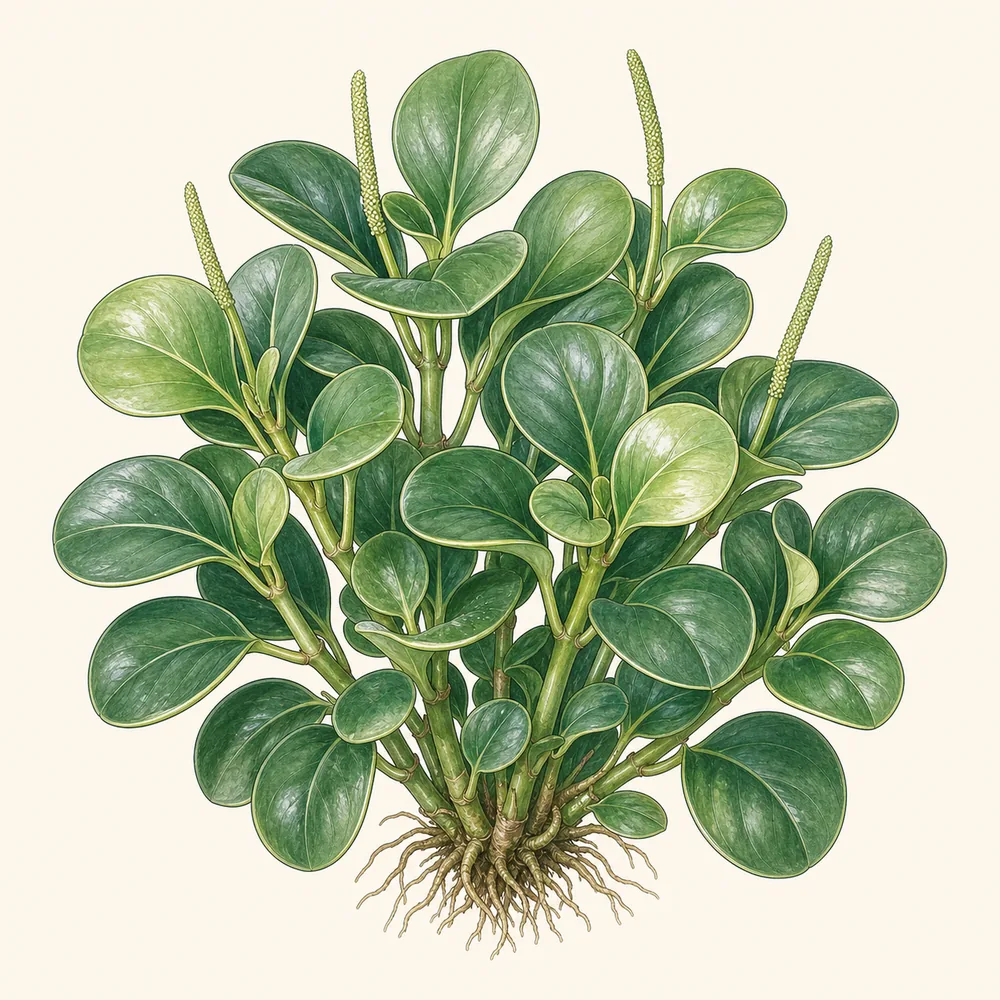
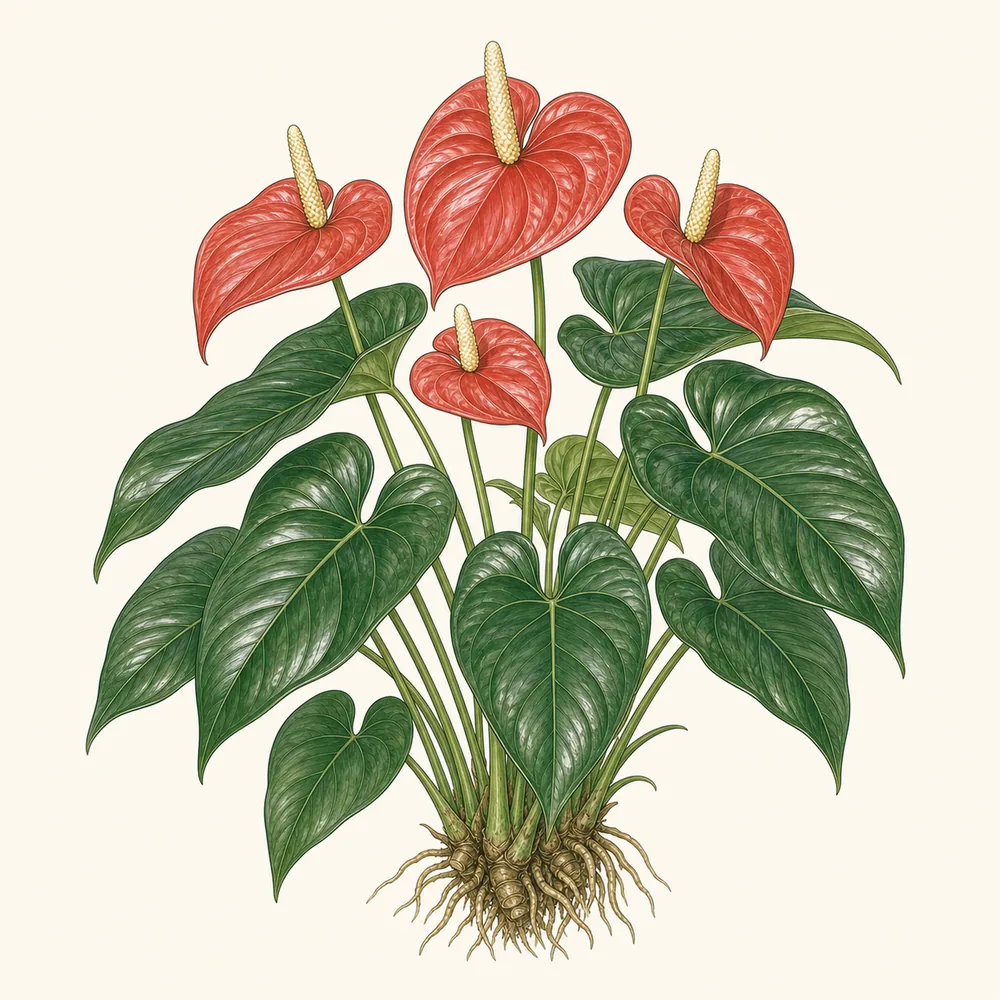
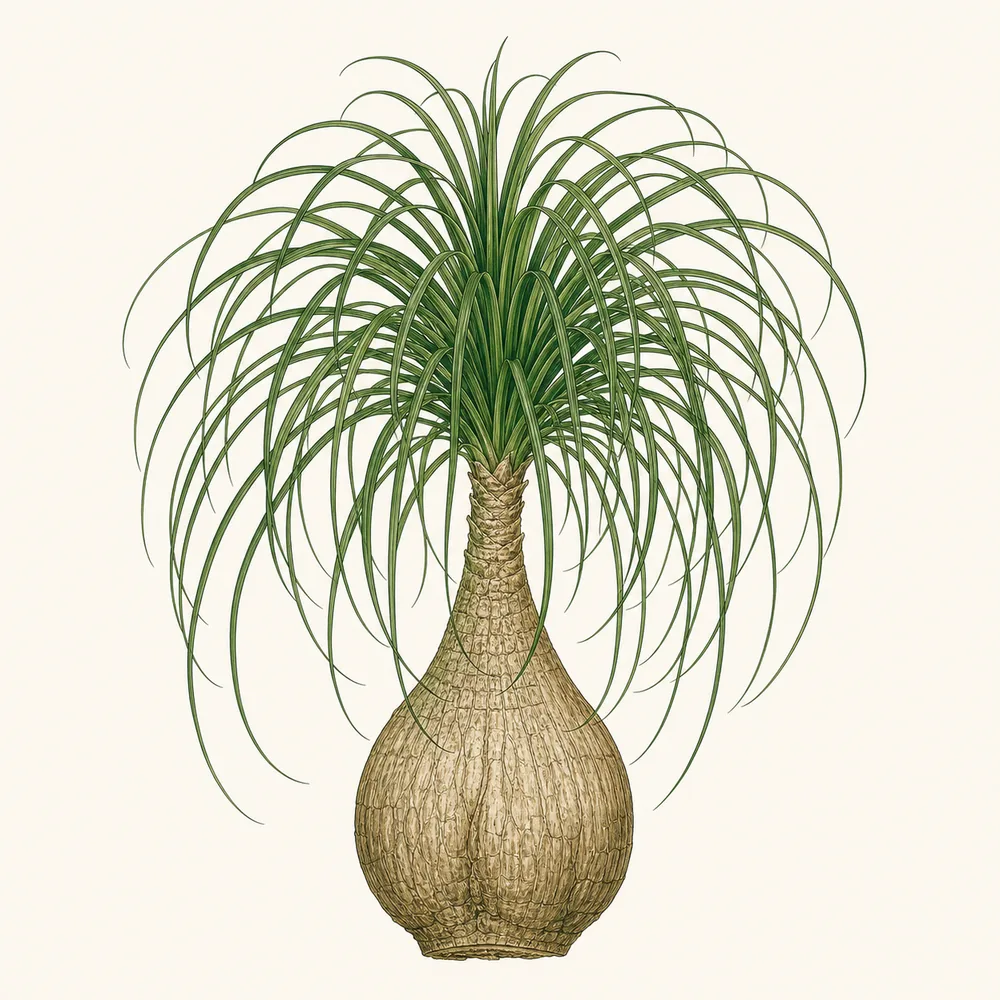
If you like this, try
Other plants with a similar temperament.
From the Notebook
Seasonal notes and guides that mention the moth orchid.
How we checked this
Care cross-checked against the RHS. Non-toxic status confirmed directly against the ASPCA Phalaenopsis orchid entry — non-toxic to cats, dogs and horses. If our page and these sources ever disagree, believe them — and tell us.
Sources: RHS · ASPCA — Phalaenopsis Orchid
Last reviewed · July 2026