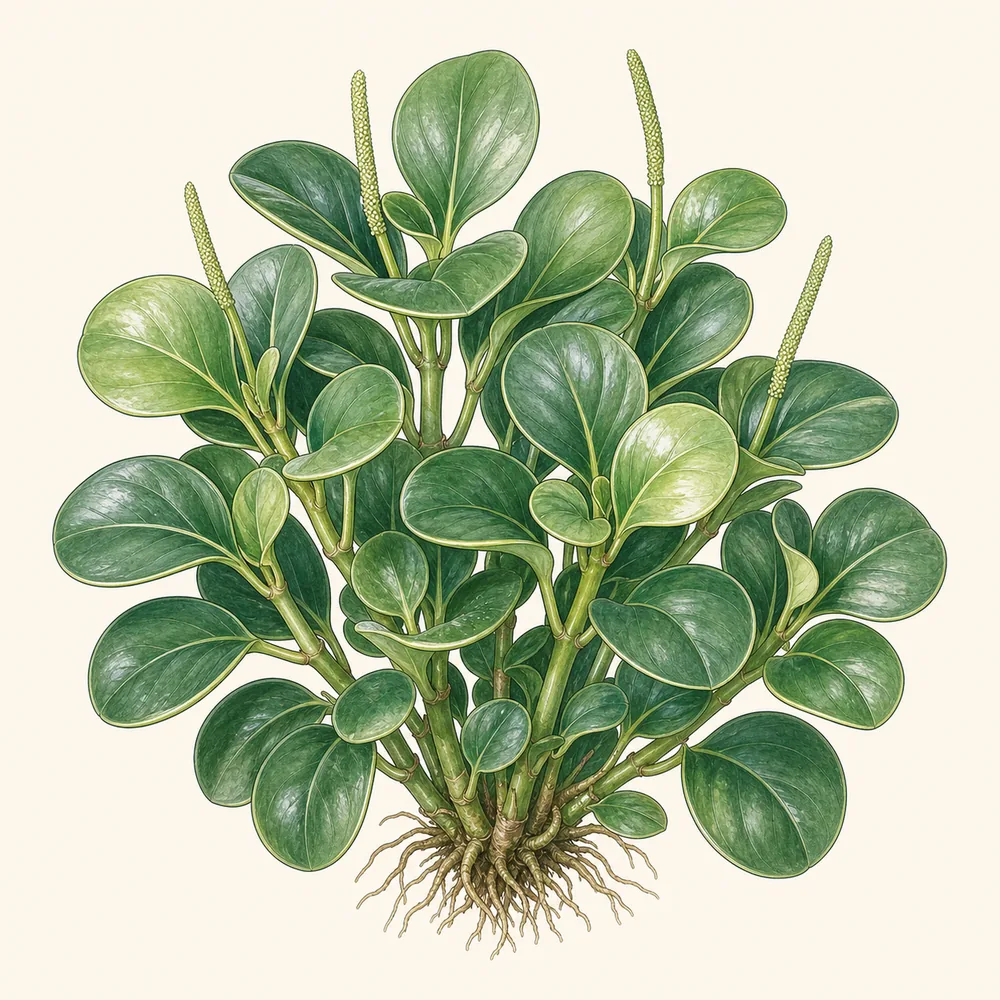
Peperomia
A neat little mound of thick, glossy, spoon-shaped leaves — the ideal desk or shelf plant. Compact, forgiving, slow to outgrow its pot, and genuinely safe around cats and dogs.
Safe around cats & dogs
Listed <strong>non-toxic to cats and dogs</strong> by the ASPCA (under “baby rubber plant” — note it is a Peperomia, quite unrelated to the toxic true rubber plant, Ficus elastica). A reassuring, compact pet-safe choice. Source: ASPCA.
Care at a glance
Everything that matters, in six lines. The detail is further down.
Light
Bright indirect is ideal; tolerates medium. No harsh direct sun.
Water
Semi-succulent leaves store water, so err on the dry side — overwatering is the only real risk.
Temperature
Ordinary room warmth; keep it off cold windowsills.
Humidity
Normal rooms are fine; it appreciates a little extra but never demands it.
Feeding
A dilute feed spring to summer. It’s a light feeder.
Soil
Peat-free compost loosened with perlite so the roots get air.
What to do, and when
Growth resumes. Take leaf or stem cuttings now, and repot only if truly congested.
Steady growth. Water when the top dries and feed weakly once a month.
Ease off water and feed as light fades.
Barely growing. Water sparingly and keep it warm and bright.
Treat it half like a succulent
Those thick, waxy leaves are little water stores, which is why a peperomia forgives forgetful owners but not overwaterers. Let the top of the compost dry out before you water again, and it will sit happily on a shelf for years.
It stays compact and slow-growing, so it rarely needs repotting and won’t take over — a large part of why it makes such a good desk plant.
Easy to multiply, safe to place anywhere
Peperomias root readily from leaf or stem cuttings in spring — a cheap way to fill more pots or share them. Stand a cutting in damp compost and keep it warm.
Because it’s ASPCA non-toxic, it’s one to reach for when you want greenery somewhere a cat patrols or a toddler roams — no worry if a leaf gets nibbled.
Common problems
Soft, dropping leaves
Overwatering. Let it dry out well before the next drink.
Wrinkled leaves
Under-watered — the leaves are drawing on their reserves. Give it a soak.
Leggy, stretched growth
Too little light. Move it somewhere brighter and indirect.
Faded markings
Variegated types need more light to hold their pattern.
Everything a peperomia needs
Small plant, small list, safe anywhere.
We take no commission on anything in the "save your money" tier — if we don't think you should buy it, we don't link it. How our recommendations work
If you like this, try
Other plants with a similar temperament.
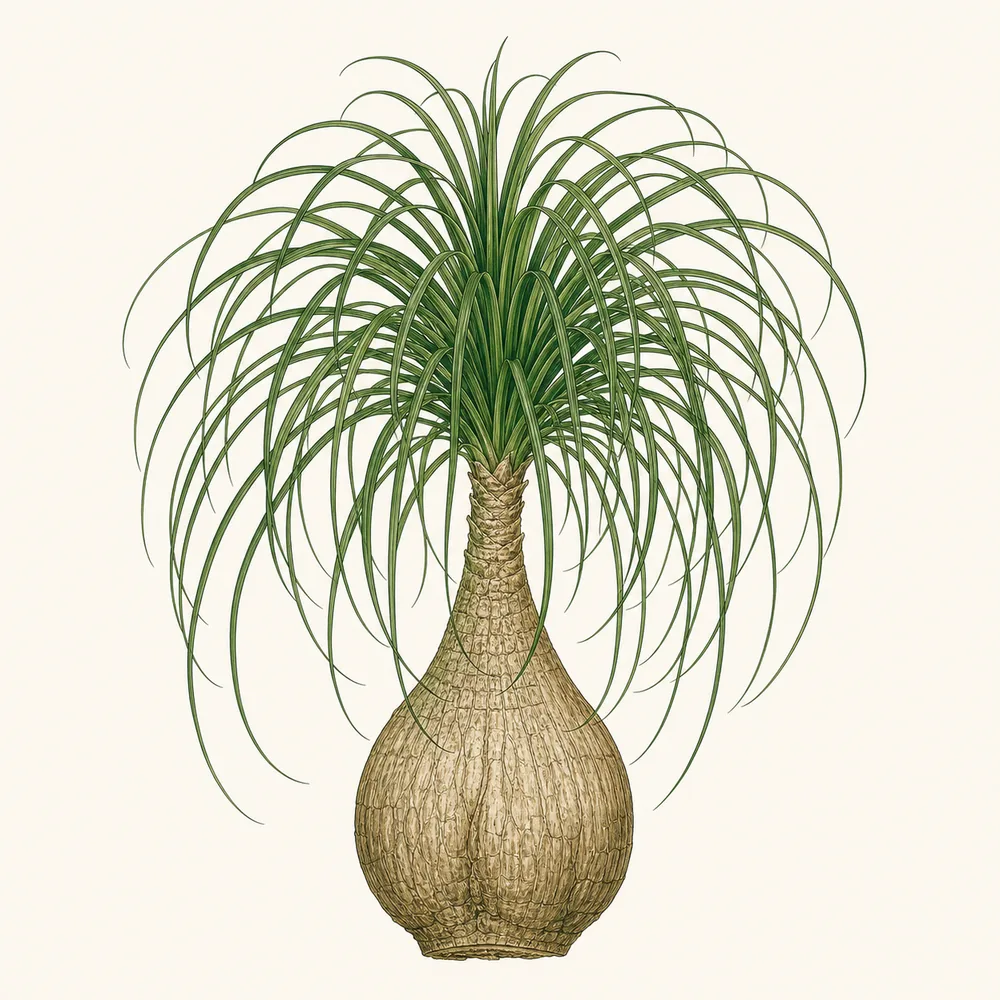
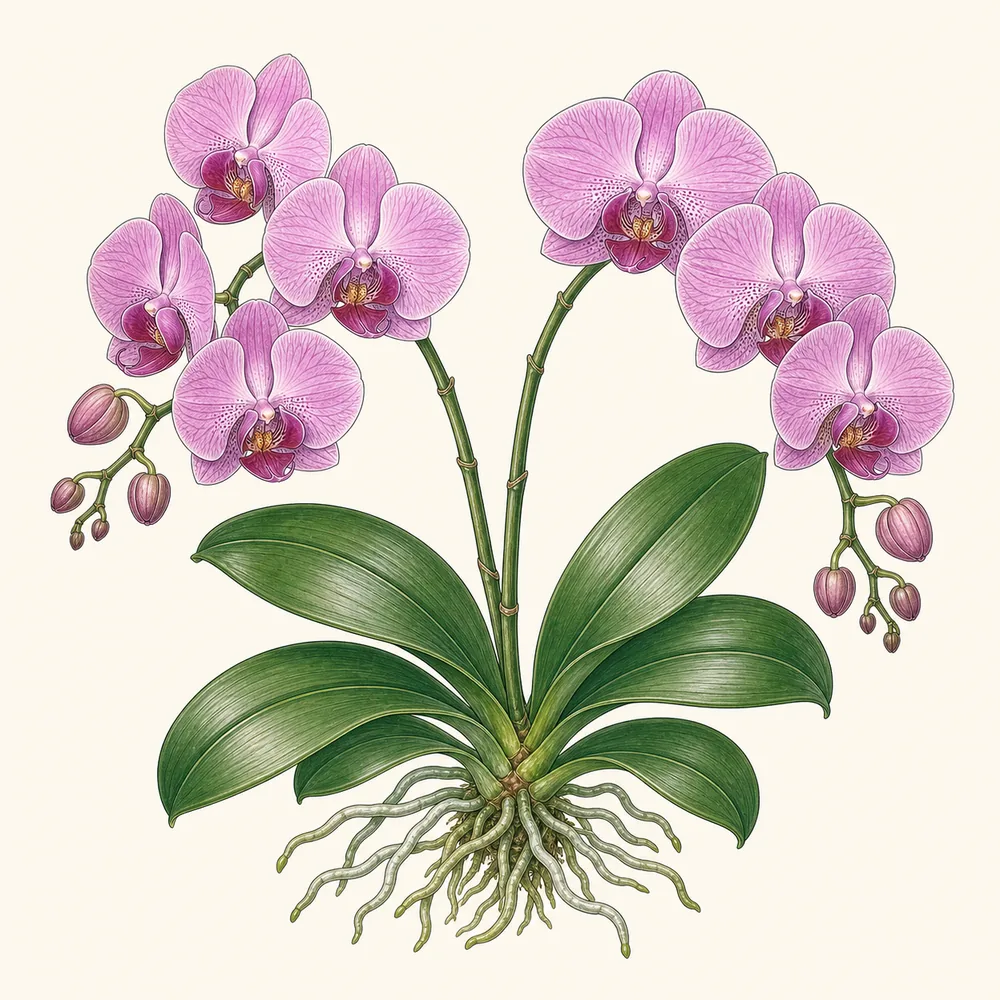
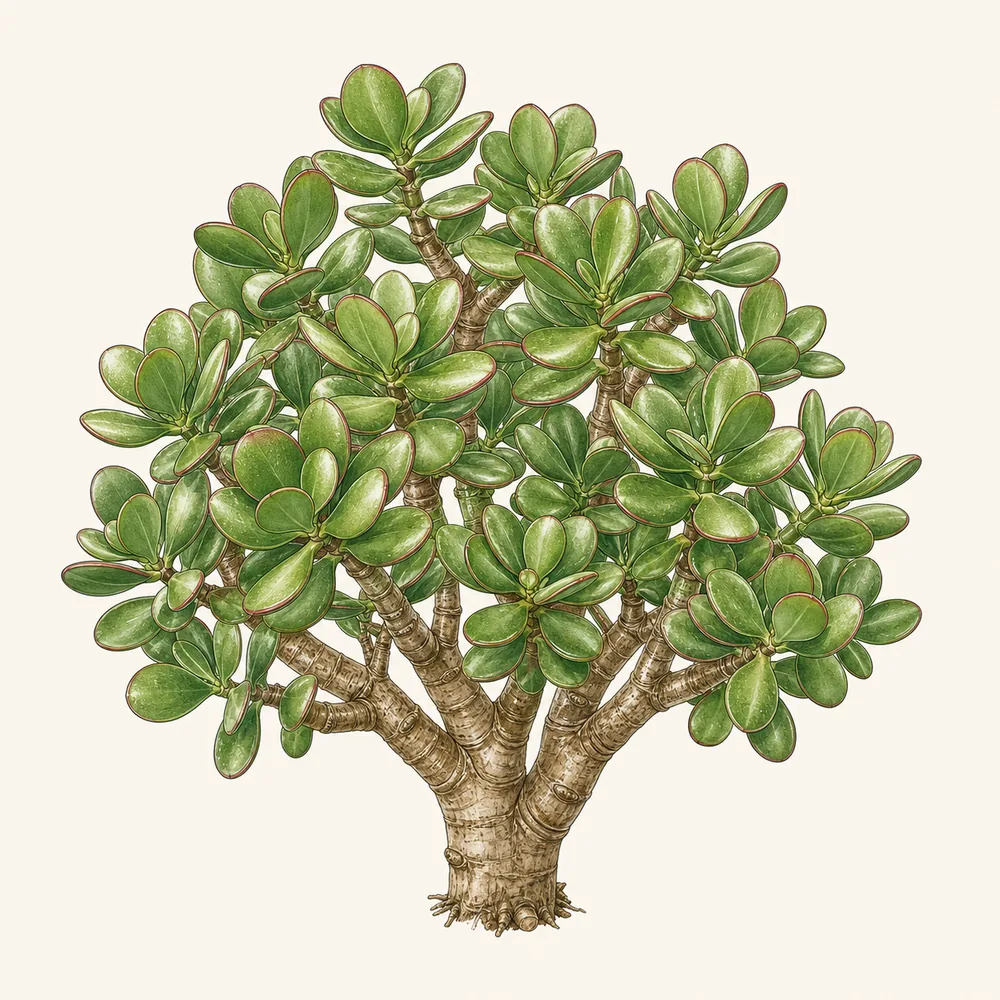
From the Notebook
Seasonal notes and guides that mention the peperomia.
How we checked this
Care cross-checked against the RHS and NC State Extension. Non-toxic status confirmed directly against the ASPCA “baby rubber plant” (Peperomia obtusifolia) entry — non-toxic to cats and dogs. Not to be confused with the toxic true rubber plant, Ficus elastica. If our page and these sources ever disagree, believe them — and tell us.
Sources: RHS · NC State Extension · ASPCA — Baby Rubber Plant
Last reviewed · July 2026