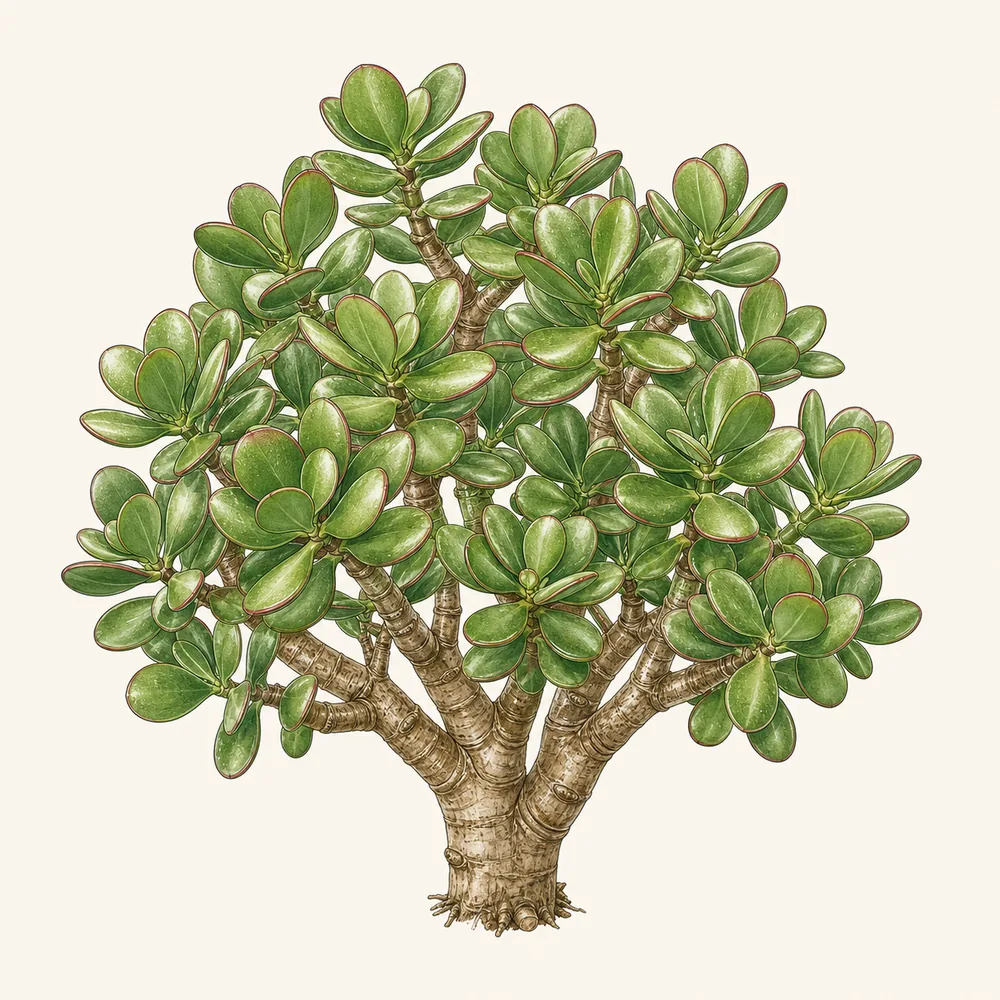
Jade Plant
A little tree of plump, jade-green paddles on a thick woody trunk — a windowsill succulent that lives for decades and can be trained almost like a bonsai. Sun and restraint with the watering can are all it asks.
Toxic to cats, dogs & horses if eaten
The ASPCA lists jade as toxic to cats, dogs and horses. Unlike the mild aroids, it can cause vomiting, depression (lethargy) and <strong>incoordination</strong> — a little more than simple mouth irritation — so it’s worth keeping genuinely out of reach of pets that chew. The exact toxic compound is still unidentified. Source: ASPCA.
Care at a glance
Everything that matters, in six lines. The detail is further down.
Light
A sunny windowsill. In low light it grows pale, leggy and floppy.
Water
Every 2–3 weeks in summer, monthly or less in winter. Overwatering is the one real danger.
Temperature
Room warmth. Not frost-hardy — bring it in well before cold nights.
Humidity
Loves dry air; damp, stagnant conditions cause rot.
Feeding
A weak succulent feed once or twice in summer, at most.
Soil
Fast-draining cactus and succulent compost, ideally in a terracotta pot.
What to do, and when
Growth resumes. Start watering again as it dries, and pot up leaves or stems to propagate.
Give it the most sun you can. Water only when dry; a light feed once is plenty.
Cut back on water as light fades; move it to the brightest spot.
Near-dormant. Water monthly at most, keep it cool, bright and dry.
Sun makes the plant
A jade plant in good light is compact, sturdy and often edged in red; the same plant in a dim corner turns pale, stretches, and flops under the weight of its own leaves. If yours looks leggy, the answer is almost always more light, not more water or food.
Water only when the compost has dried right out — the thick leaves are full water stores, and a jade rots far more easily than it ever goes thirsty.
A plant you can shape — and share
Because it grows on a woody trunk, a jade can be pruned into a pleasing little tree over the years; pinch and cut back in spring to build the shape you want.
It’s also one of the easiest plants to propagate — a single dropped leaf laid on gritty compost will often root and form a new plant. Handy, given you’ll want to keep it out of reach of pets.
Common problems
Soft, dropping leaves
Overwatering and rot. Let it dry hard; repot into gritty mix.
Leggy, stretched growth
Too little light. Move it to your sunniest window.
Shrivelled leaves
Under-watered (uncommon). Give it a proper soak.
Sudden leaf drop
Cold, a draught, or a big change. Keep it warm and steady.
Everything a jade plant needs
Sun, grit, and the discipline not to water.
We take no commission on anything in the "save your money" tier — if we don't think you should buy it, we don't link it. How our recommendations work
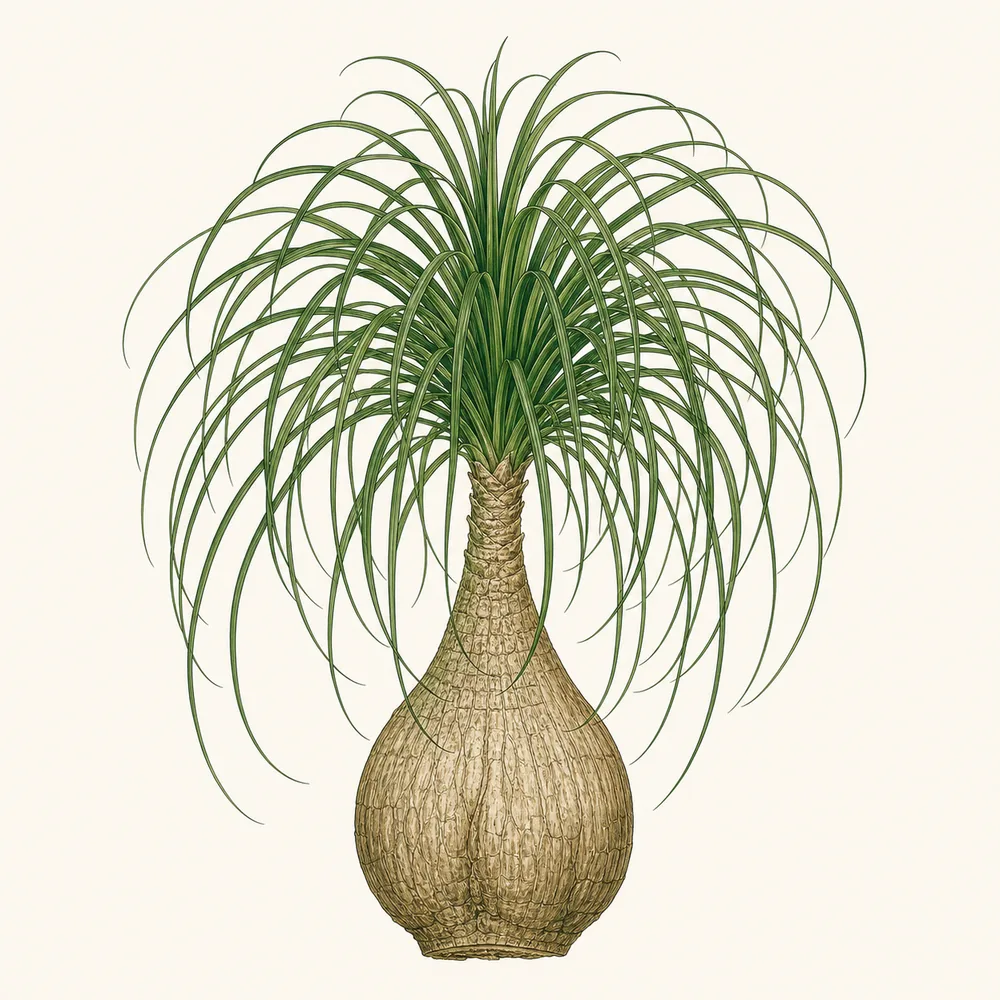
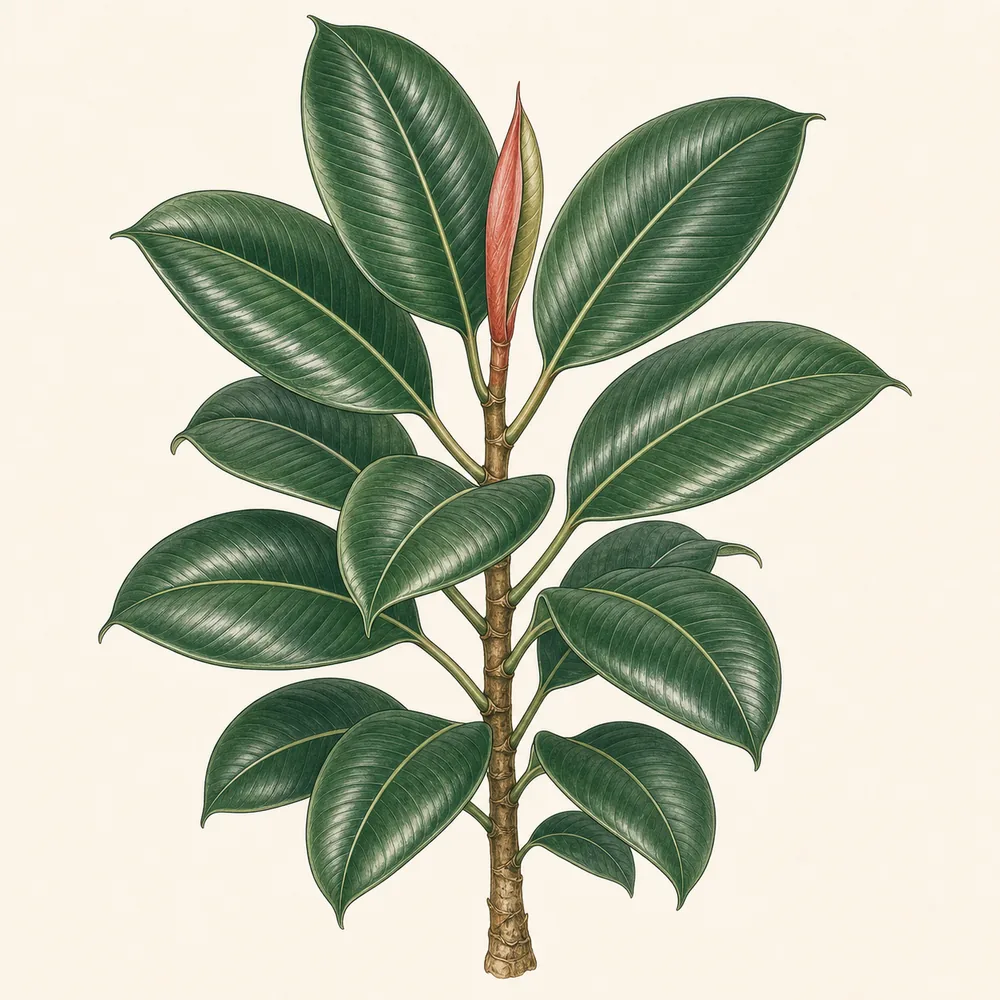
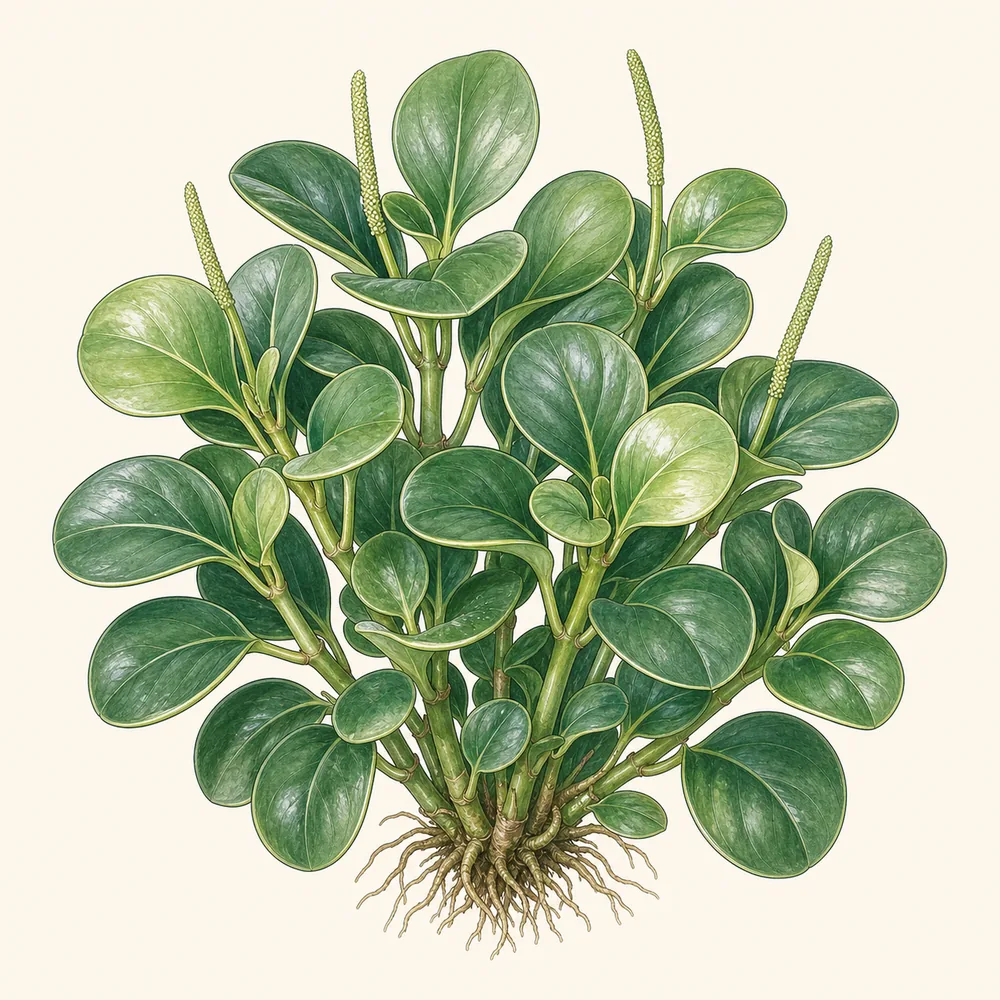
If you like this, try
Other plants with a similar temperament.
How we checked this
Care cross-checked against the RHS and NC State Extension. Toxicity confirmed directly against the ASPCA jade plant entry — toxic to cats, dogs and horses; clinical signs vomiting, depression and incoordination; toxic principle unknown. If our page and these sources ever disagree, believe them — and tell us.
Sources: RHS · NC State Extension · ASPCA — Jade Plant
Last reviewed · July 2026