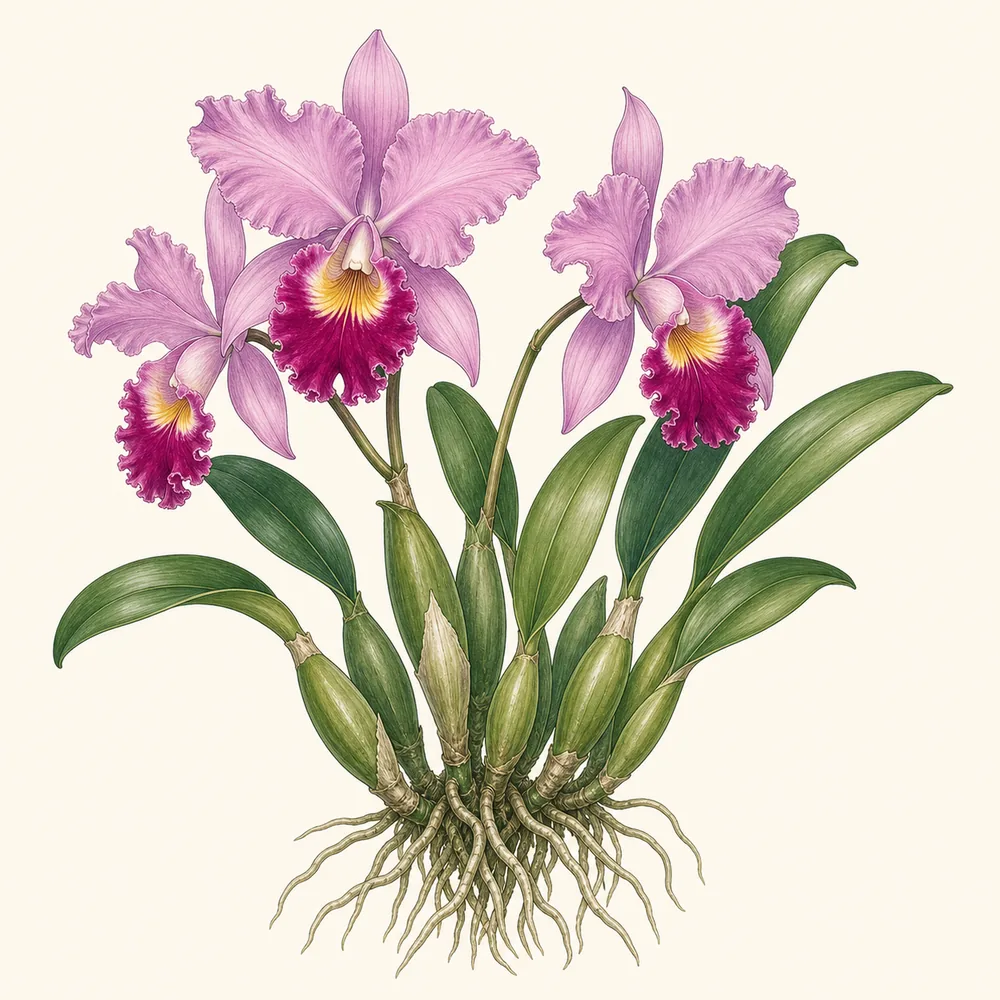
Cattleya Orchid
The big, frilly, often scented orchid that made the classic corsage — showier than a moth orchid and just as pet-safe. Give it the brightest windowsill you have and a proper dry rest, and it rewards you with a few weeks of spectacular flowers each year.
Non-toxic to cats & dogs (ASPCA)
Cattleya orchids are listed as non-toxic on the ASPCA database (under 'Easter Cattleya', Cattleya mossiae). Like other true orchids they're a safe choice for homes with cats and dogs, with no toxic principle recorded. Discourage chewing all the same, since any plant can upset a stomach.
Care at a glance
Everything that matters, in six lines. The detail is further down.
Light
The brightest orchid on the sill: an east or lightly shaded south window suits it. It can take gentle morning sun, but shield it from harsh midday glare that scorches leaves.
Water
Water the bark thoroughly, drain fully, and let it dry almost completely before the next soak — the plump pseudobulbs store water, so it hates staying wet.
Temperature
Warm days and a drop to around 13–16 °C at night. That day-to-night swing is a big part of what ripens the growth and triggers flowering.
Humidity
Aim for 50–70%. A pebble tray or a nearby humidifier helps in dry, heated rooms, and gentle airflow keeps the fat pseudobulbs from rotting.
Feeding
A dilute orchid feed every second or third watering while it's actively growing. Stop feeding during the dry winter rest.
Soil
A chunky, free-draining bark mix in a pot with big drainage holes. Ordinary compost holds too much water and suffocates the thick roots.
What to do, and when
New growth pushes from the base. Step up watering and start weak feeding as the roots get moving; repot now if the mix has broken down.
Active growth and, for many types, flowering. Water and feed regularly, keep humidity up, and give bright light out of scorching sun.
Growth ripens. Ease back on feed and let cooler nights and slightly drier bark help set next year's flowers.
A cooler, drier rest for most cattleyas. Water sparingly, don't feed, and keep it bright — this pause is what earns the spring show.
Bark, not compost — and why it matters
A cattleya grows on trees in the wild, clinging on with fat storage stems called pseudobulbs and thick roots that need air. That's why it lives in coarse bark, not soil. Pot it in ordinary compost and the roots stay wet, lose their air and rot.
Repot every couple of years, in spring just as new roots appear, when the bark has broken down to crumbs or the plant has climbed over the edge of the pot. Use a snug pot — cattleyas flower better slightly tight than swimming in fresh mix.
Watering: soak, then let it dry
The single biggest killer is kindness with the watering can. The pseudobulbs are built-in water tanks, so a cattleya wants a thorough soak-and-drain and then to dry out almost fully before the next drink.
Water in the morning so the plant and its crevices dry by nightfall, tip out anything left in the saucer, and if in doubt, wait a day. Roots that are green and firm are happy; mushy brown roots mean you're overdoing it.
Getting it to flower again
Two things bring cattleyas back into bloom: enough light and a proper winter rest. Leaves should be a mid, slightly yellow-green — a lush dark green usually means too little light and no flowers.
After the year's growth ripens, give it a cooler, drier spell with bright light and little water for several weeks. Many cattleyas also produce a papery sheath at the top of a new growth, then send the flower buds up through it — resist the urge to peel it open.
Light: the brightest sill you have
Cattleyas want more light than a moth orchid. An east-facing window, or a south one behind a light net curtain, is about right. If you can, harden it off to a little direct morning sun, which really helps flowering.
The leaves tell you when you've got it right: a healthy mid-green with maybe a faint reddish tinge in strong light is good, hard dark green means too dim, and yellow or scorched patches mean the sun is too fierce.
Common problems
Limp, wrinkled pseudobulbs
Usually rotted roots from staying wet, not thirst. Tip it out, check the roots, cut away any soft brown ones and repot into fresh bark, then water more sparingly.
Won't reflower
Nearly always too little light or no rest period. Move it brighter and give it a cooler, drier winter spell to set buds.
Root rot
Soggy, airless mix. Use coarse bark and a well-drained pot, let it dry between waterings, and never leave it sitting in water.
Bud blast
Buds yellow and drop before opening — from a sudden change: a cold draught, dry air, or being moved into hot sun. Keep conditions steady while it's in bud.
Everything a cattleya needs
Bright light, coarse bark and a disciplined watering can.
We take no commission on anything in the "save your money" tier — if we don't think you should buy it, we don't link it. How our recommendations work
If you like this, try
Other plants with a similar temperament.
How we checked this
Care cross-checked against the RHS. Non-toxicity taken from the ASPCA database, which lists Cattleya ('Easter Cattleya') as non-toxic to dogs and cats. If our page and these sources ever disagree, believe them — and tell us.
Sources: RHS · ASPCA — toxic & non-toxic plants
Last reviewed · July 2026