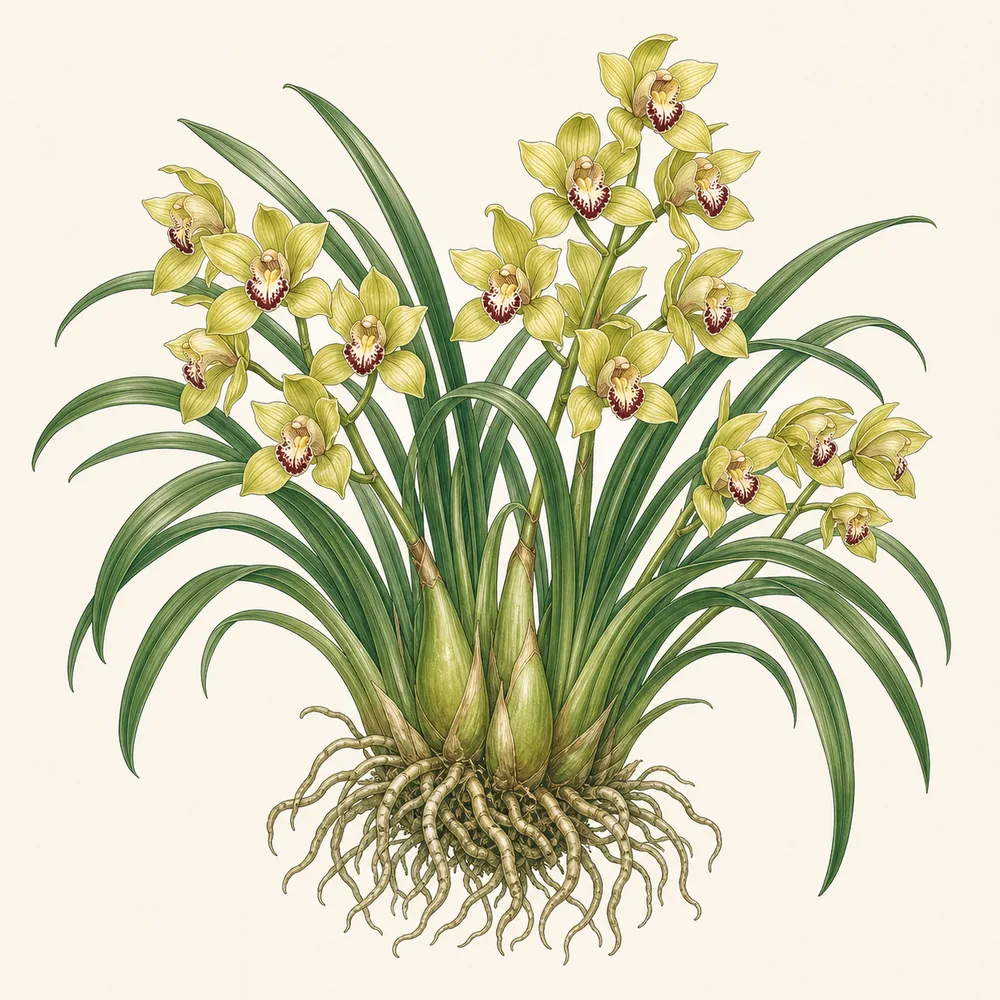
Cymbidium Orchid
The big, grassy orchid with waxy, boat-shaped blooms that last for weeks on the windowsill. It's tougher and thirstier than a moth orchid, but there's one non-negotiable catch — no cool autumn outdoors, no flowers. Get the seasons right and it's a generous, long-lived plant.
Not listed by ASPCA
The ASPCA doesn't list the cymbidium (boat) orchid specifically, so we don't stamp it safe. No toxic principle is recorded for it and close relatives are listed non-toxic, but with no database entry for this species we flag the gap honestly rather than assume.
Care at a glance
Everything that matters, in six lines. The detail is further down.
Light
Wants more light than most orchids — a bright windowsill, and it takes gentle morning or late sun. Too little light and the leaves are lush but the plant won't flower.
Water
Thirstier than a moth orchid. Water generously through spring and summer, letting the mix approach dryness between soaks; ease right back in winter.
Temperature
Stand it outdoors from June to early autumn. The drop to cool nights (around 10–13 °C) is what sets the flower buds — this is the single most important step.
Humidity
Happy in ordinary room humidity, more forgiving than the tropical orchids. A pebble tray helps in a dry, heated room over winter.
Feeding
Feed generously through spring and summer with a growth feed, then switch to a high-potash bloom feed in late summer to encourage spikes.
Soil
A coarse, free-draining bark mix — never ordinary compost. The fat pseudobulbs and roots want air and must not sit wet.
What to do, and when
New growth begins. Repot now if the mix has broken down or the plant is bursting its pot, and start watering and feeding freely as growth speeds up.
Move it outdoors to a bright, sheltered spot once nights are reliably mild. Water and feed generously — this is when the plant builds the strength to flower.
The crucial season. Leave it outside into the cool nights of early autumn to set buds, then bring it in before the first frost. Switch to a bloom feed.
Flowering time for many cymbidiums. Keep it cool and bright, water sparingly, and enjoy the spikes — the blooms can last six weeks or more.
The cool autumn is the whole secret
A cymbidium that never flowers is almost always a cymbidium kept too warm and too cosy. In the wild these are mountain orchids, and they need a real swing between warm days and cool nights in late summer and autumn to trigger flower buds.
The easiest way to give it that is to stand the pot outdoors from June, in a bright but sheltered spot, and leave it out into the cool nights of early autumn — a drop to around 10–13 °C at night is the signal. Bring it back inside before the first frost, and the spikes will follow through winter.
Feed it like it means it
Cymbidiums are hungry, thirsty orchids compared with the delicate moth orchid. Through spring and summer they're building the fat pseudobulbs that will power next winter's flowers, so water freely and feed with a high-nitrogen growth feed.
In late summer, switch to a high-potash bloom feed to nudge it toward flowering. Then ease right off through winter — a plant in bloom needs far less water and no push to grow.
Repotting and dividing
A healthy cymbidium quickly fills its pot with pseudobulbs and can go a few years between repottings. Do it in spring, just as new growth starts, using a coarse bark mix that drains fast.
If the clump is large you can divide it — keep at least three or four plump pseudobulbs together in each piece so it has the reserves to flower again. The old, leafless 'back bulbs' can be potted up separately to grow on.
Common problems
Lots of leaf, no flowers
The classic cymbidium complaint — it never got a cool autumn. Stand it outdoors through summer into the cool nights of early autumn to set buds.
Blackened or dropping buds
Usually a sudden change — a warm draught, a big temperature swing, or moving the plant once buds have formed. Keep it cool, bright and settled while buds develop.
Shrivelled pseudobulbs
Underwatering or dead roots. Check the roots when repotting; in growth these orchids drink far more than people expect.
Rotting base or soft roots
Too wet, especially in winter, or old broken-down mix holding water. Repot into coarse fresh bark and water more sparingly in the cold months.
Everything a cymbidium needs
Coarse bark, a summer outdoors, and that cool autumn.
We take no commission on anything in the "save your money" tier — if we don't think you should buy it, we don't link it. How our recommendations work
If you like this, try
Other plants with a similar temperament.
How we checked this
Care cross-checked against the RHS. The ASPCA does not list the cymbidium (boat) orchid, so its pet-safety is unconfirmed and we have not stamped it safe. If our page and these sources ever disagree, believe them — and tell us.
Sources: RHS · ASPCA — toxic & non-toxic plants
Last reviewed · July 2026