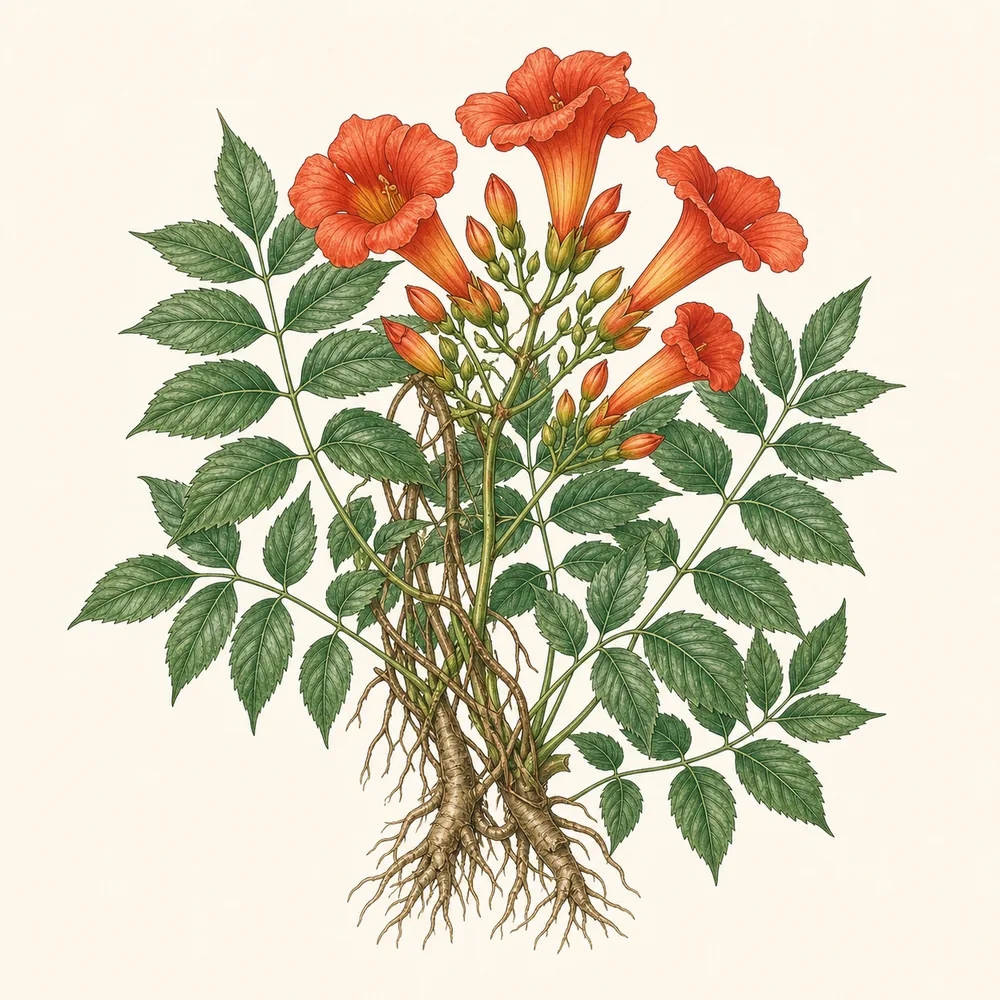
Trumpet Vine
A big, hot-climate climber that throws out clusters of flaming orange trumpets in late summer — the kind of plant that stops passers-by. It's easy to grow but genuinely muscular: give it a strong support and a sunny wall, prune it hard every year, and don't overfeed it, or you'll get a monster of leaf with barely a flower.
Irritant sap & foliage
Trumpet vine (Campsis) is on the RHS list of potentially harmful plants. The sap and foliage can irritate skin and, if chewed, the mouth and gut — handling the plant while pruning is the usual cause of skin irritation. Wear gloves and keep prunings away from pets.
Care at a glance
Everything that matters, in six lines. The detail is further down.
Position
It needs real heat to flower well in Britain — a south- or west-facing wall that bakes in summer is close to essential. In a cool or shady spot you'll get vigorous growth and no trumpets.
Water
Water well for the first couple of summers while it roots in. Once established it's notably drought-tolerant and rarely needs attention — this is a tough plant, not a thirsty one.
Soil
Any reasonable, free-draining soil suits it. Avoid rich, heavily fed ground — luxury conditions push acres of leaf and delay flowering for years.
Support
This is a heavy plant. It makes aerial roots but still needs robust wires or a strong structure — it will pull flimsy trellis off a wall. Build the support strong before you plant.
Pruning
It flowers on the current year's growth, so prune hard in late winter or early spring: build a permanent framework, then cut the previous year's shoots back to two or three buds of that framework.
Hardiness
The plant itself is hardy across most of the UK — the limitation is heat, not cold. Without a warm summer and a sun-baked wall it survives happily but flowers poorly.
What to do, and when
The main pruning window: in late winter to early spring, cut last year's growth back hard to your permanent framework, leaving two or three buds per spur. Tie in and steer the new shoots as they extend.
Rapid, muscular growth followed by the trumpet flowers from July into September, buzzing with bees. Water only while young plants are establishing — mature vines fend for themselves.
Flowering finishes and growth slows. Shorten the long whippy shoots to keep it tidy, and keep an eye out for suckers pushing up from the roots some distance from the plant.
Dormant, and the framework is fully visible — the ideal time to plan and carry out the hard prune. Check that the support is still sound before spring growth loads it up again.
Vigorous means strong support — not optional
Campsis is one of the heaviest climbers you can grow in a garden. A mature plant is a mass of woody stems that becomes seriously weighty, and it grips with aerial roots much like ivy. On its own those roots aren't always enough to hold the bulk against a wall, so it needs robust, well-fixed wires or a solid framework built before planting.
Don't underestimate this. Flimsy trellis, a light arch or a tired fence panel will eventually be pulled apart or dragged down. Think in terms of galvanised straining wires on stout vine eyes, or a purpose-built structure — the sort of support you'd give a wisteria.
Prune hard — it flowers on new wood
Trumpet vine flowers on growth made in the current season, which makes pruning refreshingly decisive: you can cut it back hard every year without losing the display. The method is the same as a wisteria or a fruiting spur system — establish a permanent framework of main stems, then each late winter cut the previous year's shoots back to two or three buds of that framework.
Left unpruned, it becomes a top-heavy tangle that flowers only at the tips, way out of reach, while the base goes bare and woody. Hard, regular pruning keeps it in bounds, keeps the flowers where you can see them, and keeps the weight off your support.
Getting it to actually flower
The commonest complaint about Campsis in Britain is a healthy plant that simply won't bloom. Three things drive flowering: heat, restraint and patience. It wants a sun-baked wall and a warm summer; it wants lean soil, not rich feeding; and it wants time — young plants can take several years to settle into flowering, and there's little you can do to rush them.
If yours is all leaf, resist the temptation to feed it — that makes things worse. Give it the hottest spot you can, ease off any fertiliser, prune it properly, and wait. A cool, shady or overfed Campsis is the classic non-flowering vine.
Keeping it in bounds — and handling it safely
As well as climbing, Campsis suckers from the roots, sometimes throwing up new shoots a surprising distance from the main plant. Pull or dig these out as they appear, or it will start colonising the border. It's a plant to give room and a clear boundary, not to squeeze into a tight corner.
Take the safety note above seriously when you work on it: the sap and foliage can irritate skin, so wear gloves and long sleeves when pruning, and clear the prunings away rather than leaving them where pets might chew them. The flowers are a real draw for bees, which is its best wildlife credential in a UK garden.
Common problems
Grows madly but won't flower
The classic Campsis complaint — usually too cool or shady, too well-fed, or simply too young. Give it a hot sunny wall, stop feeding, prune it properly, and be patient for a few seasons.
Pulling the support off the wall
The plant has outgrown flimsy trellis or tired wires. Fit heavy-duty galvanised wires on stout vine eyes, or a solid framework — this is a wisteria-weight climber, not a light one.
Shoots appearing yards from the plant
Root suckers, a normal habit of trumpet vine. Dig or pull them out as they emerge, and give the plant a spot where a bit of spread won't matter.
Skin irritation after pruning
The sap and foliage are irritant (see the safety note). Always wear gloves and cover your arms when cutting it, and keep the prunings well away from pets and children.
Everything a trumpet vine needs
A hot wall, a support strong enough to hold real weight, and gloves for pruning.
We take no commission on anything in the "save your money" tier — if we don't think you should buy it, we don't link it. How our recommendations work
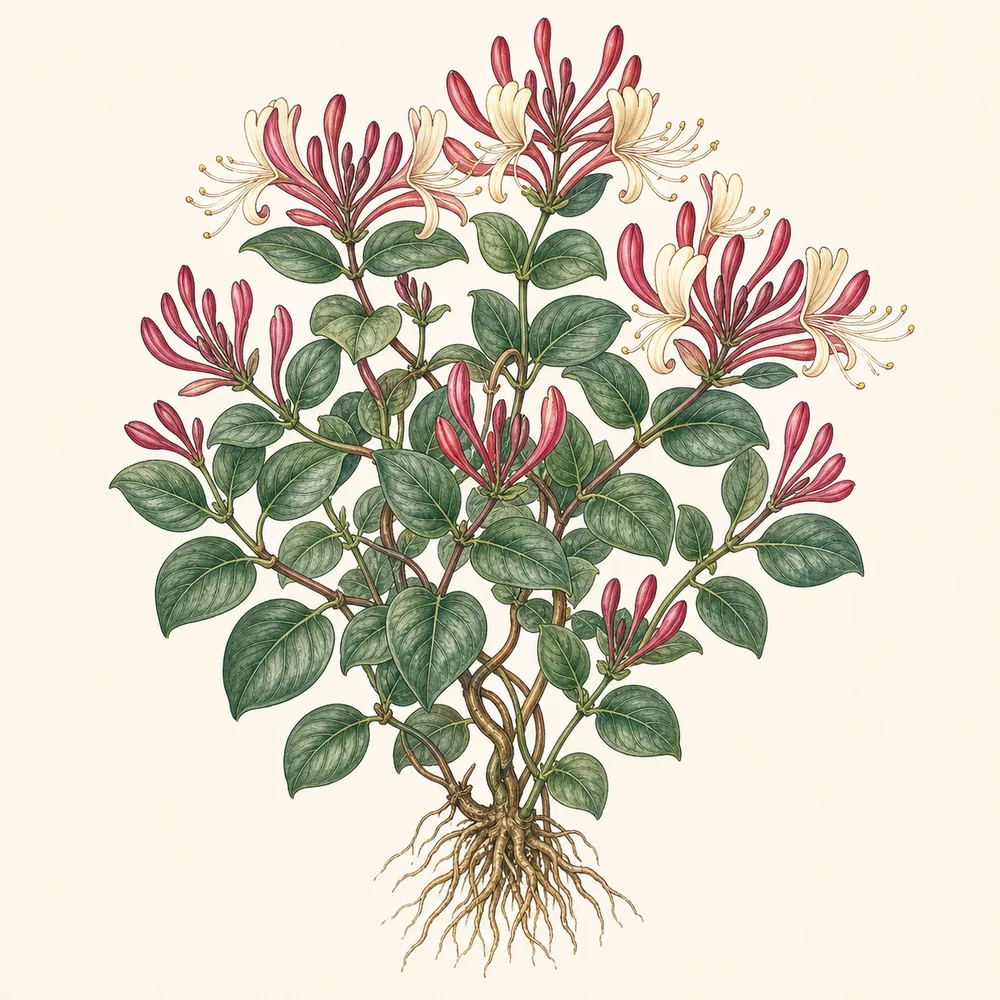
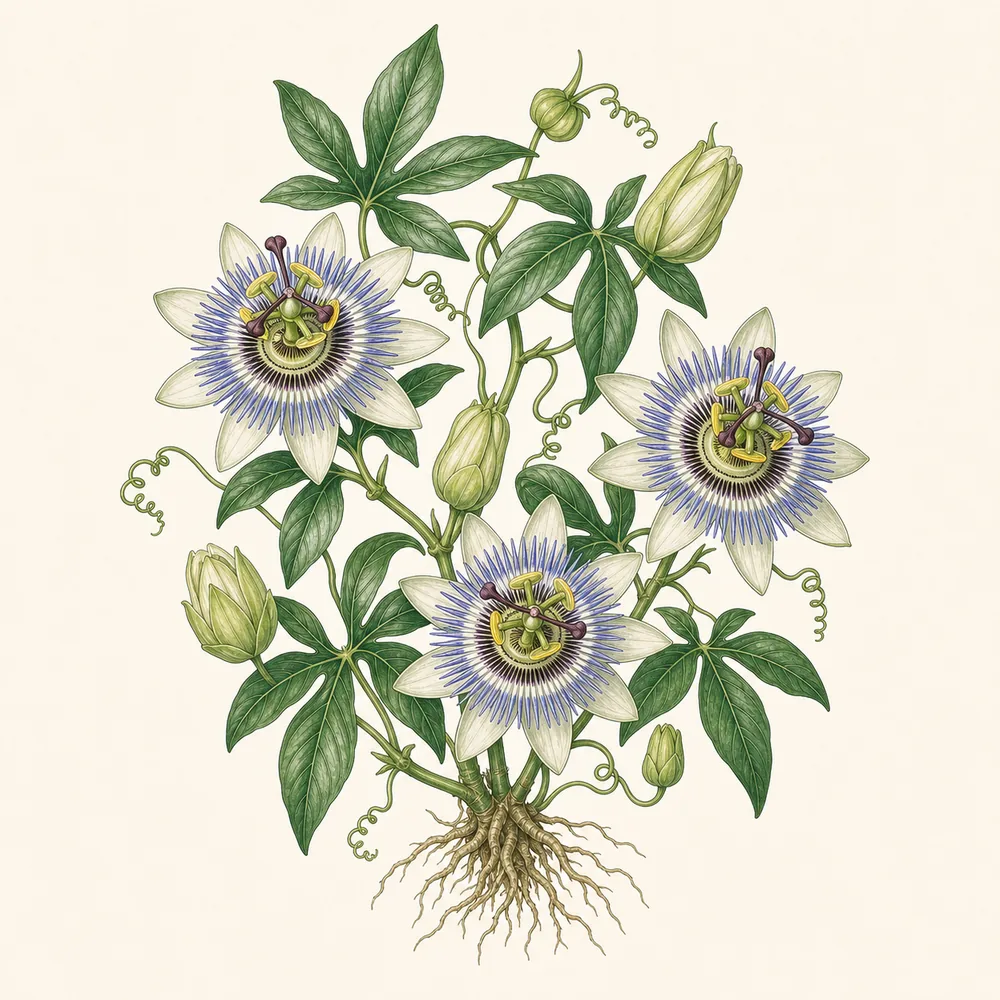
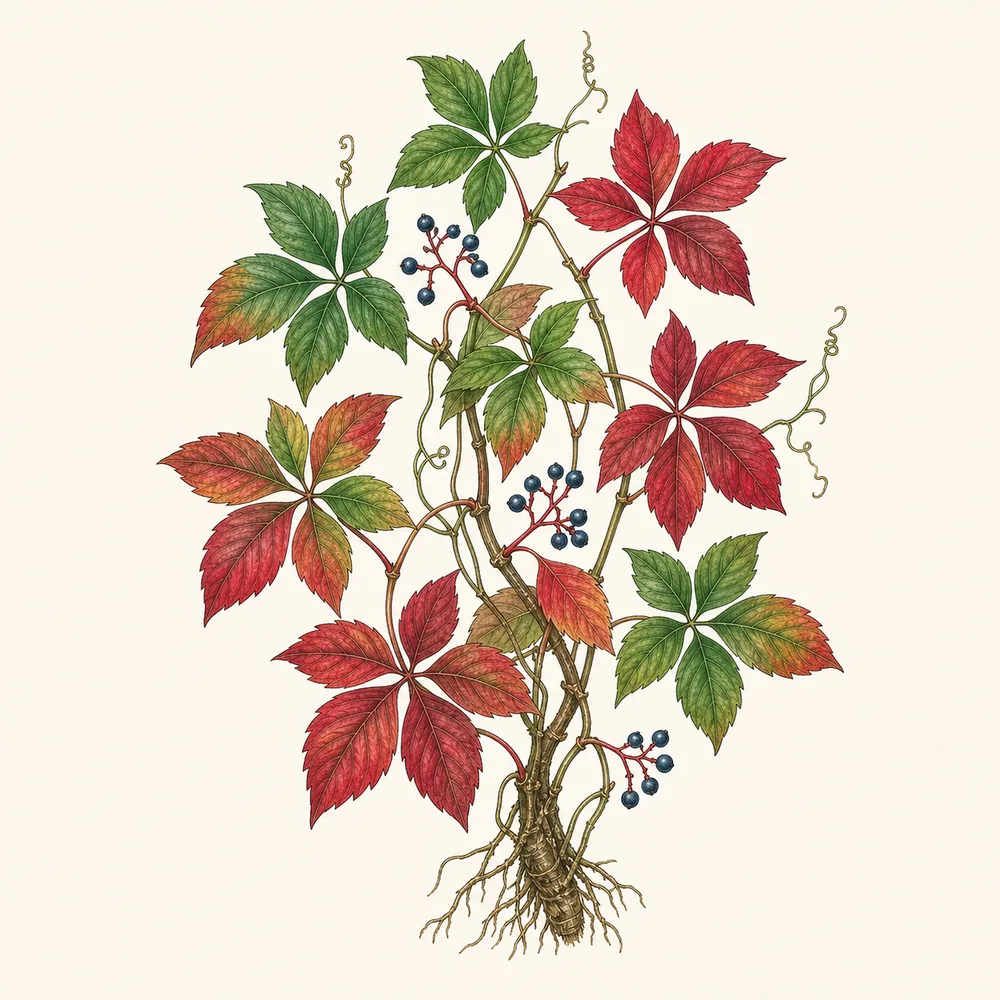
If you like this, try
Other plants with a similar temperament.
How we checked this
Care cross-checked against the RHS, which lists Campsis (trumpet vine) among potentially harmful plants — irritant sap and foliage. If our page and these sources ever disagree, believe them — and tell us.
Sources: RHS · ASPCA — toxic & non-toxic plants
Last reviewed · August 2026