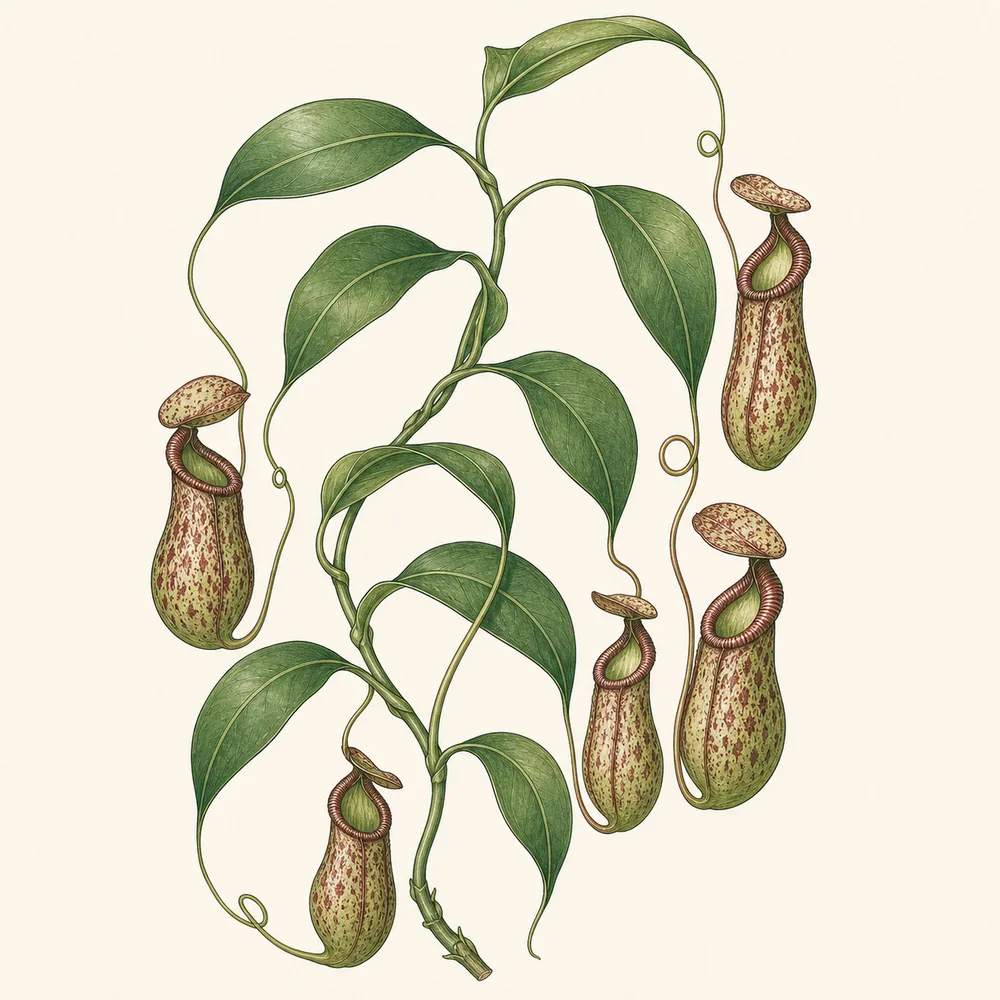
Tropical Pitcher Plant
The carnivore that hangs its traps in the air — dangling pitchers, often flushed red, on a scrambling tropical vine. Unlike the bog carnivores it comes from warm jungle, so it never goes dormant: the knack is steady warmth, good humidity and rainwater, all year round.
Not listed by ASPCA
The ASPCA doesn't list the tropical pitcher plant (Nepenthes) specifically, so we don't stamp it safe. No toxic principle is recorded for it and close relatives are listed non-toxic, but with no database entry for this species we flag the gap honestly rather than assume.
Care at a glance
Everything that matters, in six lines. The detail is further down.
Light
Bright light with some gentle sun, but sheltered from scorching midday glare. Good light is what makes it produce plenty of well-coloured pitchers; too little and it grows leaves but few traps.
Water
Only rainwater, distilled or RO water — never tap. Unlike the bog carnivores it dislikes standing in deep water, so water from the top to keep the mix evenly damp, or use only a very shallow tray.
Temperature
Tropical, so it never rests — keep it warm all year, ideally around 18–27 °C and above about 13–15 °C at night. Cold windowsills and winter draughts are its main enemy.
Humidity
The one bog carnivores shrug off, this one needs. High humidity is what encourages pitchers to form; a bathroom, kitchen or humid grow-space suits it far better than a dry living room.
Feeding
Never put fertiliser in the mix; it gets its nutrients from insects caught in the pitchers. If yours never catches anything indoors, an occasional insect dropped into a pitcher is plenty — don't overdo it.
Soil
A loose, airy, nutrient-poor mix — orchid bark, perlite and sphagnum moss. As a scrambling epiphyte it wants more air around its roots than a boggy compost, and never ordinary potting soil.
What to do, and when
Growth picks up with the lengthening days. Resume more regular watering with rainwater, keep the warmth and humidity up, and repot now if it's outgrown its pot.
Peak growing season. Warmth, bright indirect light and humidity together give the best flush of pitchers — keep the mix evenly moist and enjoy the traps.
It keeps growing, but slows as light and warmth drop. Ease off watering a little and, crucially, keep it away from cooling windows and draughts.
No dormancy — it just needs protecting from the cold. Keep it warm, above about 13–15 °C, out of draughts, and water a little less as growth slows. Central-heating dryness is the risk now, so watch the humidity.
Tropical, so no winter rest
This is the big difference between a Nepenthes and the flytraps and Sarracenia it's often sold alongside. Those come from cold-winter bogs and need a dormancy; the tropical pitcher plant comes from warm, humid jungle and keeps growing all year. Give it a cold winter rest by mistake and you'll chill it to death.
So treat it as a warm houseplant, not a bog plant. Steady warmth above the low teens °C, good light and humidity year-round is the recipe — the opposite of the deliberate cold rest its bog cousins demand.
Humidity makes the pitchers
A Nepenthes will grow perfectly good leaves in a dry room and then frustrate you by making no pitchers at all. Those dangling traps form far more readily in humid air — a dry living room is the usual reason a healthy-looking plant stays trapless.
Raise the humidity around it: a bright bathroom or kitchen, a humid grow-space, or a pebble tray and grouping it with other plants all help. Get the moisture in the air right and the pitchers follow.
Water it like a jungle plant, not a bog
It still needs rainwater, distilled or RO — the mineral rule applies to every carnivore. But unlike a Sarracenia sitting in a deep tray, a Nepenthes dislikes waterlogged roots and prefers its airy mix kept evenly damp.
Water from the top so the whole mix moistens and drains, or stand it in only a very shallow tray. Let the surface just begin to dry between waterings rather than keeping it permanently flooded.
Common problems
No pitchers forming
Usually humidity too low, or not enough light. Raise the humidity around it and move it somewhere brighter, and the traps should return.
Pitchers browning and dying off
Some ageing is normal, but widespread browning points to dry air, tap water or cold. Check humidity, switch to rainwater, and keep it warm.
Sudden leaf drop or blackening
Cold shock — a chilly windowsill or draught. Move it somewhere reliably warm and away from cold glass.
Weak, floppy, leggy growth
Too little light. Give it brighter, indirect light so the stems stay sturdy and the plant produces pitchers.
Everything a tropical pitcher plant needs
Warmth, humidity, rainwater and an airy mix — all year round.
We take no commission on anything in the "save your money" tier — if we don't think you should buy it, we don't link it. How our recommendations work
If you like this, try
Other plants with a similar temperament.
How we checked this
Care cross-checked against the RHS. The ASPCA does not list the tropical pitcher plant (Nepenthes), so its pet-safety is unconfirmed and we have not stamped it safe. If our page and these sources ever disagree, believe them — and tell us.
Sources: RHS · ASPCA — toxic & non-toxic plants
Last reviewed · July 2026