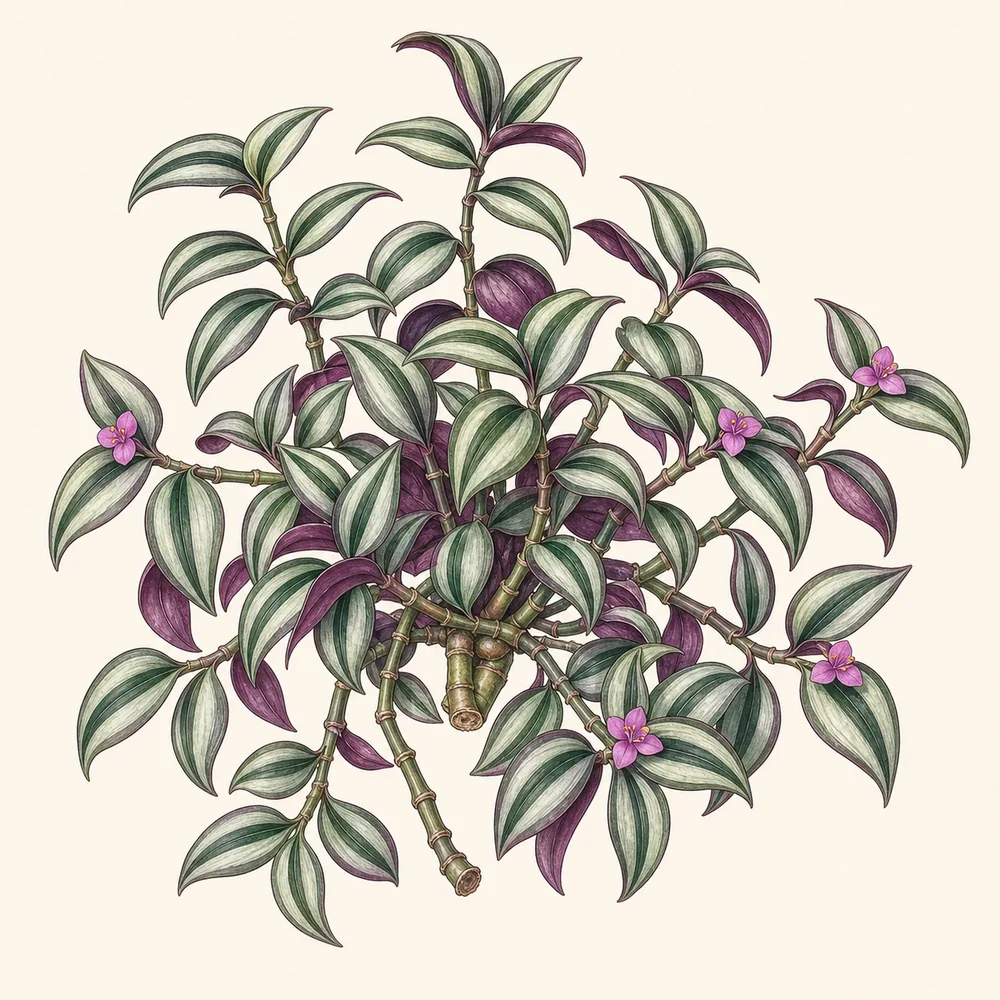
Tradescantia
A fast, forgiving trailer with shimmering purple-and-silver striped leaves. It roots from almost any cutting and grows about as easily as a houseplant can.
Mildly toxic to cats & dogs
Tradescantia (the inch plant) is listed as toxic to cats and dogs on the ASPCA database. Its sap can cause skin irritation and dermatitis, and chewing the leaves may cause mild mouth and stomach upset. Unpleasant rather than dangerous, but keep the trailing stems away from pets that chew.
Care at a glance
Everything that matters, in six lines. The detail is further down.
Light
Good light keeps the purple-and-silver colours vivid. In shade it reverts to plain green and grows leggy.
Water
Water when the top centimetre dries. Forgiving either way, but limp leaves mean it's thirsty.
Temperature
Ordinary room warmth; keep it off cold glass in winter.
Humidity
Fine in normal rooms — no fuss required.
Feeding
A balanced feed monthly spring to summer keeps the colours strong.
Soil
Any decent houseplant compost. Nothing special needed.
What to do, and when
Growth takes off. Pinch the tips to keep it bushy and pot up any cuttings.
Fast growth — water and feed regularly and give it bright light for the best colour.
Ease back on water and feed as growth slows.
Slower growth. Water less and keep it bright; take cuttings if the plant is getting straggly.
Pinch it, and start again often
Tradescantia grows fast and goes bare at the base with age — the trick is to pinch the growing tips regularly to force bushy new growth, and to start fresh plants from cuttings when the old one gets straggly.
Cuttings could not be easier: snip a few centimetres, pop them in water or straight into compost, and they root within a week or two. Tucking cuttings back into the same pot keeps it looking full.
Colour comes from light
The vivid stripes are a light response. In a bright spot the leaves glow purple and silver; in shade they fade toward plain green and the plant stretches.
It's happiest just out of direct midday sun — enough light for colour, not so much that the leaves bleach.
Common problems
Leggy, bare stems
Too little light and no pinching. Move it brighter and pinch the tips; refresh from cuttings.
Colours fading to green
Not enough light. Give it a brighter spot out of harsh sun.
Mushy stems
Overwatering. Let it dry a little more and improve drainage.
Crispy leaf tips
Very dry air or under-watering. Water a little more consistently.
Everything a tradescantia needs
Light for colour, a pinch for shape, and cuttings on tap.
We take no commission on anything in the "save your money" tier — if we don't think you should buy it, we don't link it. How our recommendations work
If you like this, try
Other plants with a similar temperament.
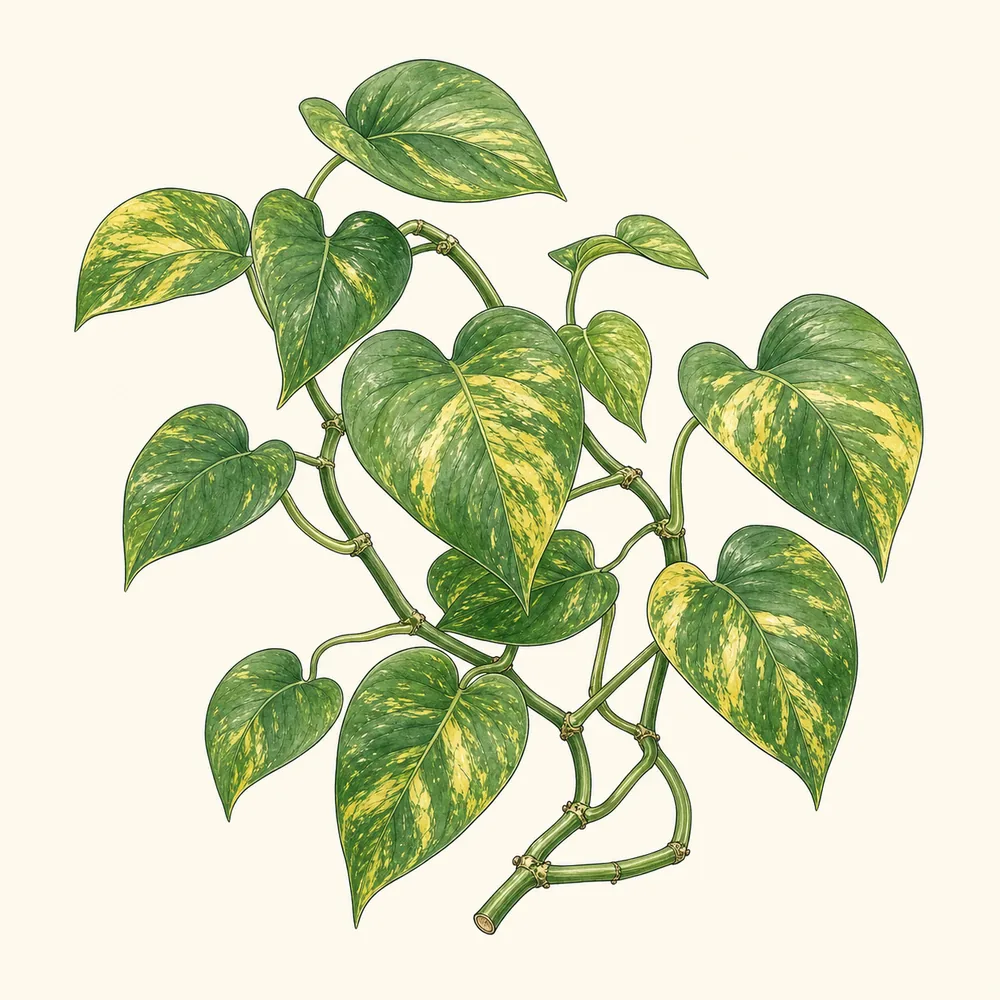
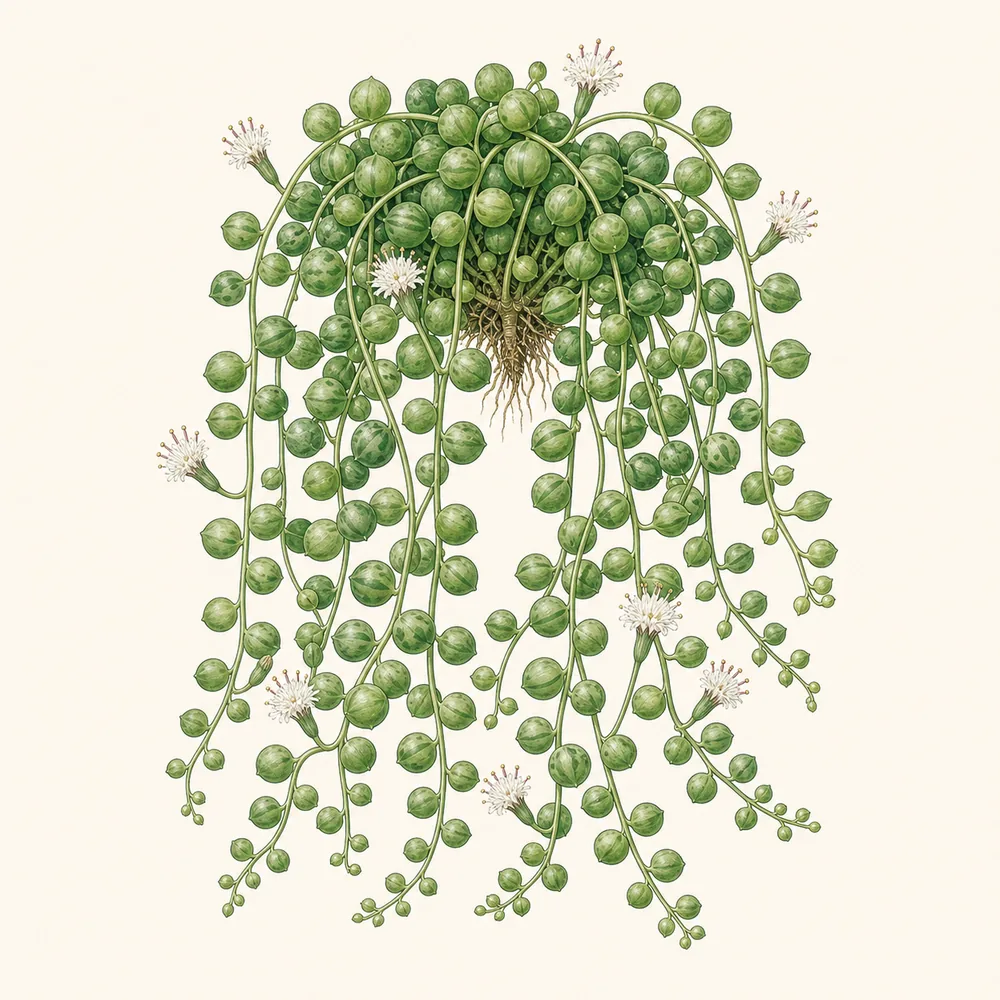
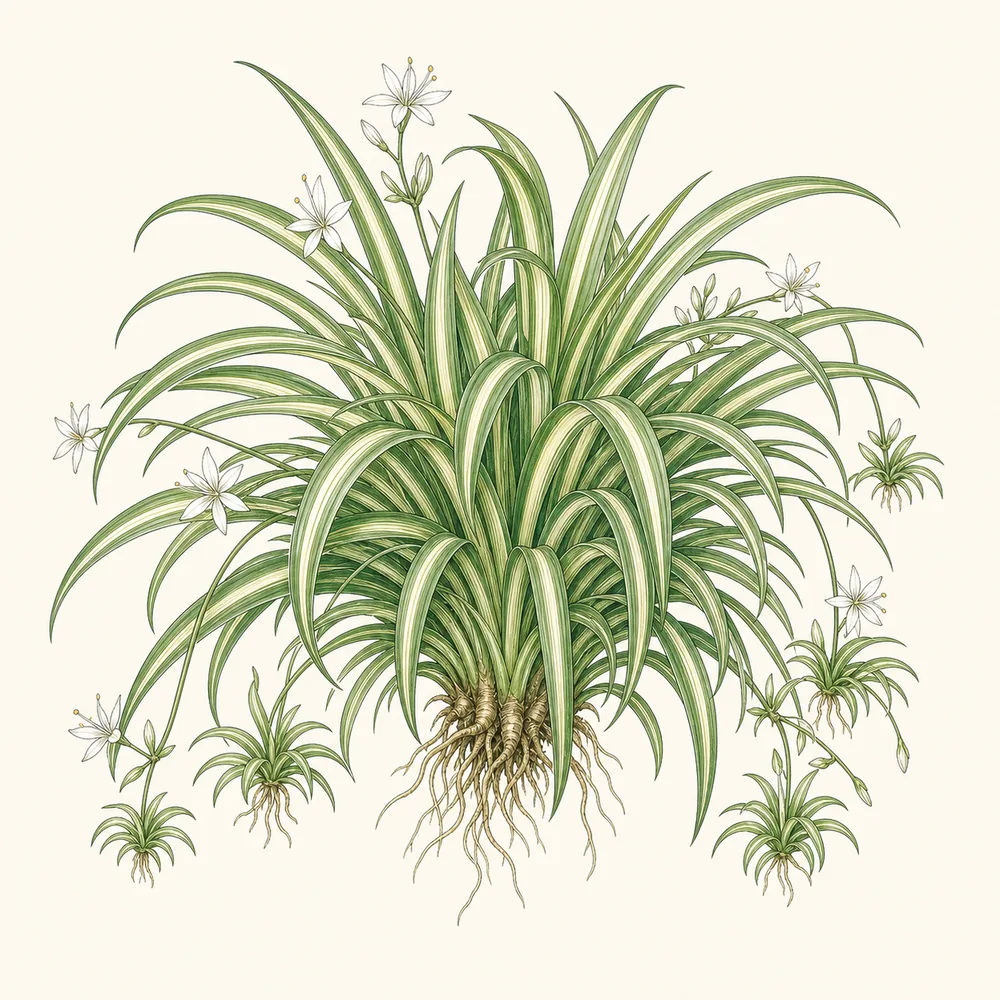
How we checked this
Care cross-checked against the RHS. Toxicity confirmed against the ASPCA database, which lists Tradescantia (inch plant) as toxic to cats and dogs, with sap that can irritate skin. If our page and these sources ever disagree, believe them — and tell us.
Sources: RHS · ASPCA — toxic & non-toxic plants
Last reviewed · July 2026