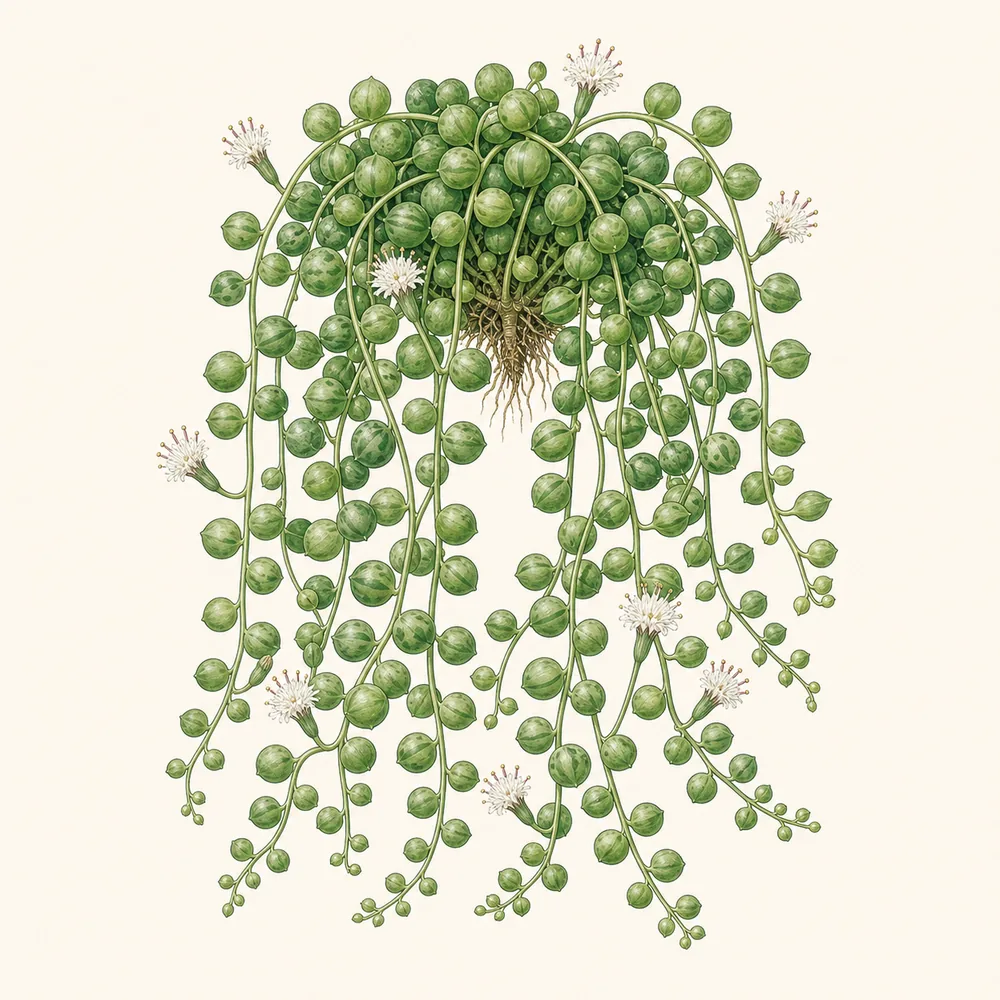
String of Pearls
A curtain of bead-like leaves that spill over the pot edge — a striking trailing succulent that wants bright light and a careful, sparing hand with water.
Toxic to cats & dogs if eaten
String of pearls (Curio, formerly Senecio, rowleyanus) is listed as toxic to cats and dogs on the ASPCA database. Chewing the beads can cause vomiting, drooling and lethargy, and the sap can irritate skin. The dangling strands are tempting to cats, so hang it out of reach.
Care at a glance
Everything that matters, in six lines. The detail is further down.
Light
The brightest spot you have, with a little gentle direct sun. Too dark and the beads space out and shrivel.
Water
Water thoroughly, then wait until the soil is completely dry. Shrivelled beads mean thirsty; mushy beads mean overwatered.
Temperature
Room warmth; not frost-hardy. Keep it above 10 °C.
Humidity
Loves dry air; humidity and damp are what cause rot.
Feeding
A weak succulent feed once or twice in summer, if at all.
Soil
Fast-draining cactus and succulent compost is essential.
What to do, and when
Growth resumes — start watering again as it dries, and pot up or re-lay strands to fill the pot.
Give it maximum bright light. Water only when bone dry; feed once, weakly.
Cut back on water as light fades and keep it in the brightest spot.
Near-dormant. Water monthly at most and keep it cool, bright and dry.
The soak-and-dry rhythm
String of pearls is a succulent, and the fastest way to lose one is overwatering. The beads store water, so soak the pot, let it drain completely, and leave it alone until the soil is bone dry.
The beads themselves are your gauge: plump and firm means happy; shrivelled and soft-flat means thirsty; translucent and mushy means the roots are rotting from too much water.
Light, and making more
Good light keeps the beads round and closely spaced; in a dim spot the strands stretch and go sparse. A bright windowsill is ideal.
It's very easy to propagate — lay a strand on top of gritty compost, keep it barely moist, and the nodes root readily. Tucking cuttings back into the pot keeps it looking full.
Common problems
Shrivelled, flat beads
Under-watered. Give it a proper soak and they should plump up.
Mushy, bursting beads
Overwatering and rot. Let it dry hard and repot into gritty mix.
Sparse, stretched strands
Too little light. Move it to your brightest window.
White cottony spots
Mealybugs. Dab with dilute alcohol and repeat weekly.
Everything a string of pearls needs
Bright light, grit, and the discipline not to overwater.
We take no commission on anything in the "save your money" tier — if we don't think you should buy it, we don't link it. How our recommendations work
If you like this, try
Other plants with a similar temperament.
How we checked this
Care cross-checked against the RHS. Toxicity confirmed against the ASPCA database, which lists string of pearls (Curio/Senecio rowleyanus) as toxic to cats and dogs. If our page and these sources ever disagree, believe them — and tell us.
Sources: RHS · ASPCA — toxic & non-toxic plants
Last reviewed · July 2026