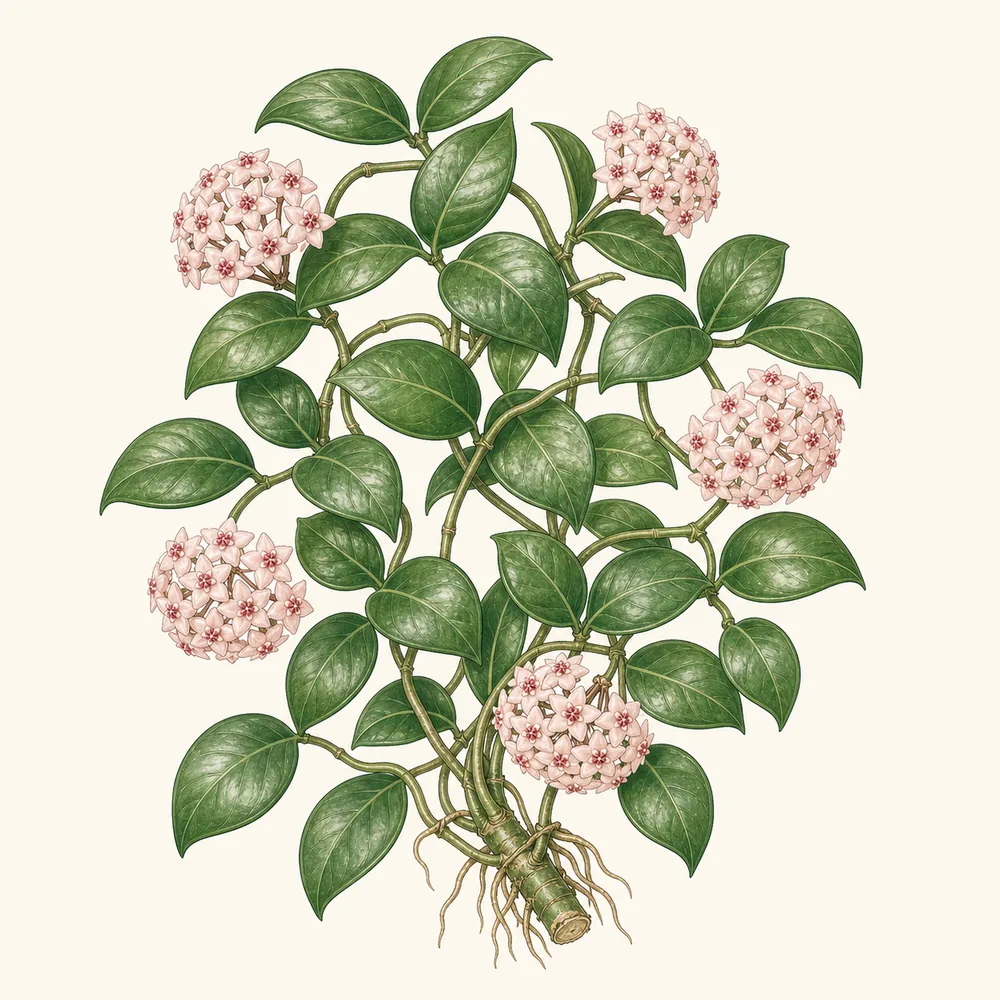
Hoya
A tough, long-lived trailer with thick, waxy leaves and, in a bright spot, clusters of scented, almost porcelain flowers. It likes to be a little pot-bound and a little neglected.
Safe around cats & dogs
Hoya carnosa (the wax plant) is listed as non-toxic to cats and dogs on the ASPCA database. It is one of the safer trailing houseplants to keep where pets can reach the vines.
Care at a glance
Everything that matters, in six lines. The detail is further down.
Light
A bright spot out of harsh midday sun. Good light — even an hour of gentle sun — is what triggers flowering.
Water
Water thoroughly, then wait until the top half of the pot is dry. The thick leaves store water, so it forgives forgetfulness.
Temperature
Ordinary room warmth. Keep it off cold glass in winter.
Humidity
Fine in normal rooms; a touch more humidity keeps it glossy.
Feeding
A balanced feed monthly spring to late summer; a high-potash feed encourages blooms.
Soil
An epiphyte — happiest in a chunky mix of orchid bark and perlite that never stays soggy.
What to do, and when
Growth resumes. Repot only if it is truly bursting the pot — hoyas flower better slightly cramped.
Peak growth and flowering. Feed regularly and give it as much bright, indirect light as you can.
Ease back on water and feeding as the light drops.
Near-rest. Water sparingly and keep it bright and above 10 °C.
Never cut off the flower spurs
Hoyas flower from short stubby stems called spurs, and each spur reblooms year after year from the same spot. The commonest mistake is snipping these off as "dead" — do that and you remove next year's flowers.
Blooms come with maturity, brightness and a little pot-binding. A young or shaded plant simply won't flower; move it brighter and be patient rather than repotting into a bigger pot.
Watering and roots
Treat it almost like a succulent: soak, drain, and let it dry well before the next drink. Yellowing, soft leaves mean the roots are sitting wet.
The airy bark mix matters — hoya roots want oxygen, and a dense, water-holding compost is the fastest route to rot.
Common problems
Won't flower
Usually too little light, or a young plant — and check you haven't removed the spurs. Move it brighter.
Soft, yellowing leaves
Overwatering. Let it dry out fully and make sure the mix drains freely.
Wrinkled leaves
Thirsty and drawing on its reserves. Give it a proper soak.
White cottony spots
Mealybugs, which love the leaf joints. Wipe off with dilute alcohol and repeat weekly.
Everything a hoya needs
Bright light, an airy mix, and the patience to leave the spurs alone.
We take no commission on anything in the "save your money" tier — if we don't think you should buy it, we don't link it. How our recommendations work
If you like this, try
Other plants with a similar temperament.
How we checked this
Care cross-checked against the RHS. Toxicity confirmed against the ASPCA database, which lists Hoya carnosa (wax plant) as non-toxic to cats and dogs. If our page and these sources ever disagree, believe them — and tell us.
Sources: RHS · ASPCA — toxic & non-toxic plants
Last reviewed · July 2026