Teasel
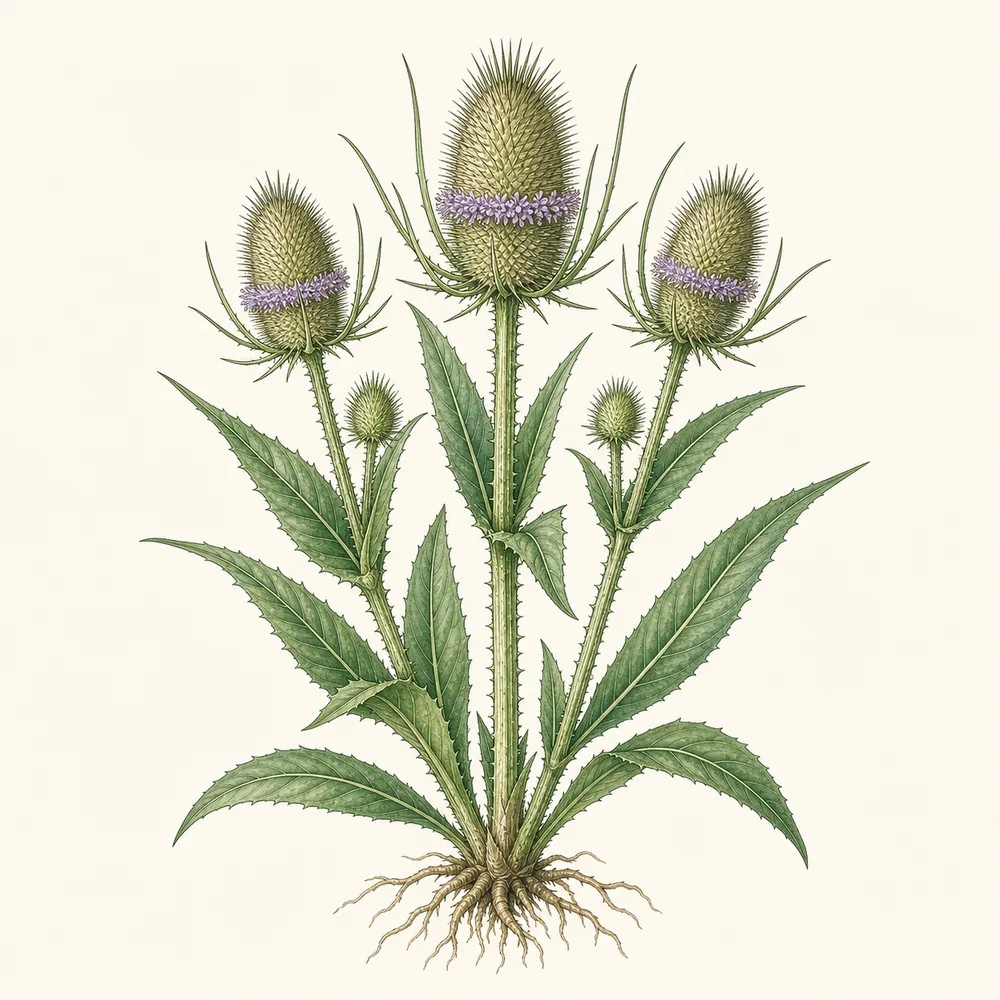
A statuesque native biennial with spiny, egg-shaped flower heads on tall, architectural stems. Bees work the mauve flowers in summer, and — the reason to grow it — the standing winter seedheads are a favourite feeding station for goldfinches. It's as much a piece of structure as a flower.
Not listed by ASPCA
The ASPCA doesn't list the teasel, so we don't stamp it safe. It's a UK native wildflower with no recorded serious toxicity to pets, but with no database entry we flag the gap honestly rather than guess.
Care at a glance
Everything that matters, in six lines. The detail is further down.
Light
Flowers and stands tallest in full sun, but tolerates a little shade. An open spot gives the sturdiest stems for winter structure.
Water
Tough and drought-tolerant once its long tap root is down. No watering needed except for young plants in a dry first spell.
Temperature
A hardy native biennial. It overwinters as a flat leaf rosette, flowers and seeds in its second summer, then dies.
Spacing
It makes a big plant. Thin self-sown seedlings or space plants 30–45 cm apart so each has room for its broad rosette.
Feeding
Don't feed it. Teasel thrives on rough, unimproved ground and needs no help; rich soil only pushes soft, floppy growth.
Soil
Grows on most soils including heavy clay and rough waste ground. It prefers ground that isn't bone-dry but copes with a lot.
What to do, and when
First-year plants sit as broad, prickly rosettes; second-year plants send up their tall flowering stems. Thin or transplant seedlings now.
The spiny heads flower in a curious band of mauve that circles up and down the cone from July, worked steadily by bees.
Flowers fade to hard brown seedheads packed with seed. Leave every stem standing — this is when the plant earns its keep for wildlife.
The dead stems and seedheads stand all winter, feeding goldfinches and giving strong garden structure. Cut down only in late winter once picked clean.
A biennial — plan for two years
Teasel is a biennial, and understanding that is the whole game. In its first year it makes only a flat rosette of prickly leaves; in its second year it bolts up into the tall flowering stems, sets seed, and then dies. There's no flower in year one, so don't expect one.
The trick is to keep it self-seeding so you always have both stages present — some plants flowering, others building up as rosettes for next year. Sow two years running to get it started and it will then look after itself, popping up wherever a seed has fallen on bare ground.
Sow in autumn onto bare, rough ground
Sow fresh seed in autumn onto bare, firmed soil and let it be — teasel germinates readily and asks for nothing special. Skip the rich compost; it's a plant of rough, unimproved ground and does perfectly well, often better, on poor soil where it makes sturdier stems.
It has a long tap root and resents being moved once established, so either sow where it's to grow or transplant seedlings while they're still small. After the first sowing, self-sown seedlings appear freely — thin them to give each plant room, and pull any that stray where you don't want them.
Leave the seedheads standing for the goldfinches
This is the reason to grow teasel. Once the flowers fade, the heads harden into cones packed with seed, and through autumn and winter they become a magnet for goldfinches, which cling to the stems and prise the seed out with their fine beaks. Watching a charm of goldfinches work a stand of teasel is one of the small joys of a winter garden.
So resist any urge to tidy. Leave every stem standing through the winter — they give strong architectural structure while they feed the birds — and only cut them down in late winter once they've been picked clean. Leaving a few to seed keeps the colony going for next year.
Common problems
No flowers in the first year
Not a fault — teasel is biennial and only flowers in its second year. Be patient and let it self-seed so you always have plants at both stages.
Seeds itself everywhere
It self-sows freely and can become a nuisance. Cut a few heads off before the seed ripens to limit it, and pull unwanted seedlings while small.
Floppy, weak stems
Usually too much shade or too rich a soil. Grow it in full sun on lean, unimproved ground for strong, self-supporting stems.
Resents transplanting
The long tap root dislikes disturbance. Sow where it's to grow, or move seedlings only while they're very small and still shallow-rooted.
Everything a teasel stand needs
Bare rough ground, full sun, and the discipline to leave the seedheads standing.
We take no commission on anything in the "save your money" tier — if we don't think you should buy it, we don't link it. How our recommendations work
If you like this, try
Other plants with a similar temperament.
How we checked this
Care cross-checked against the RHS. The ASPCA does not list the teasel, so its pet-safety is unconfirmed and we have not stamped it safe. If our page and these sources ever disagree, believe them — and tell us.
Sources: RHS · ASPCA — toxic & non-toxic plants
Last reviewed · July 2026