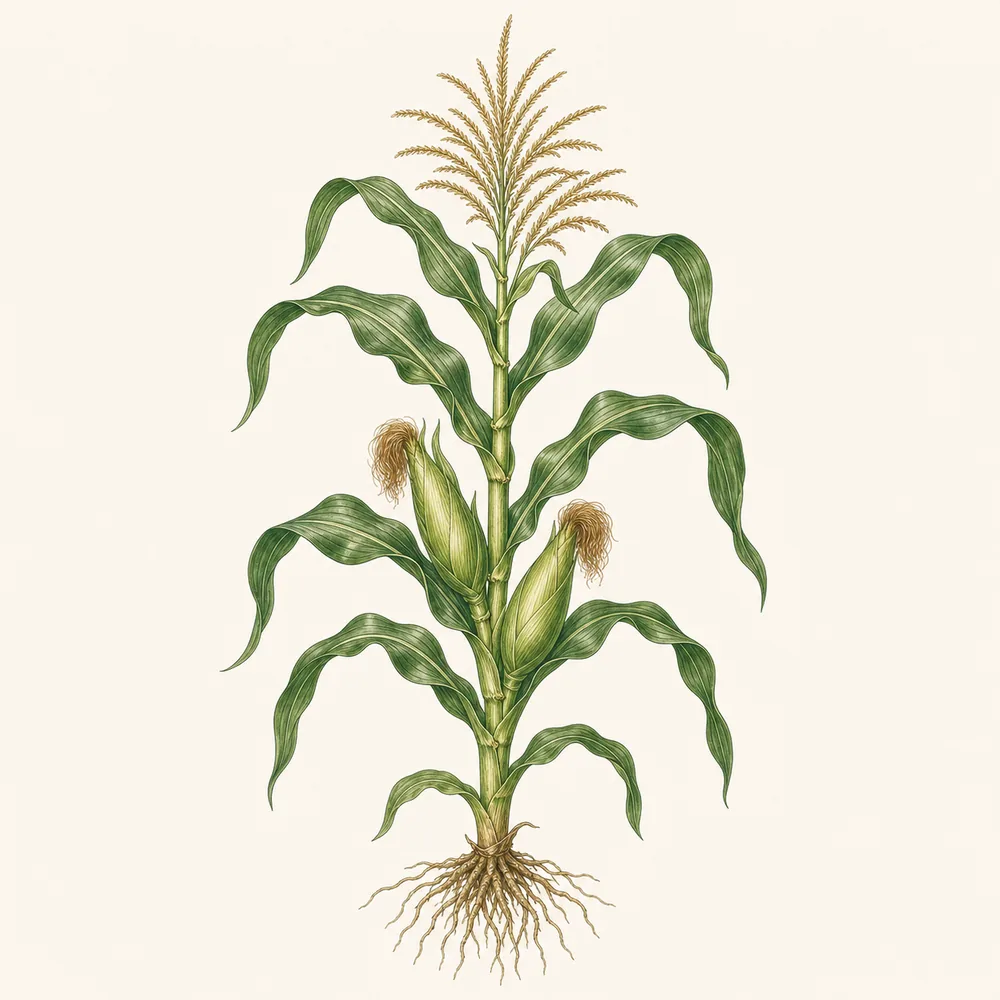
Sweetcorn
Home-grown sweetcorn eaten minutes after picking is a different vegetable from the shop version — sweeter and juicier before the sugars turn to starch. It needs warmth, room, and planting in a block so it pollinates.
Not listed by ASPCA
The ASPCA doesn't list sweetcorn (maize), so we don't stamp it safe. The kernels are widely eaten, but cobs are a serious choking and gut-blockage risk for dogs — keep spent cobs out of reach.
Care at a glance
Everything that matters, in six lines. The detail is further down.
Light
Needs the warmest, sunniest spot you have; it's a heat-lover that won't ripen well in shade or cold.
Water
Water generously once flowering and as the cobs fill; dry roots at that stage give gappy, poorly filled ears.
Temperature
Sow warm indoors from April; plant out only from late May or June once all frost has passed and soil is warm.
Spacing
Plant in a grid block, not a long row, so the wind-blown pollen reaches every plant and fills the cobs.
Feeding
Grows well in ground enriched with compost; a general feed helps on poorer soil but avoid excess nitrogen.
Soil
A deep, fertile, well-drained soil that warms early gives the strongest, most productive plants.
What to do, and when
Sow seed indoors in pots from April in the warmth. Harden off and plant out in blocks from late May once frost has gone.
Plants grow fast and tassel over. Water well as cobs swell and earth up the base of tall stems for support.
Harvest through early autumn while the sun lasts, then clear the tall stalks to the compost heap once picked.
Nothing outdoors now. Order seed of a modern supersweet variety and plan a sheltered, sunny block for next year.
Plant in a block, not a row
Sweetcorn is wind-pollinated: the pollen falls from the tassels at the top onto the silks of the cobs below. Plant it in a square block — say four by four — rather than a single long row, so pollen drifts across every plant.
A row planted end to end pollinates badly, and poor pollination is the classic cause of cobs with only half the kernels filled. The block is the single most important trick with sweetcorn.
Warmth, not haste
Sweetcorn is a tender heat-lover with no frost tolerance at all. There's no gain in rushing it outside — cold, wet soil in spring simply checks or kills young plants.
Sow in pots indoors from April, harden the plants off well, and plant out from late May or into June once the soil is warm and frost is finished. In a poor summer, a warm sheltered spot makes all the difference to ripening.
Picking at the perfect moment
Timing the harvest matters more than almost anything. The silks at the top of each cob turn brown and dry when it's close; peel back a little and press a kernel with your nail — a milky juice means ripe, watery means too early, doughy means past it.
Pick and cook as soon as you can — the sugars start turning to starch the moment a cob is picked, which is exactly why shop corn never tastes as good. After picking, clear the spent cobs and stalks away; a discarded cob is a choking and gut-blockage hazard if a dog gets hold of it.
Common problems
Gappy, half-filled cobs
Poor pollination. Grow in a block rather than a row, and give the plants a gentle shake on dry days when tasselling.
Plants blown over
Tall stems catch the wind. Choose a sheltered spot and earth up the base of the stems to anchor the roots.
Cobs never ripen
Too little warmth or a late start. Give it the sunniest spot and don't plant out until the soil is properly warm.
Birds or mice at the cobs
They'll strip ripening ears. Net vulnerable cobs, and pick promptly once the silks brown rather than leaving them.
Everything a sweetcorn block needs
Warmth, a sunny block of space, and picking at the right moment.
We take no commission on anything in the "save your money" tier — if we don't think you should buy it, we don't link it. How our recommendations work
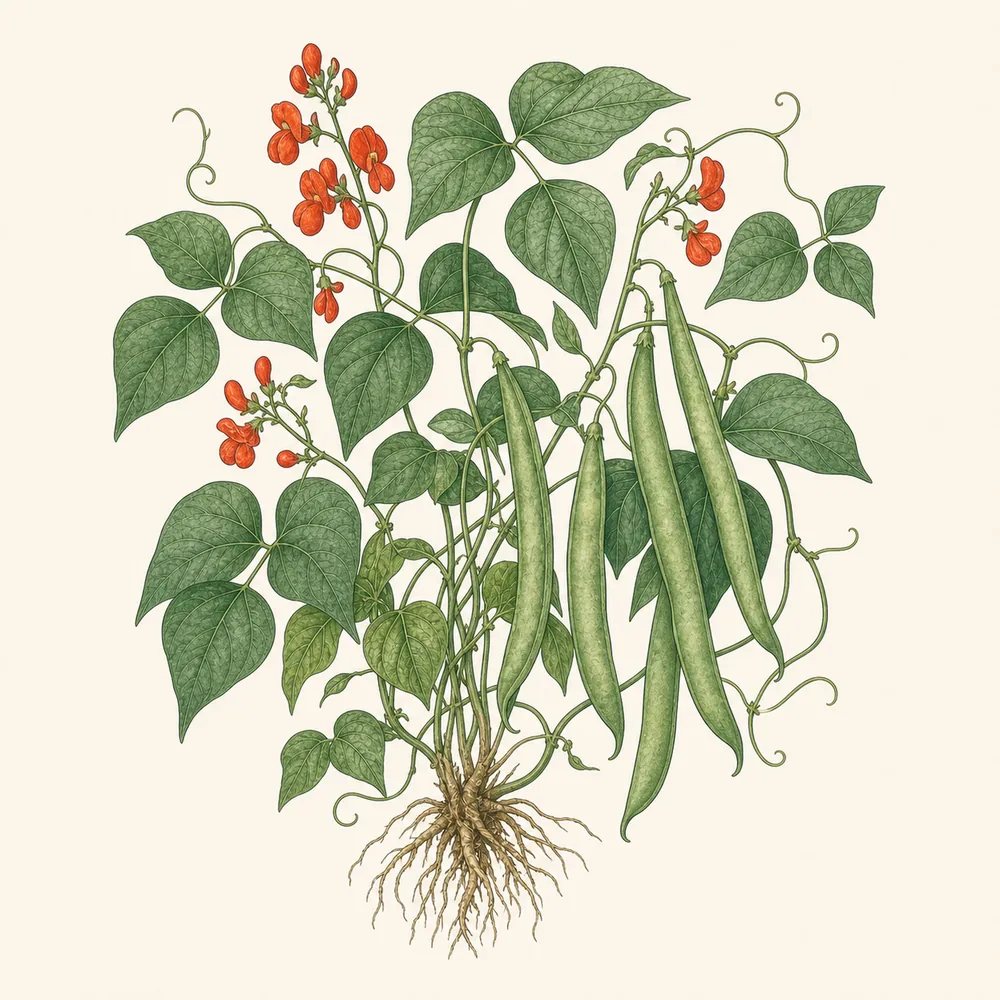
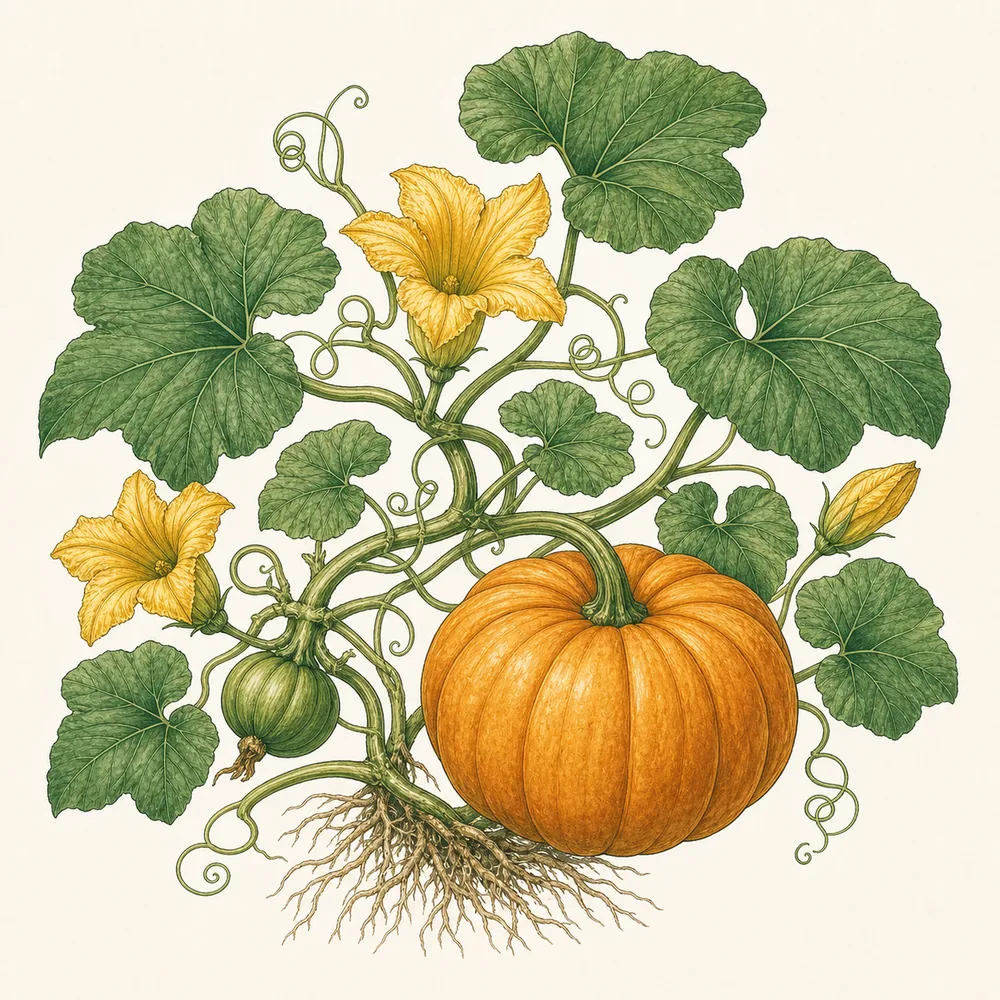
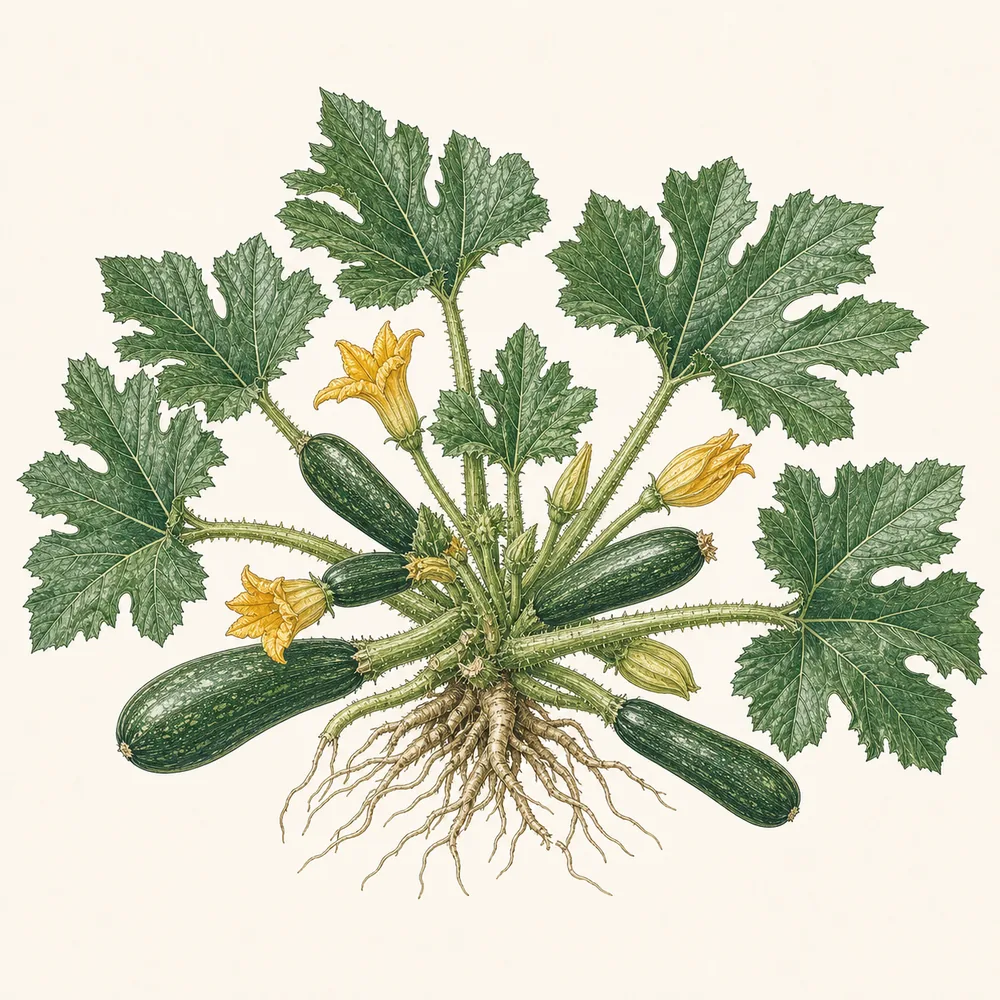
If you like this, try
Other plants with a similar temperament.
How we checked this
Care cross-checked against the RHS. The ASPCA does not list sweetcorn, so its pet-safety is unconfirmed and we have not stamped it safe. If our page and these sources ever disagree, believe them — and tell us.
Sources: RHS · ASPCA — toxic & non-toxic plants
Last reviewed · July 2026