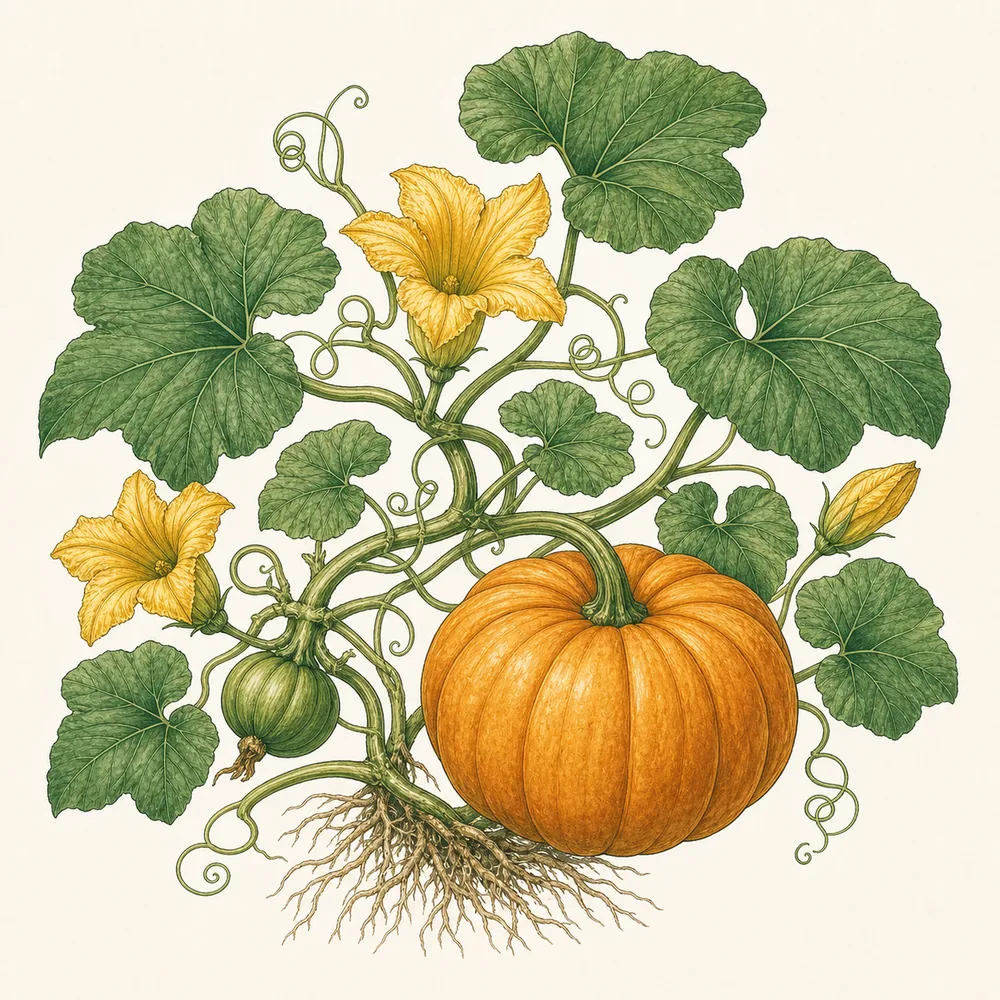
Pumpkin
Big, sprawling and hugely rewarding — give a pumpkin sun, rich soil and plenty of water and it will romp away. The main thing to plan for is space, because one plant can cover several square metres.
Not listed by ASPCA
The ASPCA doesn't list pumpkin, so we don't stamp it safe. Plain pumpkin flesh is commonly fed to pets, but with no database entry we flag the gap honestly rather than guess.
Care at a glance
Everything that matters, in six lines. The detail is further down.
Light
Wants an open, sunny site with room to sprawl; shade gives leafy plants and few, poorly ripened fruit.
Water
A thirsty crop — water deeply and often around the base, especially as the fruits are swelling.
Temperature
Sow warm indoors in April; plant out only from late May or June once frost is past and soil has warmed.
Spacing
Give each plant a lot of room, or train the vines round in a spiral to keep the sprawl in check.
Feeding
Plant on a compost-rich mound and feed with a high-potash tomato feed once the fruits start to form.
Soil
Loves deep, fertile soil with masses of well-rotted manure or compost dug in to hold moisture and feed.
What to do, and when
Sow seed on edge indoors in April. Harden off and plant out onto a rich mound from late May or early June.
Plants romp away. Water and feed heavily, and slip a tile or board under each swelling fruit to keep it dry.
Harvest before the first frost, cutting with a good stalk, then cure the fruit in the sun to harden the skin.
Cured pumpkins store for months in a cool, dry, frost-free room. Plan next year's patch and order seed.
Rich soil and a warm start
Pumpkins are hungry and thirsty plants that reward generosity. The traditional method is to plant each one on a mound stuffed with well-rotted manure or compost, which feeds the plant and holds the moisture it craves.
They're also frost-tender, so don't rush them out. Sow seed on edge in warm pots indoors in April, harden the young plants off, and plant out from late May or into June once the risk of frost has gone.
Getting fruit to set
Each plant carries separate male and female flowers — the females have a tiny embryo fruit behind the bloom. Fruit only forms when a pollinating insect (or you) moves pollen from male to female flowers.
In a cool or wet spell when few insects are about, hand-pollinate: pick a male flower, peel back the petals, and dab its pollen onto the centre of an open female flower in the morning. It's the reliable fix for a plant flowering but not fruiting.
Ripening and curing for storage
For big, well-coloured pumpkins, restrict each plant to two or three fruits and remove the rest, so its energy goes into those. Slip a tile, slate or board under each fruit to lift it off damp soil and stop it rotting.
Harvest before the first frost, cutting each with a good length of stalk as a handle. Then cure them for a week or two in the sun (or a warm windowsill) to harden the skin — cured fruit stores for months in a cool, dry room.
Common problems
Flowers but no fruit
Poor pollination in cool weather. Hand-pollinate female flowers with a male flower on a dry morning.
Fruit rotting on the soil
Damp ground under swelling fruit. Raise each pumpkin onto a tile, slate or board to keep the skin dry.
Powdery mildew on leaves
White coating, common in late summer. Water at the roots not the leaves, and don't let plants go dry.
Lots of leaf, small fruit
Too much nitrogen or too many fruit per plant. Switch to a high-potash feed and thin to two or three fruits.
Everything a pumpkin patch needs
Rich soil, plenty of space and water, and a warm start.
We take no commission on anything in the "save your money" tier — if we don't think you should buy it, we don't link it. How our recommendations work
If you like this, try
Other plants with a similar temperament.
How we checked this
Care cross-checked against the RHS. The ASPCA does not list pumpkin, so its pet-safety is unconfirmed and we have not stamped it safe. If our page and these sources ever disagree, believe them — and tell us.
Sources: RHS · ASPCA — toxic & non-toxic plants
Last reviewed · July 2026