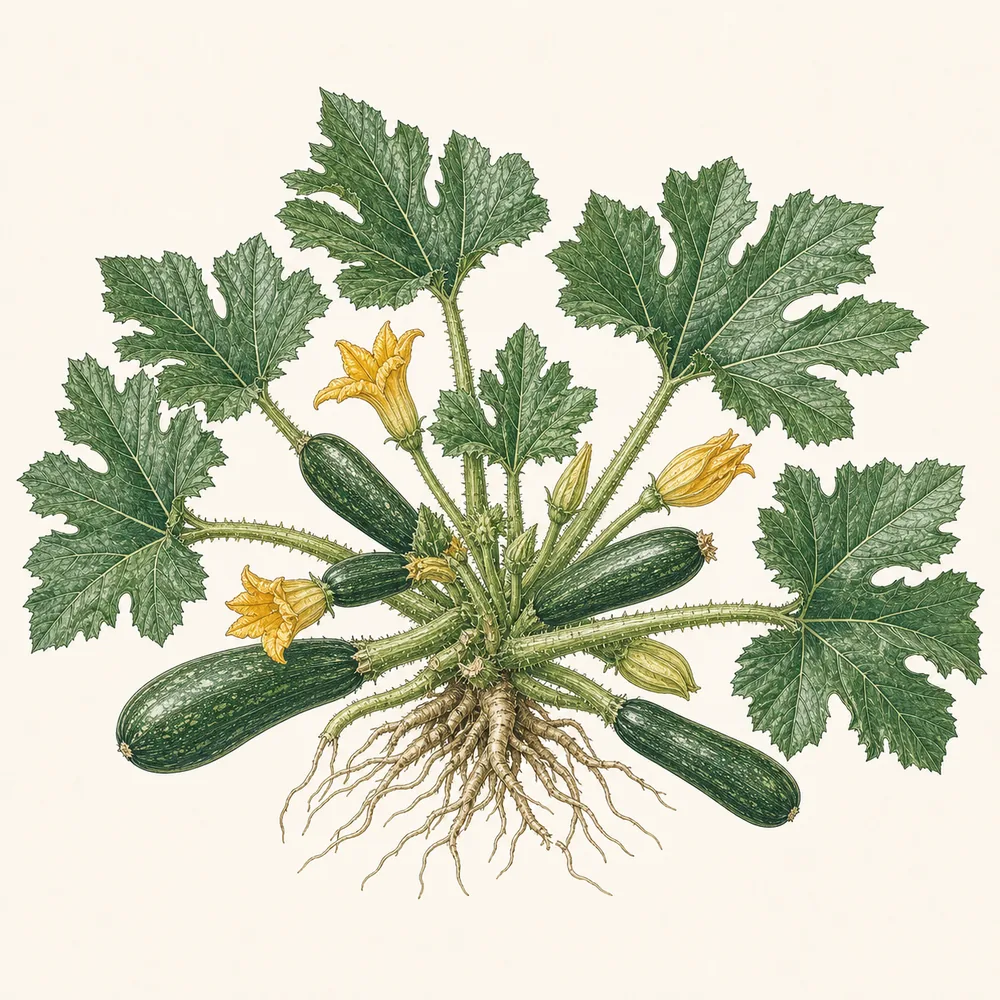
Courgette
One or two plants will bury you in glossy courgettes all summer — this is the crop that famously turns into marrows the moment you look away. Give it sun, rich soil and plenty of water, pick young and often, and it just keeps coming.
Not listed by ASPCA
The ASPCA doesn't list courgette (a summer squash) as toxic or non-toxic, so we don't stamp it safe. Squash flesh is commonly eaten with no known serious toxicity, but with no database entry we flag the gap honestly.
Care at a glance
Everything that matters, in six lines. The detail is further down.
Light
A warm, sheltered, sunny spot gives the strongest plants and the steadiest crop of fruit through summer.
Water
Courgettes are thirsty. Water generously and directly onto the soil, not the leaves, to keep fruit swelling and hold off mildew.
Temperature
Sow indoors from mid-April, but don't plant out until all frost has passed, usually late May or early June.
Spacing
These are big, sprawling plants. Give each one around 90 cm of room so air moves freely and leaves stay dry.
Feeding
Start a weekly high-potash tomato feed once the first fruits set to keep the plant cropping heavily.
Soil
Dig in plenty of well-rotted manure or compost before planting; a fertile, moisture-holding soil is what feeds the heavy crop.
What to do, and when
Sow seed on its edge indoors from mid-April in small pots on a warm windowsill. Harden plants off and only plant out once the risk of frost has passed, usually late May into June.
Peak cropping. Water and feed generously, and pick fruit young at 10–15 cm every couple of days — the more you pick, the more you get.
Plants keep going until the first frost blackens them. Take a final pick of any fruit, and leave one to swell into a marrow if you like.
Nothing to grow outdoors now. Clear away the frosted plants to the compost heap and order fresh seed for next year.
Pick young, pick often
The single biggest mistake with courgettes is not picking enough. A fruit left on the plant swells into a watery marrow and, worse, signals the plant to stop producing new ones. Two or three plants picked regularly will feed a family all summer.
Harvest when fruits are 10–15 cm long and the skin is glossy — a gentle press should leave no lasting dent. In warm weather that means checking every couple of days, because they bulk up astonishingly fast.
Water at the base, never overhead
Courgettes drink a lot, and a dry plant sheds its young fruit or produces bitter, stunted ones. Water generously and consistently, aiming the can at the soil around the stem rather than over the leaves.
Keeping the foliage dry also slows powdery mildew, the white dusty coating that inevitably appears on the leaves by late summer. Sinking a plant pot or length of pipe beside each plant and watering into that delivers moisture straight to the roots.
The flowers and pollination
Courgettes carry separate male and female flowers — the females have a tiny fruit behind the bloom, the males a plain stalk. Early in the season a plant may open only males, or set tiny fruit that then rots at the tip; that's just a temporary lack of pollination and usually sorts itself out.
The bright flowers are edible and something you'll never see in a shop — a genuine perk of growing your own. Pick the males, or gluts of tiny fruit-and-flower, and stuff or fry them.
Common problems
Fruit rots at the tip
Small fruit shrivelling from the flower end is poor pollination, common early on and in cold spells. It usually corrects itself as more flowers open and pollinators arrive.
Powdery mildew
A white dusty coating on the leaves in late summer. Water at the base, keep air moving, and remove the worst leaves — most plants crop on regardless.
Plants collapse or fruit stops
Usually drought stress. Courgettes need copious, steady water and a rich soil; a mulch around the base helps hold moisture in dry spells.
Bitter fruit
Occasionally an off plant produces bitter courgettes from natural compounds — spit them out and don't eat them. Never save seed from ornamental gourds grown nearby.
Everything a courgette plant needs
Rich soil, plenty of water, and the discipline to keep picking.
We take no commission on anything in the "save your money" tier — if we don't think you should buy it, we don't link it. How our recommendations work
If you like this, try
Other plants with a similar temperament.
How we checked this
Care cross-checked against the RHS. The ASPCA does not list courgette, so its pet-safety is unconfirmed and we have not stamped it safe. If our page and these sources ever disagree, believe them — and tell us.
Sources: RHS · ASPCA — toxic & non-toxic plants
Last reviewed · July 2026