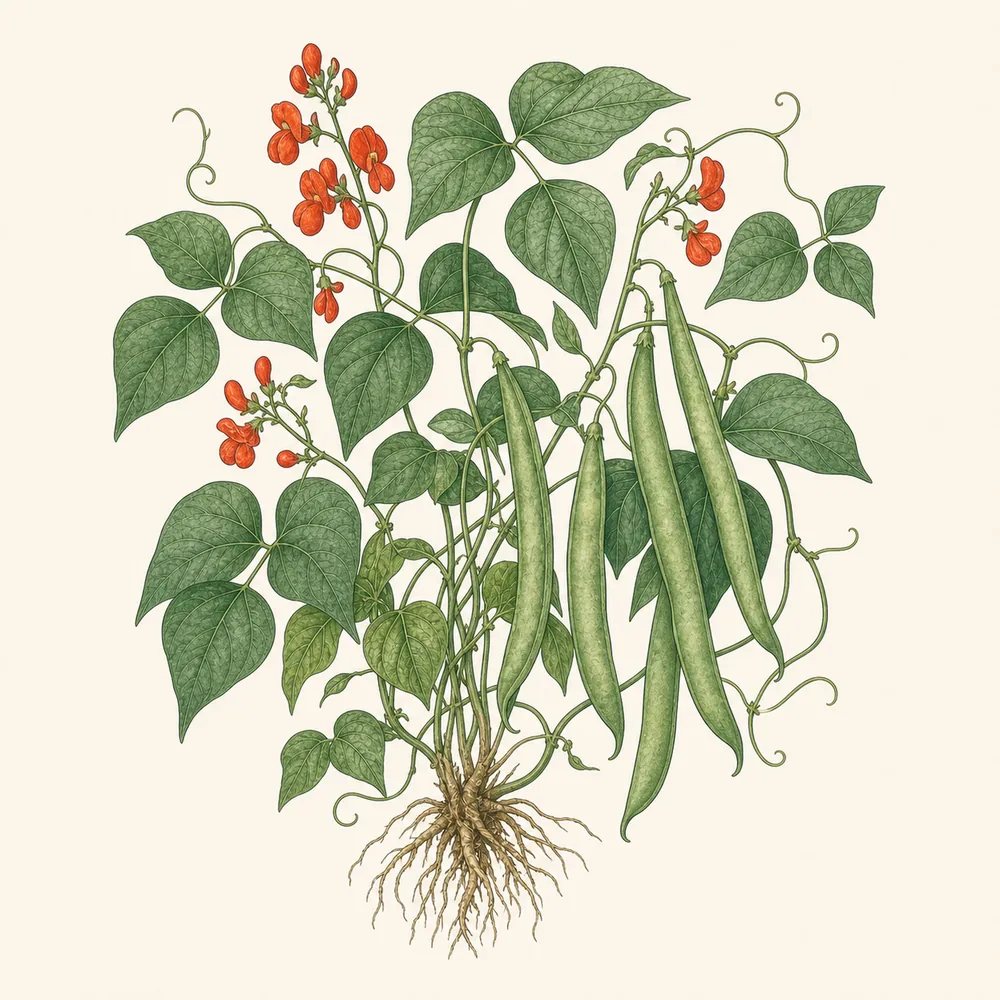
Runner Bean
The classic cottage-garden climber — scarlet flowers, then long tender pods from a few square feet of ground. Build a good support, keep the roots moist, and pick every few days and a wigwam of runners will crop from midsummer to the first frost.
Not listed by ASPCA
The ASPCA doesn't list the runner bean, so we don't stamp it safe. Note the raw pods and seeds contain lectins toxic to people until cooked — worth keeping raw beans away from curious pets and children too.
Care at a glance
Everything that matters, in six lines. The detail is further down.
Light
A warm, sheltered spot in full sun helps the flowers set pods; strong wind rocks tall plants and puts off pollinators.
Water
Keep the roots reliably moist, especially once flowering starts — dryness at the roots is the main reason flowers drop without setting.
Temperature
Sow from mid-May outdoors, or indoors in late April to plant out after the last frost has passed.
Spacing
Sow one bean at the foot of each cane, around 15 cm apart, on a sturdy double row or wigwam of 2.4 m supports.
Feeding
As a legume it makes much of its own nitrogen; a rich soil and steady water matter far more than feeding.
Soil
Dig a trench of well-rotted manure or compost over winter — that reservoir of moisture and food carries a heavy crop.
What to do, and when
Dig in plenty of compost and put up strong supports. Sow indoors in pots from late April, or wait and sow outdoors from mid-May once the soil has warmed and frost has passed.
Plants romp up the canes and flower from July. Pinch out the tips when they reach the top, water well, and start picking pods young from midsummer.
Keep picking regularly until the first frost cuts the plants down. Leave a few pods to dry on healthy plants if you want to save seed.
Clear the frosted haulm but leave the roots in to rot down and release their nitrogen. Dig a bean trench now and fill it with kitchen waste and compost.
Build the support first
Runner beans are vigorous climbers that grow to two metres or more and become extremely heavy and wind-catching in full leaf. The support has to go up before you sow, and it needs to be genuinely sturdy — a collapsed row of beans in an August gale is a miserable sight.
A double row of canes tied to a horizontal ridge, or a wigwam of five or six canes, both work well. Sow or plant one bean at the foot of each cane and the young plants will find and twine up the support on their own.
Water is everything at flowering
The commonest complaint — flowers that open beautifully then drop without forming pods — is almost always down to dry roots or hot, dry air. Keep the soil consistently moist from the moment flowering begins and mulch the base to lock that moisture in.
That winter-dug trench of compost pays off here: it holds water like a sponge through July and August. A gentle spray of water over the flowers on hot evenings can help too, though reliable soil moisture matters most.
Pick young and keep picking
Pick pods while they're young, slim and snap cleanly — around 15–20 cm, before the beans inside start to bulge and the pod turns stringy and tough. As with courgettes, regular picking is what keeps the plant flowering; leave old pods on and cropping stops.
A quick reminder on safety: runner beans, like all beans, must be cooked before eating. The raw pods and seeds contain lectins that upset the stomach, so they're a cook's crop, never a raw snack straight off the plant.
Common problems
Flowers drop without setting pods
Almost always dry roots or hot, dry weather. Water generously at flowering and mulch the base; cooler evenings usually bring the pods on.
Tough, stringy pods
Left on too long. Pick young while pods snap cleanly and the beans inside haven't yet swelled — and keep picking every few days.
Blackfly on the tips
Aphids cluster on the soft growing tips. Pinch out and squash the worst, or blast off with water; pinching the tops at the top of the canes helps.
Slugs on young plants
Emerging seedlings are vulnerable. Starting plants in pots and planting out sturdy young beans gets them past the riskiest stage.
Everything a row of runners needs
A strong support, a rich moist root run, and regular picking.
We take no commission on anything in the "save your money" tier — if we don't think you should buy it, we don't link it. How our recommendations work
If you like this, try
Other plants with a similar temperament.
How we checked this
Care cross-checked against the RHS. The ASPCA does not list the runner bean, so its pet-safety is unconfirmed and we have not stamped it safe. If our page and these sources ever disagree, believe them — and tell us.
Sources: RHS · ASPCA — toxic & non-toxic plants
Last reviewed · July 2026