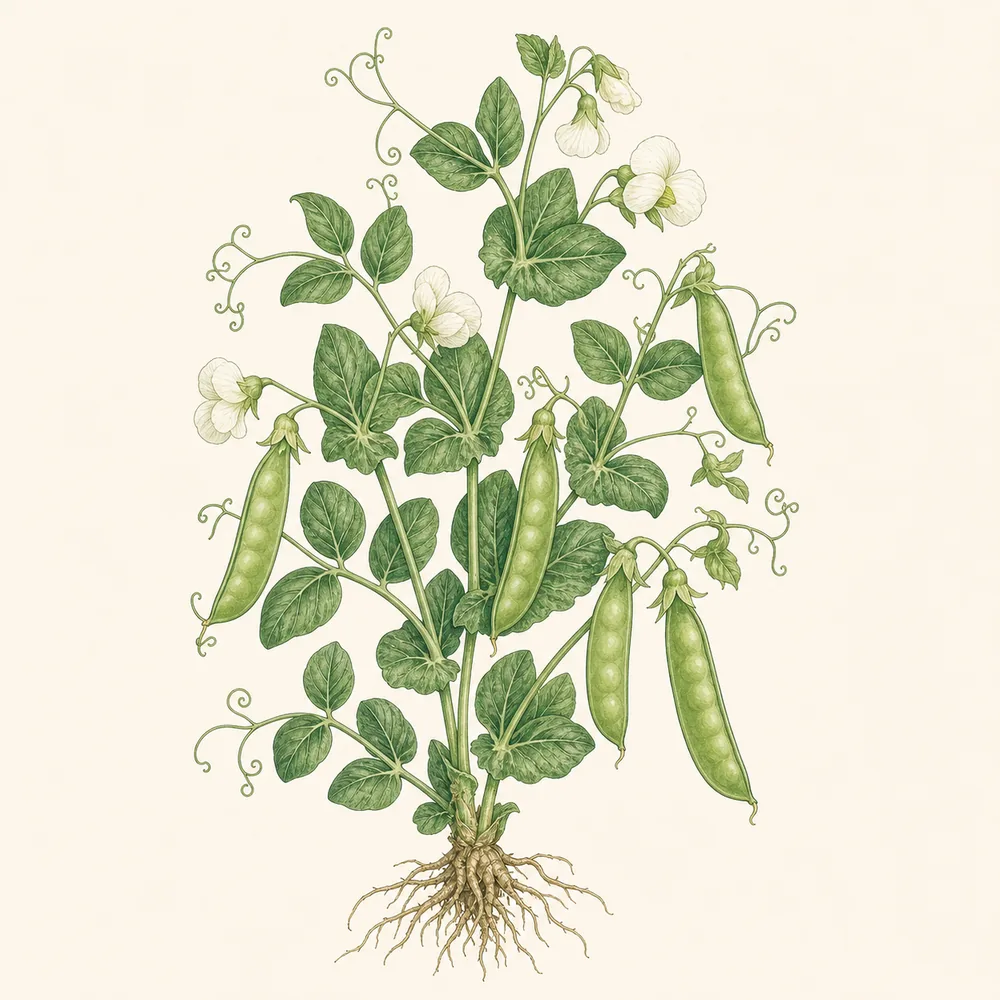
Pea
Sweet peas eaten straight from the pod in the garden are worlds apart from the frozen kind — the sugars turn to starch within hours of picking, so you can only really taste them fresh. Hardy, quick and undemanding, they're one of the most rewarding early crops.
Not listed by ASPCA
The ASPCA doesn't list the garden pea as toxic or non-toxic, so we don't stamp it safe. Peas are widely eaten with no known serious toxicity, but with no database entry we flag the gap rather than guess.
Care at a glance
Everything that matters, in six lines. The detail is further down.
Light
An open, sunny site is best, though peas tolerate a little light shade — useful for later sowings in the heat of summer.
Water
Peas need little water while young, but water generously once they flower and set pods to keep them plump and sweet.
Temperature
Sow from March once the soil is workable, in succession to early summer; hardy varieties can even be autumn-sown to overwinter.
Spacing
Sow in a flat drill in a double or wide row, spacing seeds a few centimetres apart so plants support each other.
Feeding
As a legume it fixes its own nitrogen; extra feed just gives leaf. A fertile, well-limed soil is all it asks.
Soil
A rich, moisture-holding soil that isn't too acidic suits them best; add garden compost before sowing.
What to do, and when
The main sowing season. Sow in succession from March into May, warming cold soil with a cloche for the earliest rows and putting supports in as the seedlings appear.
Pick pods regularly from June to keep plants cropping, and water well at flowering. Sow a last quick early variety in June for an autumn crop.
Clear spent plants but cut them off at the base, leaving the nitrogen-rich roots in the soil. In mild areas, sow a hardy round-seeded variety to overwinter.
Autumn-sown peas sit tight under cloches. Otherwise plan next year's rows and chit a few seeds indoors in guttering in late winter for an early start.
Support them early
Even so-called dwarf peas do far better with something to cling to — their tendrils are made to grip. Push in twiggy hazel sticks, netting or a mesh of canes and string while the plants are still small, because once they flop it's fiddly to lift them.
Sowing in a double or wide row helps the plants lean on each other and makes supporting them easier. Taller maincrop varieties will need supports of a metre or more.
Sow in succession, eat them fresh
Peas don't crop for long, so a single big sowing gives a glut then nothing. Sow a short row every few weeks from March into early summer for a steady supply rather than a wall of peas all at once.
The reason to grow your own comes down to sugar: a pea's sweetness starts converting to starch the moment it's picked. Shelled and eaten within the hour — or straight from the pod in the garden — they taste nothing like anything you can buy.
Mangetout and sugarsnap
Not all peas are shelled. Mangetout and sugarsnap types are eaten pod and all, picked young and flat (mangetout) or once the peas have swelled but the pod is still crisp and sweet (sugarsnap). They give more food from the same row because nothing's thrown away.
Pea shoots are edible too — the tender growing tips make a fine salad leaf, and pinching them can encourage bushier plants. It's a genuinely versatile crop from a single packet of seed.
Common problems
Mice eat the seed
Sown seed vanishing before it germinates is often mice. Start peas in lengths of guttering indoors and slide the whole row out to plant, past the risky stage.
Powdery mildew
A white coating on leaves, worst on late sowings in dry summers. Water at the base, keep plants spaced, and grow resistant varieties for a later crop.
Pea moth maggots in the pods
Tiny caterpillars inside the pods come from moths laying at flowering. Sowing very early or late to dodge the flight period, or covering with fine mesh, helps most.
Pods stop forming
Old pods left on the plant halt cropping, and dryness at flowering causes poor set. Pick every few days and water well once flowers appear.
Everything a row of peas needs
Something to climb, succession sowings, and a bit of protection from mice.
We take no commission on anything in the "save your money" tier — if we don't think you should buy it, we don't link it. How our recommendations work
If you like this, try
Other plants with a similar temperament.
How we checked this
Care cross-checked against the RHS. The ASPCA does not list the garden pea, so its pet-safety is unconfirmed and we have not stamped it safe. If our page and these sources ever disagree, believe them — and tell us.
Sources: RHS · ASPCA — toxic & non-toxic plants
Last reviewed · July 2026