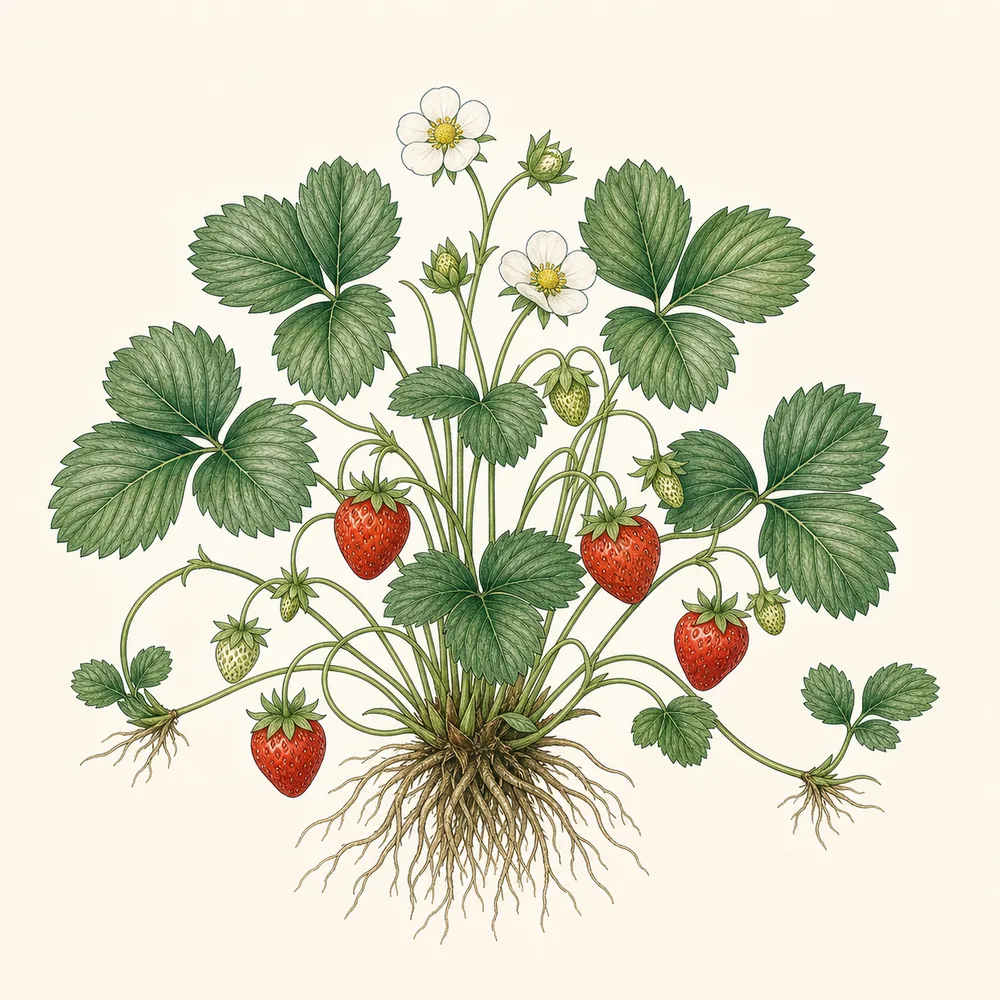
Strawberry
The gateway crop: flowers in May, fruit in June, and a taste shop-bought berries haven't had in decades. Strawberries are easy in ground, beds or a window box — the growing is simple; the racing of slugs and blackbirds to the ripe fruit is the sport.
Safe around cats & dogs
Strawberry plants (Fragaria) are listed as non-toxic to cats, dogs and horses on the ASPCA database, fruit and foliage alike. The only real caution is what you put around them — some slug pellets and netting are far more of a hazard to pets than the plant ever will be.
Care at a glance
Everything that matters, in six lines. The detail is further down.
Position
Sun is sweetness — six hours minimum. A sunny window box crops surprisingly well.
Water
Water at the base, not over the fruit, and keep it consistent — erratic watering splits berries.
Soil
Plant with the crown exactly at soil level: buried crowns rot, proud crowns dry out.
Feeding
High-potash every fortnight once flowers appear, for more and sweeter fruit.
Harvest
Pick fully red, with the green calyx, in the warm afternoon — flavour peaks then. Everbearers trickle on to autumn.
Hardiness
Plants sail through winter. It's the blossom that a late April frost can burn — fleece on cold nights.
What to do, and when
Weed the bed, feed lightly, and tuck straw under the plants as flowers set fruit. Fleece flowering plants on frosty nights.
Harvest daily in the June rush. Net against blackbirds before the first berry blushes, not after. Peg down runners for free plants.
Tidy old leaves, plant new beds (September roots beat spring planting), and pot up rooted runners.
Nothing to do outdoors. Order new varieties bare-root; replace beds every three or four years as vigour fades.
Free plants forever: runners
After fruiting, every strawberry plant throws out runners — long stems with baby plants along them. Peg the first plantlet on each runner into a pot of compost with a stone or a bent wire, sever it from the parent a month later, and you have next year's bed for nothing.
This is also the renewal system: strawberry plants crop hard for three or four years and then fade. A rolling bed — one row of new runners planted each autumn, the oldest row composted — keeps yields high forever without ever buying plants twice.
Winning the June race
Everything wants your strawberries the day they ripen. The defence stack, cheapest first: straw tucked under the trusses (lifts fruit off the soil, away from slugs and rot), picking daily so nothing sits ripe overnight, and netting against birds — taut and pegged, because loose netting entangles the blackbirds it's meant to deter, and hedgehogs below it.
Skip the fancy hardware. Terracotta strawberry towers look charming and dry out by lunchtime; a plain bed, bag or window box out-crops them all.
Common problems
Fruit eaten before you get there
Slugs at ground level, birds from above. Straw under the fruit, taut netting over, daily picking.
Grey fluffy mould on berries
Botrytis in damp, crowded beds. Straw mulch, wider spacing, water the soil not the plant, remove affected fruit fast.
Lots of leaf, little fruit
Nitrogen-rich feeding or an old bed. Tomato feed only, and renew from runners.
Small, seedy, misshapen berries
Poor pollination in a cold flowering spell, or frosted blossom (black centres). Fleece on cold nights helps.
Everything a strawberry bed needs
Cheap crop, cheap kit. The plants themselves multiply for free.
We take no commission on anything in the "save your money" tier — if we don't think you should buy it, we don't link it. How our recommendations work
If you like this, try
Other plants with a similar temperament.
From the Notebook
Seasonal notes and guides that mention the strawberry.
How we checked this
Care guidance cross-checked against the Royal Horticultural Society and NC State Extension. Pet-safety confirmed against the ASPCA database, which lists Fragaria as non-toxic to cats, dogs and horses. If our page and these sources ever disagree, believe them — and tell us.
Sources: RHS · NC State Extension · ASPCA
Last reviewed · July 2026