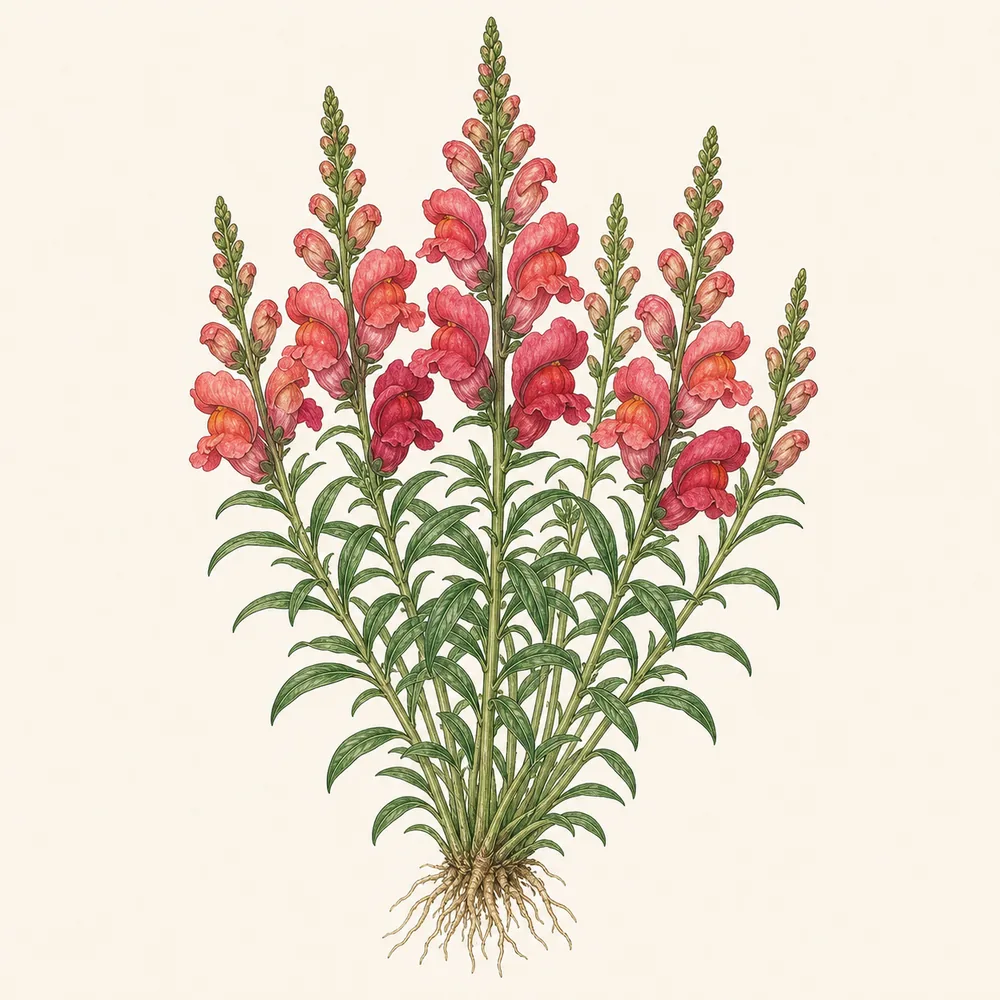
Snapdragon
A cottage-garden favourite grown for its tall spikes of pouched, snapping flowers that children love to pinch open. Pinch the young plants out early for a bushy, flower-packed clump, keep them deadheaded, and they'll bloom from early summer to autumn — just watch for rust, their one real weakness.
Not listed by ASPCA
The ASPCA doesn't list the snapdragon (Antirrhinum), so we don't stamp it safe. It's widely regarded as non-toxic, but has no database entry. With no database entry we flag the gap honestly rather than guess.
Care at a glance
Everything that matters, in six lines. The detail is further down.
Light
Give them full sun for the best, sturdiest spikes. They'll cope with a little light shade but flower less freely and grow softer.
Water
Keep the soil evenly moist while they establish and flower. Water at the base — wetting the foliage helps rust take hold.
Temperature
Young plants take a light frost but not a hard one. Harden off and plant out from late spring once the worst frosts have passed.
Pinching out
Nip out the growing tip at 10cm to make them branch. One pinch turns a single spike into a bushy plant covered in flower.
Feeding
Not greedy. A balanced liquid feed every few weeks in poorer soil keeps the spikes coming — don't overdo the nitrogen.
Soil
Fertile, well-drained soil, ideally neutral to slightly alkaline. Improve heavy ground with grit so the roots never sit wet.
What to do, and when
Sow indoors from February to March — the fine seed needs light, so barely cover it. Prick out, grow on cool, harden off and plant out from late spring.
The main flowering season. Pinch young plants early, then deadhead and cut for the vase to keep fresh spikes coming right through summer.
Flowering carries on into autumn until frost. Clear plants once they're done, and bin (don't compost) any rust-spotted foliage to reduce next year's spores.
Grown as annuals here, so nothing to tend outdoors. Order seed and choose rust-resistant varieties if the disease was a problem this year.
Pinch early for a bushy plant
Left alone, a young snapdragon often runs up as a single spike. The trick every cottage gardener uses is to pinch out the growing tip when the plant is about 10cm tall. That one small act forces it to branch, and instead of one flower stem you get a bushy plant with five or six.
It feels counter-intuitive to remove growth, but you'll have far more flower over the season. Do it early, while the plant is young and soft.
Keep them cutting and coming
Snapdragons are excellent cut flowers, and cutting them is good for the plant — it works just like deadheading, stopping seed set and pushing out new spikes. Cut for the vase, or snap off faded spikes at the base, and they'll keep flowering from early summer well into autumn.
Taller varieties may need a little support in an exposed spot; twiggy sticks or a few canes and string keep the spikes upright in wind and rain.
Watch for rust
Snapdragon rust is the one disease that regularly spoils them — brown, powdery pustules on the undersides of the leaves that spread fast in warm, damp weather and can weaken the whole plant.
Reduce the risk by watering at the base rather than over the leaves, spacing plants for good airflow, and not growing them in the same spot year after year. Choose rust-resistant varieties where you can, and bin badly affected foliage rather than composting it.
Common problems
Rust on the leaves
Brown pustules underneath the foliage, worst in warm damp spells. Water at the base, space plants well, grow resistant varieties, and bin infected leaves — don't compost them.
Tall, floppy spikes
Wind and rain flatten taller kinds, especially if soft-grown. Support with twiggy sticks or canes, and grow them in full sun on the lean side for sturdier stems.
Few flowers, single stem
Plants that weren't pinched stay thin. Nip out the growing tips of young plants at 10cm to make them branch, and keep deadheading through summer.
Damping off of seedlings
Seedlings collapse at the base in cold, wet, overcrowded conditions. Sow thinly in fresh compost, use clean trays, and don't overwater young plants.
Everything a snapdragon needs
Full sun, free-draining soil, and an early pinch for bushiness.
We take no commission on anything in the "save your money" tier — if we don't think you should buy it, we don't link it. How our recommendations work
If you like this, try
Other plants with a similar temperament.
How we checked this
Care cross-checked against the RHS. The ASPCA does not list the snapdragon (Antirrhinum), so its pet-safety is unconfirmed and we have not stamped it safe. If our page and these sources ever disagree, believe them — and tell us.
Sources: RHS · ASPCA — toxic & non-toxic plants
Last reviewed · August 2026