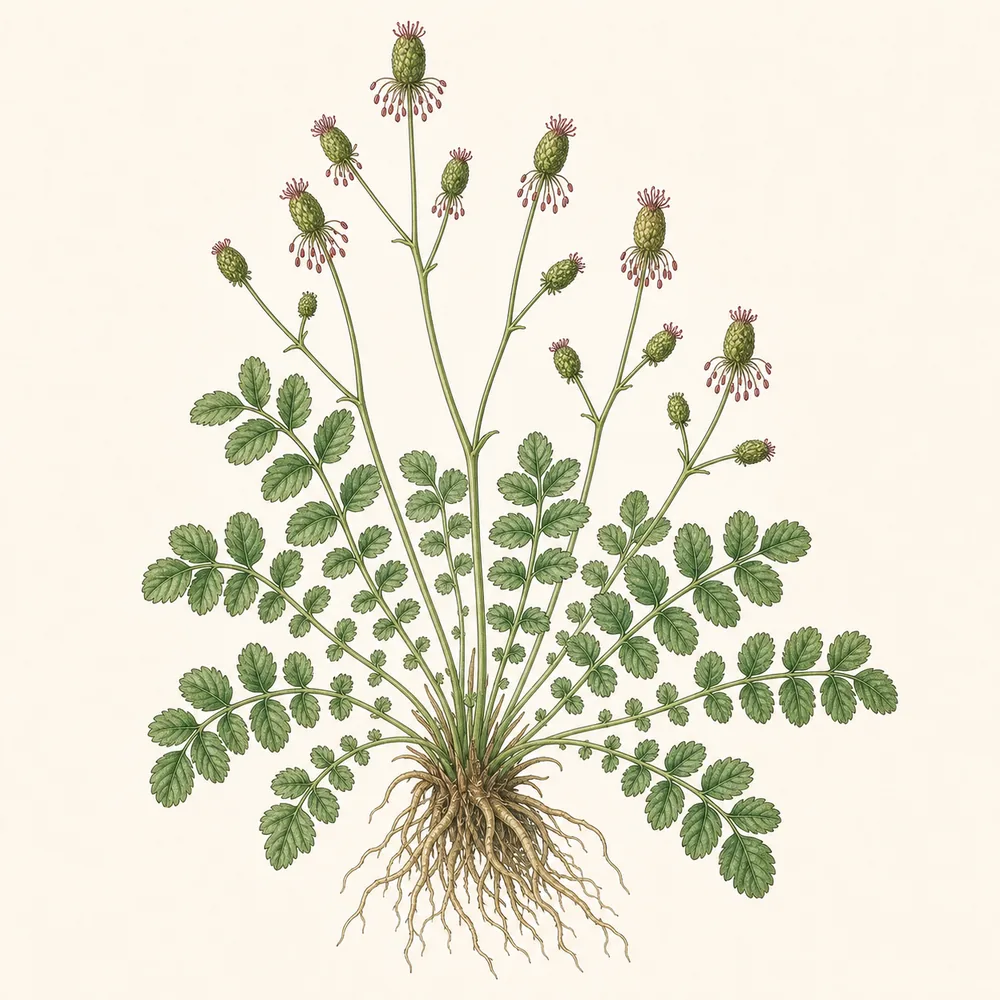
Salad Burnet
A neat, near-evergreen native of chalk grassland with ferny rosettes and rounded, red-tinged flower heads. Doubles as a kitchen herb — the young leaves taste cool and cucumber-fresh. Thrives on poor, dry, alkaline soil and asks almost nothing in return.
Not listed by ASPCA
The ASPCA doesn't list salad burnet, so we don't stamp it safe. It's a UK native wildflower with no recorded serious toxicity to pets, but with no database entry we flag the gap honestly rather than guess.
Care at a glance
Everything that matters, in six lines. The detail is further down.
Light
Best in an open, sunny spot, as on its native chalk downs, but perfectly happy in light or dappled shade too.
Water
Water only to settle new plants in. Once established it copes easily with dry spells and rarely needs watering.
Season
A fully hardy native that keeps much of its foliage through mild winters, giving fresh pickings almost year-round.
Spacing
Set plants a hand's width apart so the ferny rosettes fill out; leave more room in a border, less in a herb patch.
Feeding
No feeding needed. Rich ground makes soft, floppy growth; poor soil keeps it compact and the leaves well-flavoured.
Soil
Ideal on dry, alkaline, chalky or limey soil that drains fast. It dislikes heavy, wet ground more than anything.
What to do, and when
Fresh new leaves push up — the best pickings of the year, when they're tenderest and most cucumber-flavoured. Sow or plant out now.
Rounded, red-tinged flower heads appear from May. Snip a few off to keep the plant leafy and the young foliage tender for the kitchen.
Growth slows and seed ripens. Leave a few heads to self-sow, and cut the plant back lightly to encourage a fresh flush of leaves.
Much of the foliage stays green through mild UK winters, so you can keep picking. Fully hardy and needs no protection.
A wildflower you can eat
Salad burnet earns its place twice over: it's a genuine native of Britain's chalk grassland, and it's a useful kitchen herb. The young leaves have a cool, clean, cucumber-like taste that's lovely in salads, cream cheese, cold drinks and dressings.
Pick the youngest leaves from the centre of the rosette — older ones toughen and lose their flavour. Keeping the plant lightly cut back means a steady supply of the tender new growth that tastes best.
Chalk grassland conditions
This is a plant of thin, dry, alkaline soils — the short turf of chalk and limestone downs. Reproduce those lean, free-draining conditions and it thrives with no effort; plant it in rich, damp ground and it sulks.
It's genuinely drought-tolerant once established, making it a good choice for a dry, sunny bank, a gravel garden or a herb patch on poor soil. Heavy, waterlogged clay is the one thing to avoid, or improve it heavily with grit first.
Keeping it leafy
Left alone, salad burnet flowers and the rosettes grow coarse. For the best leaves, treat it a little like a cut-and-come-again herb: snip off the flower heads and shear the whole plant back now and then.
Cutting back triggers a fresh flush of young, tender foliage and keeps the plant compact. If you want it to self-seed around a meadow, leave a few flower heads to ripen — it spreads gently without ever becoming a nuisance.
Common problems
Tough, bitter leaves
Leaves left to age, or the plant allowed to flower unchecked. Cut it back and pick only the young central leaves.
Soft, floppy growth
Soil too rich or too wet. Grow it hard on lean, free-draining ground and don't feed it.
Rotting in winter
Waterlogged soil. It needs sharp drainage — add grit, or grow it in a raised bed or gravel.
Spreading further than wanted
Free self-seeding. Deadhead the flower heads before seed ripens if you want to keep it in check.
Everything salad burnet needs
Poor free-draining soil, sun, and the odd cut-back.
We take no commission on anything in the "save your money" tier — if we don't think you should buy it, we don't link it. How our recommendations work
If you like this, try
Other plants with a similar temperament.
How we checked this
Care cross-checked against the RHS. The ASPCA does not list salad burnet, so its pet-safety is unconfirmed and we have not stamped it safe. If our page and these sources ever disagree, believe them — and tell us.
Sources: RHS · ASPCA — toxic & non-toxic plants
Last reviewed · August 2026