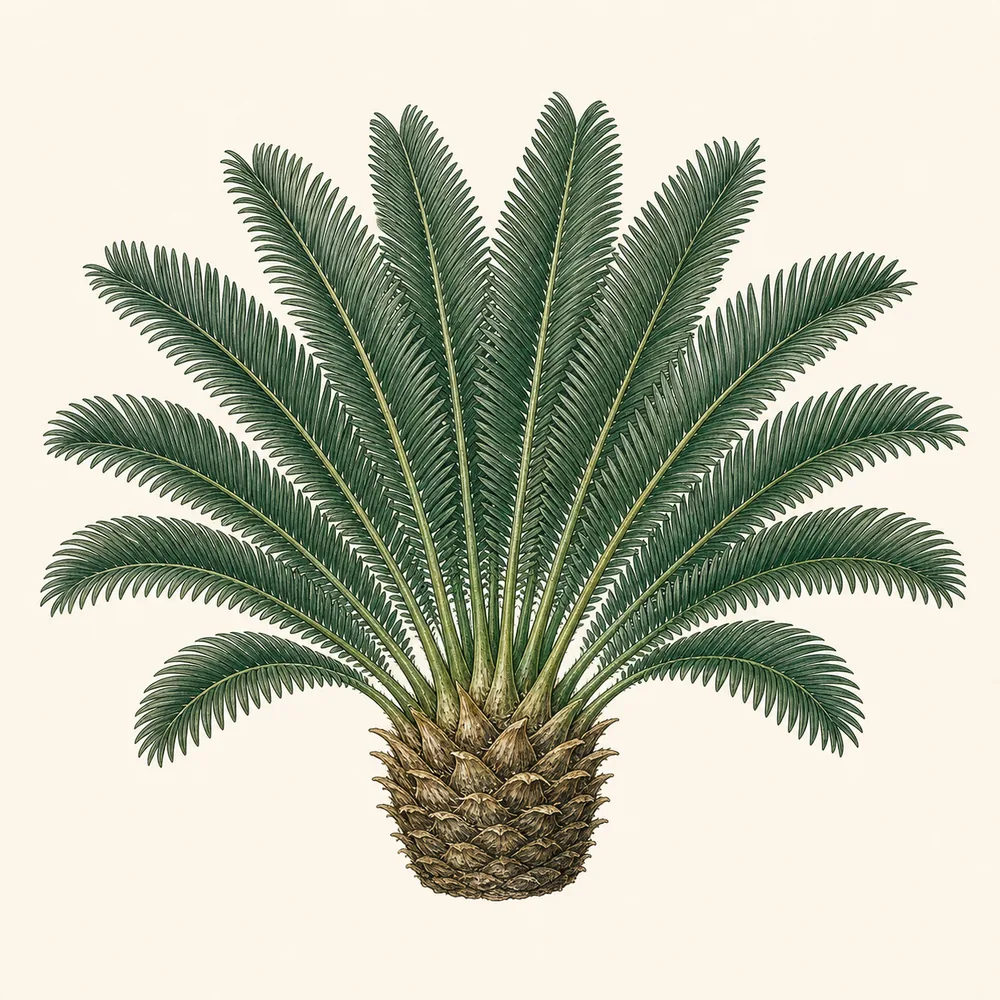
Sago Palm
An architectural, prehistoric-looking rosette of stiff, glossy fronds — a striking houseplant that grows with almost geological slowness. Handsome and long-lived. Also one of the most dangerous plants you can bring into a home with a dog.
Can kill a dog — one seed is enough
Every part of a sago palm is poisonous, the seeds most of all, and dogs are the usual victims. The toxin cycasin causes vomiting, then liver failure and bleeding disorders; even with intensive veterinary care a large share of dogs that eat it die. This is not a mild-irritant houseplant — if you have a dog that chews things, this plant does not belong in the house. Any ingestion is an immediate emergency. Toxic to cats and horses too. Source: ASPCA.
Care at a glance
Everything that matters, in six lines. The detail is further down.
Light
Wants the brightest indoor spot short of harsh midday glare. Too dark and the slow growth stops altogether.
Water
Water only when the top few centimetres are dry, and less in winter. Wet roots rot the trunk.
Temperature
Warm rooms suit it. It can summer outdoors in a sheltered, bright spot, back in before cold nights.
Humidity
Undemanding about humidity. An occasional wipe keeps the glossy fronds dust-free.
Feeding
A balanced feed once a month through the growing season. It grows too slowly to need more.
Soil
A gritty, cactus-style mix. Sharp drainage is the difference between decades of health and slow rot.
What to do, and when
A flush of new fronds may appear, unfurling from the centre. Resume light feeding; repot only every few years — it hates disturbance.
Its main (still slow) growth. Water when dry, feed monthly. Protect the tender new fronds from being knocked.
Growth stops. Cut watering right back as light fades, and bring any outdoor plant indoors well before cold.
Near-dormant. Keep it bright, barely water, and above 10°C. Overwatering now is the usual killer.
Why this plant needs a decision, not just a spot
Most 'toxic' houseplants on this site are mild — a chewed pothos means a sore mouth. The sago palm is in a different category entirely. It is one of the few common houseplants that regularly kills dogs, and it does it through liver failure, which is slow, distressing and expensive to treat even when it works.
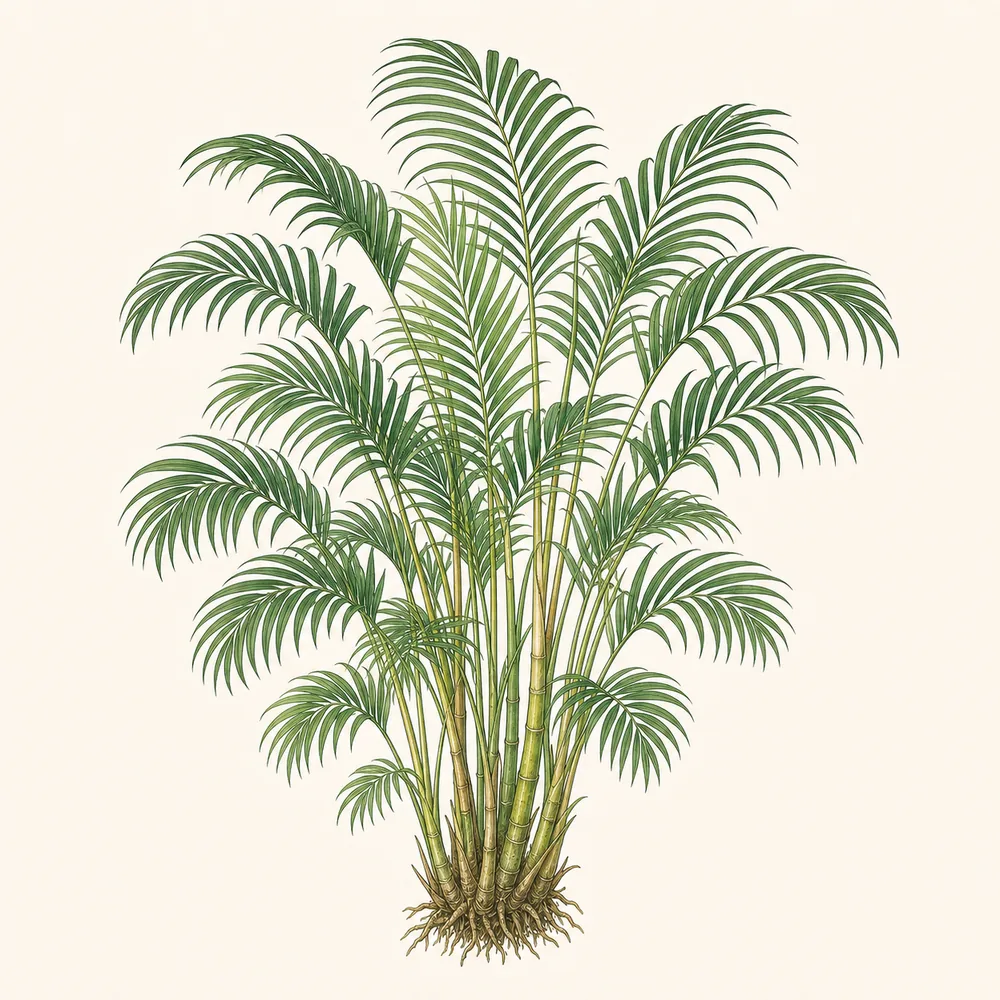
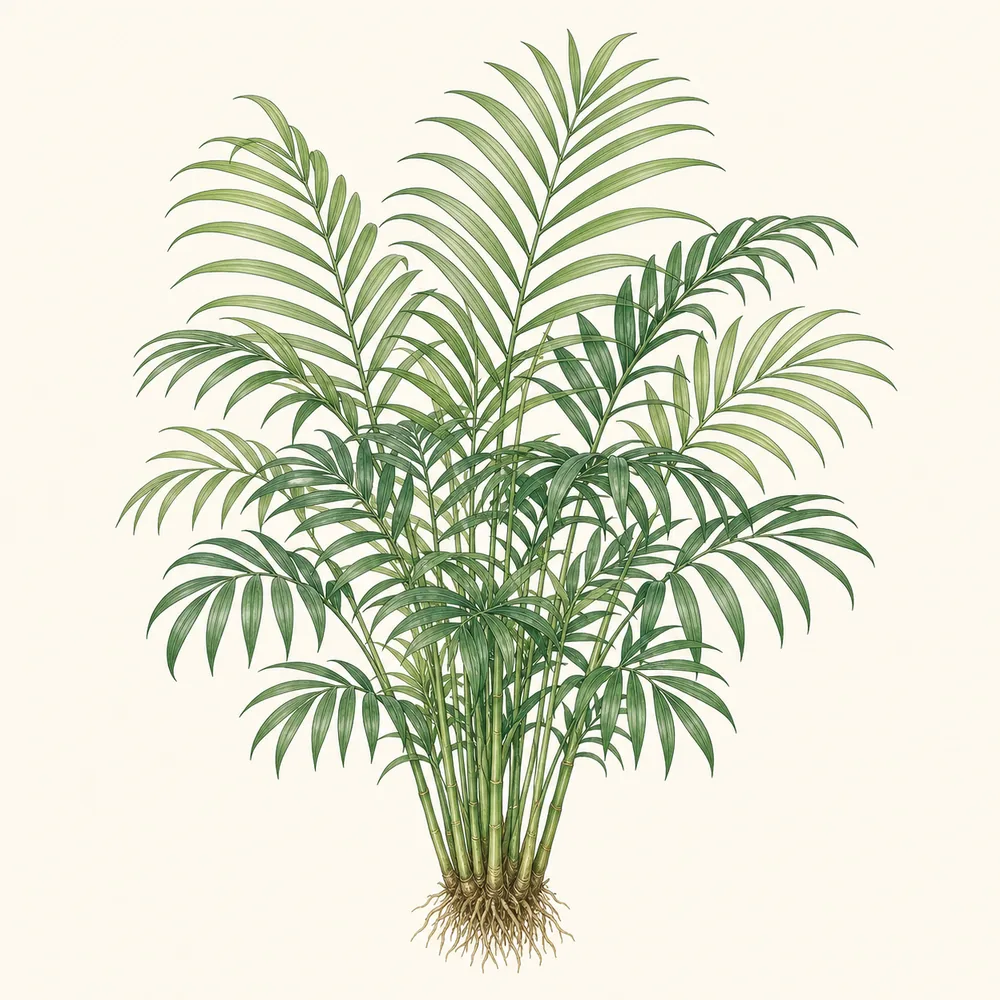
So the honest advice is a yes/no question before you buy: is there, or might there ever be, a dog in this home? If so, don't. There is no safe height or careful placement that makes a seed-dropping, entirely-poisonous plant sensible around a curious dog. Choose a parlour palm or areca palm instead — they look similar and are non-toxic.
Growing it (in a pet-free home)
Where no pets are at risk, the sago is a rewarding, near-immortal plant that asks very little. Give it bright light, a gritty free-draining mix, and water only when it dries — its commonest cause of death by far is overwatering, which rots the fat trunk from the inside.
Patience is the main requirement: it may push out a single flush of new fronds a year, and it resents being repotted, so leave it snug and disturb it as little as possible. Wear gloves if you handle the seeds or cut it, and wash your hands after.
Common problems
Fronds yellowing, soft trunk
Overwatering and rot — the number one killer. Let it dry hard, check the roots, improve drainage.
No new growth
Often just its nature (it's very slow) or too little light. Move it brighter; be patient.
Scale insects on fronds
Sticky bumps and sooty mould. Wipe the fronds; dab scale with a cotton bud. Persistent but treatable.
Pale, washed-out fronds
Too much direct sun, or a nutrient shortage. Shade from harsh glare; a light summer feed helps.
Everything a sago palm needs
Short list for a slow plant — but read the safety note before any of it.
We take no commission on anything in the "save your money" tier — if we don't think you should buy it, we don't link it. How our recommendations work
If you like this, try
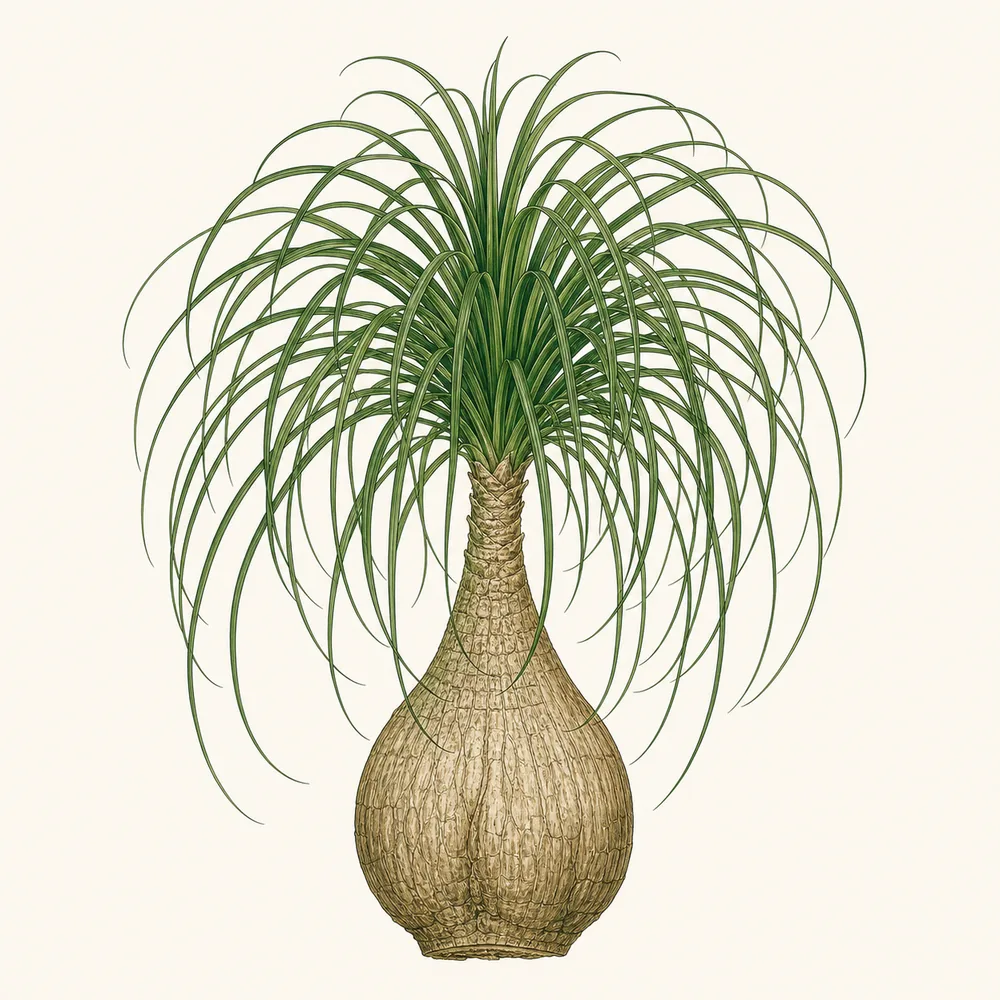
Other plants with a similar temperament.
From the Notebook
Seasonal notes and guides that mention the sago palm.
How we checked this
Care guidance cross-checked against the Royal Horticultural Society and NC State Extension. Toxicity confirmed against the ASPCA database (Cycas revoluta — cycasin; vomiting, melena, icterus, coagulopathy, liver damage, liver failure, death). Its high fatality rate in dogs is well documented. If our page and the ASPCA ever disagree, believe them and tell us. If our page and these sources ever disagree, believe them — and tell us.
Sources: RHS · NC State Extension · ASPCA
Last reviewed · July 2026