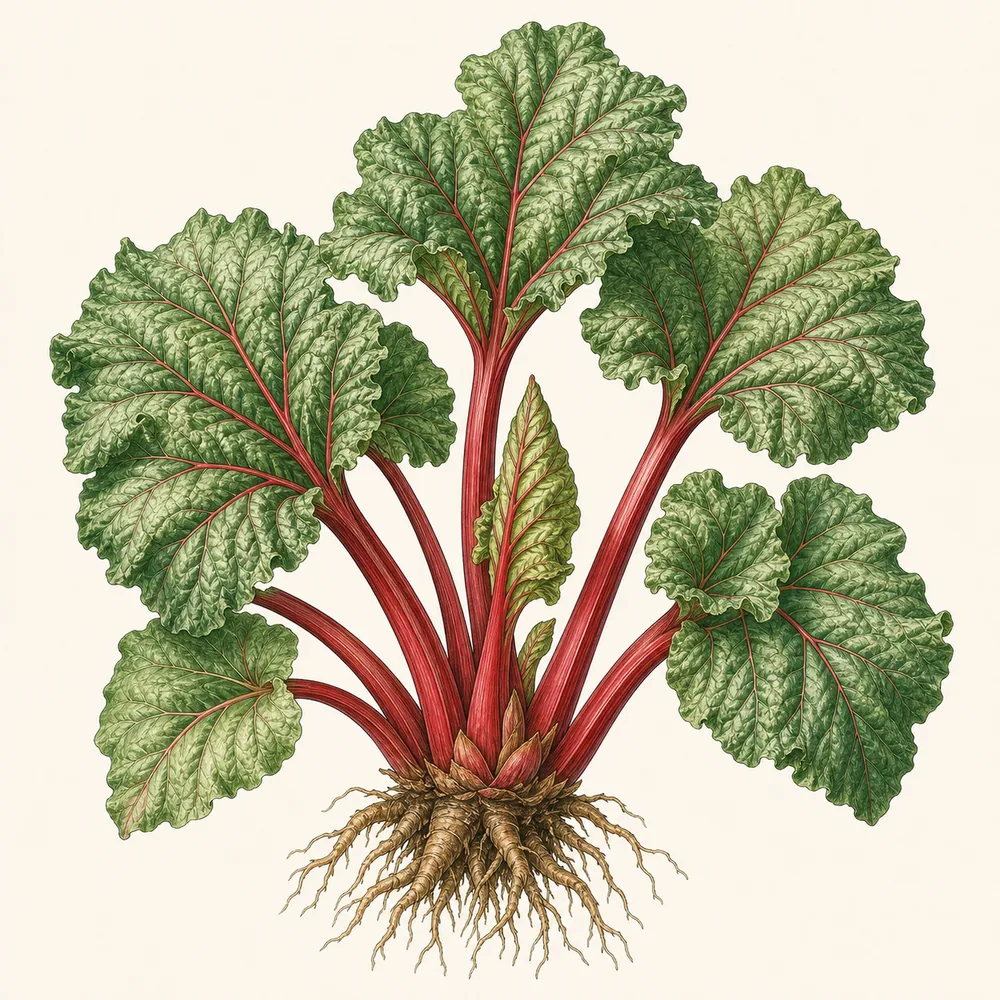
Rhubarb
One of the great low-effort crops: a single crown in a corner gives you tart pink stalks every spring for two decades, asking for little more than a barrowload of muck each winter. Just remember the golden rule that every rhubarb-grower learns — you eat the stalks and never the leaves.
Leaves are poisonous — the stalks you eat are fine
This is the classic 'which part' plant. The pink stalks are a delicious food, but the large leaf blades are toxic to people and pets alike: the ASPCA lists soluble calcium oxalates causing salivation, tremors and, in serious cases, kidney failure. Never eat or compost-feed the leaves, keep trimmed leaves away from pets and livestock, and cut the leafy tops off into the compost or bin as soon as you harvest a stalk. Source: ASPCA.
Care at a glance
Everything that matters, in six lines. The detail is further down.
Position
An open spot with room to spread — a mature crown is large. Tolerates light shade well.
Soil
A hungry, thirsty plant. Dig in plenty of manure or compost at planting and it repays you for years.
Water
Water well in dry spells, especially young plants — drought stress shrinks the harvest.
Feeding
A generous mulch of well-rotted manure over the crown each winter (not touching it) is the whole feeding regime.
Harvest
From year two, pull stalks with a gentle twist. Take no more than a third at once, and stop by midsummer.
Hardiness
Bone-hardy — it actually needs winter cold to crop well. Dies down completely and returns each spring.
What to do, and when
The main harvest: pull young, tender stalks from April. Force early stalks by covering a crown with a bucket in late winter for pale, sweet stems.
Stop pulling by midsummer to let the plant rebuild. Remove any flower spike that appears — it saps the crown. Keep it watered.
Growth dies back naturally. Clear away the collapsed leaves. A good time to plant new crowns or divide old ones.
Dormant, and glad of the cold. Spread a thick mulch of manure around (not over) the crown — the one job that matters.
The leaf rule, and why it exists
Everyone who grows rhubarb is told the same thing: eat the stalks, never the leaves. It's true, and worth understanding rather than just obeying. The broad leaf blades contain far higher levels of oxalic acid and related compounds than the stalks — enough to cause real harm to people, and, as the ASPCA notes, to poison cats, dogs and horses too.
In practice it's easy: as you harvest each stalk, trim the leafy top straight off and put it on the compost heap (where it rots down harmlessly) or in the bin — never in a salad, a juicer, or a pet's or animal's reach. The stalks themselves are completely safe and delicious. It's the tidiest example of the site's whole approach: not 'is it toxic?' but 'which part, and to whom?'
Twenty years from one crown
Rhubarb is close to the best value in the whole vegetable garden. Plant a single crown in rich, well-manured soil, resist harvesting at all in the first year, take a light pull in the second, and from then on it crops generously every spring for fifteen to twenty years with almost no attention.
The only real 'work' is a barrowload of well-rotted manure mulched around the crown each winter and a good soak in summer droughts. Every few years you can lift and split a congested crown in winter to make new plants — each fist-sized piece with a bud grows into a whole new plant, for free.
Common problems
Thin, spindly stalks
Hungry or thirsty, or harvested too hard. Mulch heavily with manure, water in summer, and pull less.
Flower spike appearing
Stress (often heat or age). Cut it out at the base immediately so the plant feeds the stalks, not the seed.
Crown rotting
Waterlogged soil, or mulch piled onto the crown itself. Improve drainage; keep mulch around, not over, the buds.
Cropping less after years
Congested old crown. Lift and divide it in winter into fresh pieces, each with a bud, and replant in enriched soil.
Everything rhubarb needs
A crown and a barrow of muck. That's genuinely most of it.
We take no commission on anything in the "save your money" tier — if we don't think you should buy it, we don't link it. How our recommendations work
If you like this, try
Other plants with a similar temperament.
How we checked this
Care guidance cross-checked against the Royal Horticultural Society and NC State Extension. Toxicity confirmed against the ASPCA database, which lists rhubarb (Rheum) as toxic to cats, dogs and horses via soluble calcium oxalates (salivation, tremors, kidney failure) — the leaf blades being the dangerous part; the edible stalks are safe. If our page and the ASPCA ever disagree, believe them and tell us. If our page and these sources ever disagree, believe them — and tell us.
Sources: RHS · NC State Extension · ASPCA
Last reviewed · July 2026