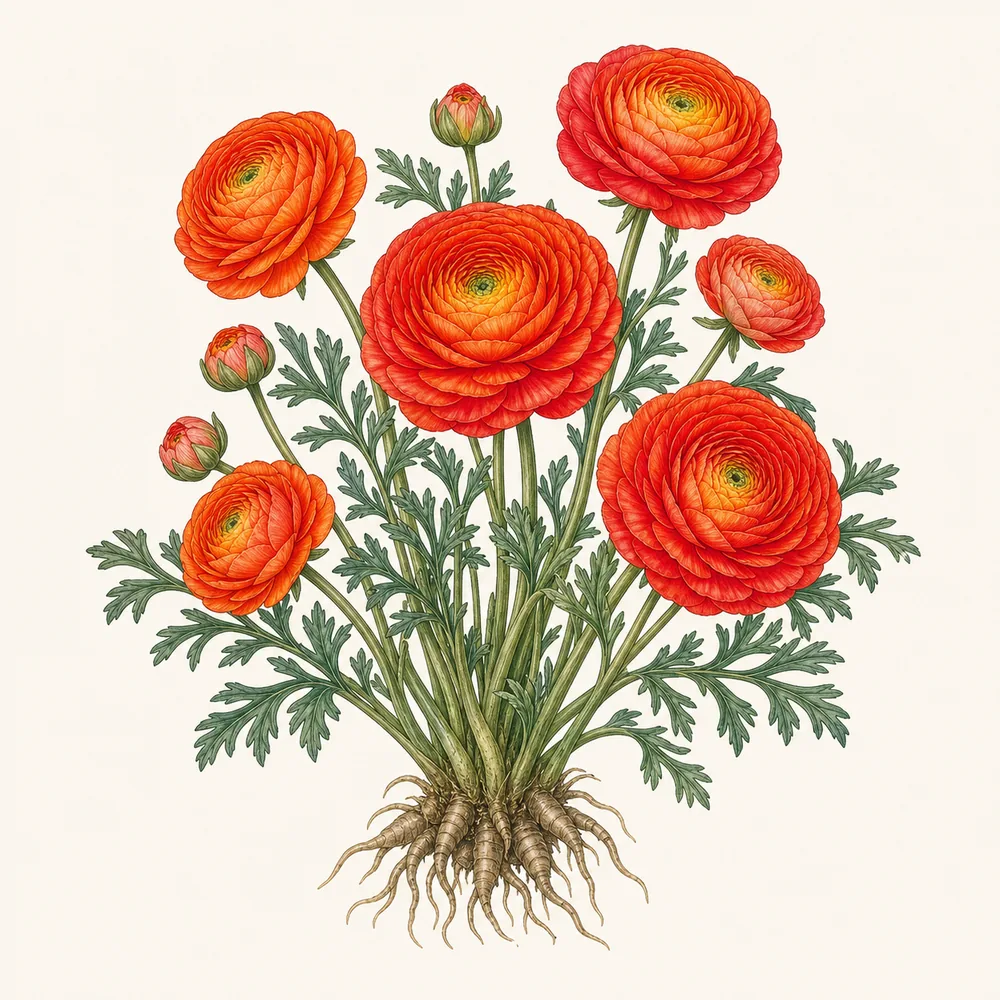
Ranunculus
Grown from claw-like corms, the Persian buttercup produces layer upon layer of tissue-paper petals in jewel and sorbet shades from late spring. It is half-hardy and hates cold, wet winters, so timing and sharp drainage make all the difference.
Toxic to cats, dogs & people if eaten
Ranunculus (like the buttercups it's related to) contains protoanemonin and is listed as toxic on the ASPCA database. Chewing causes mouth irritation, drooling and stomach upset, and the sap can blister skin. It loses its toxicity once dried. Keep pets from grazing the fresh plant.
Care at a glance
Everything that matters, in six lines. The detail is further down.
Position
A bright, sunny spot brings out the fullest, most colourful flowers. It sulks in deep shade.
Water
Keep evenly moist in growth, but sharp drainage is vital — sitting wet, especially when cold, rots the corms fast.
Hardiness
Takes a light frost but hates cold, soggy winters. Grow under cover, protect with fleece, or lift and store.
Soil
Fertile but open soil, or a gritty compost in pots. Heavy, wet ground is the quickest way to lose it.
Feeding
A high-potash feed as the buds appear keeps the flowers coming over a long picking season.
Flowering
Weeks of ruffled, many-petalled blooms, superb for cutting.
What to do, and when
Plant soaked corms claws-down in early spring for early-summer flowers, or plant out autumn-started plants once hard frosts have passed.
Flowering season — pick or deadhead often to keep buds coming, and feed and water in dry spells.
In mild areas start corms under cover for early flowers; lift, dry and store summer corms, always protecting them from wet.
Corms rest dry and frost-free; cloche or fleece any plants left in the ground and above all keep them out of the wet.
Soak the corms, claws down
Ranunculus corms look like tiny brown claws, and they wake up fastest if you soak them for a few hours in water before planting — they'll swell to two or three times their size.
Plant them with the claws pointing downwards, a few centimetres deep. Get them upside down and they struggle to emerge; that, and cold wet soil, is where most people lose them.
Beating the winter wet
The plant's real enemy is not cold so much as damp: corms sitting in wet, chilly soil simply rot. Sharp drainage, raised beds or pots, and protection from winter rain all help.
Many UK growers treat ranunculus almost as an annual — starting corms under cover, planting out in spring, and lifting to dry off for storage once flowering ends.
Common problems
Corms rot and never sprout
Planted into cold, wet soil, or corms sat too wet. Improve drainage, warm the soil, and don't overwater early on.
No growth after planting
Corms not soaked, or planted claws-up. Soak before planting and set them with the claws pointing down.
Grey mould on buds and stems
Botrytis in cool, damp, crowded conditions. Improve airflow and remove any affected growth promptly.
Distorted shoots and sticky leaves
Aphids on soft new growth. Rub them off or blast with water, and encourage ladybirds and other predators.
Everything a ranunculus needs
A pre-soak, sharp drainage, and shelter from the winter wet.
We take no commission on anything in the "save your money" tier — if we don't think you should buy it, we don't link it. How our recommendations work
If you like this, try
Other plants with a similar temperament.
How we checked this
Care cross-checked against the RHS. Toxicity confirmed against the ASPCA database, which lists Ranunculus as toxic to cats, dogs and people — the fresh plant contains protoanemonin, causing mouth irritation, drooling and stomach upset, and the sap can blister skin. If our page and these sources ever disagree, believe them — and tell us.
Sources: RHS · ASPCA — toxic & non-toxic plants
Last reviewed · July 2026