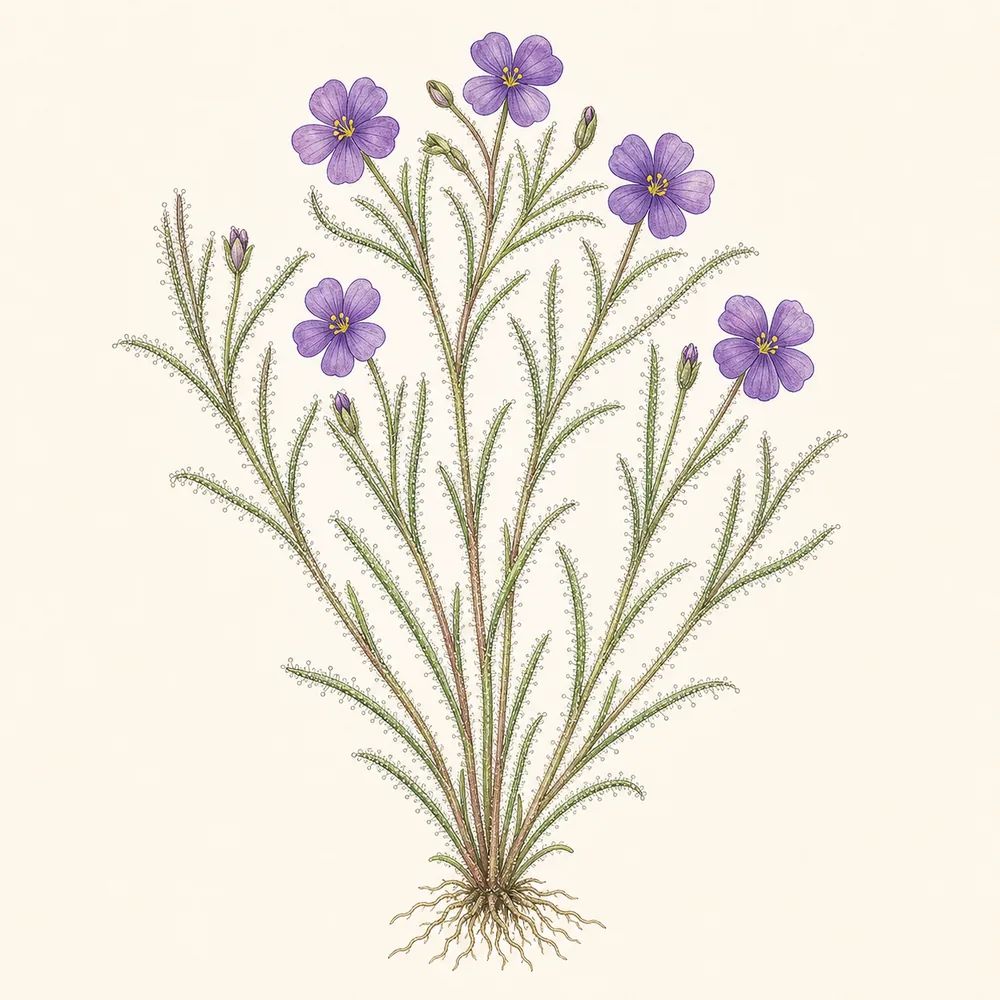
Rainbow Plant
An Australian flypaper carnivore whose dew-covered leaves catch the light like a scatter of tiny rainbows. It's usually raised from seed and demands a long, hot, brilliantly bright season — get the warmth and light right and it rewards you with pretty purple flowers.
Not listed by ASPCA
The ASPCA doesn't list the rainbow plant (Byblis) specifically, so we don't stamp it safe. No toxic principle is recorded for it and close relatives are listed non-toxic, but with no database entry for this species we flag the gap honestly rather than assume.
Care at a glance
Everything that matters, in six lines. The detail is further down.
Light
As much bright light as you can give — a full-sun south window or a strong grow light. Weak light gives leggy, sulking plants.
Water
Only rainwater, distilled or RO water. Stand it in a little water in the growing season, but ease off as it likes to dry a touch more than a bog carnivore.
Temperature
Wants real warmth through a long growing season — think 20–30 °C. Cool, short summers are its main enemy indoors.
Humidity
Doesn't need a sealed case; good airflow with moderate humidity suits it better than stagnant damp.
Feeding
No soil fertiliser. The sticky dew traps small flies it digests itself — leave it to feed as it evolved to.
Soil
A very lean carnivorous mix heavy on sand and perlite with a little peat-free base. Never ordinary compost.
What to do, and when
Sowing season. Start seed with warmth and bright light; many types germinate better with a smoke or heat treatment to break dormancy.
Peak growth in the long, hot, bright days it lives for. Keep it warm, dewy and brilliantly lit, and it should flower.
Growth winds down as light and warmth fade. Annual types set seed and die back; save seed now for next year.
Little happening. Keep any perennial types warm and bright but drier; sow nothing until the warmth and long days return.
Why it's called the rainbow plant
Byblis is a flypaper carnivore: its slender leaves are covered in glistening glands that hold small insects fast. In bright light those beads of dew split the sunlight, and the whole plant shimmers with tiny rainbows — hence the name.
Despite the sparkle, it's a demanding plant. The dew and the trapping only really come good under strong light and steady warmth, which is where most indoor attempts fall short.
It's a long-season plant
The single biggest hurdle is season length. Byblis evolved in warm, sunny Australia and wants a long run of hot, bright days to grow, mature and flower. A cool, grey UK summer on a north sill won't cut it.
Give it your sunniest spot or a strong grow light and real warmth. Many growers run it under lights precisely to stretch the season and keep the light intense enough.
Usually grown from seed
Rainbow plants resent root disturbance and are typically raised from seed rather than bought as established plants. Several species are annuals, living fast, flowering, setting seed and dying in a single season.
Germination can be stubborn — many kinds break dormancy best with heat or a smoke treatment. Sow into the lean sandy mix, keep warm and bright, and be patient.
Common problems
Leggy, sparse, no dew
Nearly always too little light or warmth. Move it to full sun or under a strong grow light and keep it genuinely warm.
Seed won't germinate
Common with Byblis. Provide warmth and bright light, and try a smoke or heat treatment to break the seed's dormancy.
Plant collapses after flowering
Many species are annuals and naturally die once they've set seed. Collect and sow that seed to carry it on.
Roots rot or plant sulks after a move
It hates root disturbance and soggy roots. Grow from seed where it's to stay, use rainwater, and let the sandy mix dry a little between waterings.
Everything a rainbow plant needs
Strong light, real warmth, and a long season from seed.
We take no commission on anything in the "save your money" tier — if we don't think you should buy it, we don't link it. How our recommendations work
If you like this, try
Other plants with a similar temperament.
How we checked this
Care cross-checked against the RHS. The ASPCA does not list the rainbow plant (Byblis), so its pet-safety is unconfirmed and we have not stamped it safe. If our page and these sources ever disagree, believe them — and tell us.
Sources: RHS · ASPCA — toxic & non-toxic plants
Last reviewed · July 2026