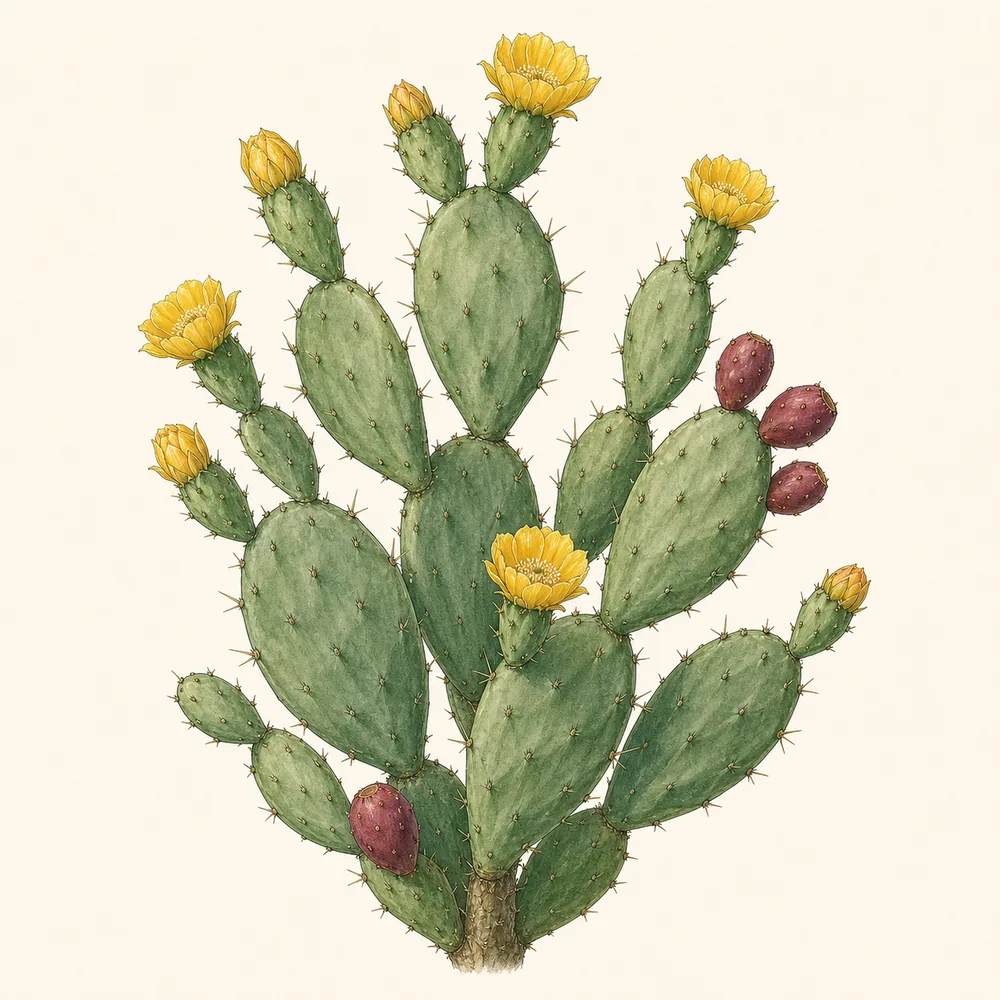
Prickly Pear
The classic flat-padded cactus, building up in jointed 'ears' of blue-green. Tough, sculptural and undemanding — but armed with more than just obvious spines, so handle it with real care.
Not listed by ASPCA — treat with caution
The ASPCA doesn't list prickly pear (Opuntia), so we can't confirm it pet-safe. The bigger hazard is mechanical: as well as obvious spines it carries tiny barbed glochids that embed in skin, so handle it and site it with pets in mind.
Care at a glance
Everything that matters, in six lines. The detail is further down.
Light
The brightest, sunniest spot you have. Strong direct light keeps the pads firm and upright; too little and they grow thin, pale and floppy.
Water
Soak, drain, then wait until bone dry — often two to three weeks in summer. Through winter keep it almost completely dry.
Temperature
Loves summer heat and a cool, dry winter rest. Some Opuntia are surprisingly cold-tolerant if bone dry, but treat it as tender to be safe.
Humidity
Dry room air suits it perfectly. Never mist; the only humidity it cares about is none.
Feeding
A weak cactus feed a couple of times over the growing season is ample. Overfeeding just produces soft, weak pads.
Soil
A cactus and succulent mix, or ordinary compost cut heavily with grit and sand. Fast drainage is non-negotiable.
What to do, and when
Growth resumes with the light. New pads start to form; water lightly at first and repot now if it needs it — spring is the safest time to handle a spiny plant.
Peak growth in full sun, and the season for its big, papery yellow or orange flowers on mature plants. Water only when fully dry.
Growth slows. Cut watering right back to steer it into a dry winter rest.
Dormant. Keep it cool, bright and almost bone dry — cold it can often take, but cold and wet together will rot it.
The glochids are the real hazard
Everyone expects the long spines. The catch with Opuntia is the glochids — tufts of tiny, barbed hairs at the base of each spine cluster. They detach at the lightest brush, work into skin almost invisibly, and are genuinely difficult and irritating to remove.
Never handle the pads bare-handed. Use thick gloves or fold a strip of newspaper into a sling, and keep the plant well away from where pets or children might swipe at it — a swipe is all it takes to load a paw or hand with glochids.
Watering: soak, then forget
The flat pads are water tanks, so prickly pear is built for drought. Water thoroughly, let every drop drain away, then leave it alone until the soil is completely dry.
Winter is when most are lost — to cold, wet compost. Keep it barely watered and well drained through the dark months, and it will sail through.
Propagating from a single pad
Prickly pear is one of the easiest cacti to propagate. Wearing gloves, twist off a whole pad, leave the cut end to dry and callus for a week or so, then stand it upright in gritty compost.
Keep it barely moist and it will root and start pushing new pads within a few weeks — an easy way to build up a bigger plant or share one.
Common problems
Pads going soft, wrinkled or yellow
Usually overwatering and poor drainage. Let it dry right out; if the base has gone soft and brown, rot may already have set in.
Thin, pale, stretched new pads
Too little light. Move it to your sunniest window — new growth will come back firm and green.
Pads leaning or the plant toppling
Reaching for light, or top-heavy in a light pot. Give it more sun, turn it regularly, and pot into something heavier and wider.
White cottony clusters on the pads
Mealybugs, which lurk around the spine clusters. Dab them off with dilute alcohol on a cotton bud and repeat weekly.
Everything a prickly pear needs
Full sun, gritty soil, and thick gloves for every time you touch it.
We take no commission on anything in the "save your money" tier — if we don't think you should buy it, we don't link it. How our recommendations work
If you like this, try
Other plants with a similar temperament.
How we checked this
Care cross-checked against the RHS. The ASPCA does not list prickly pear, so its pet-safety is unconfirmed; its spines and glochids are a physical hazard. If our page and these sources ever disagree, believe them — and tell us.
Sources: RHS · ASPCA — toxic & non-toxic plants
Last reviewed · July 2026