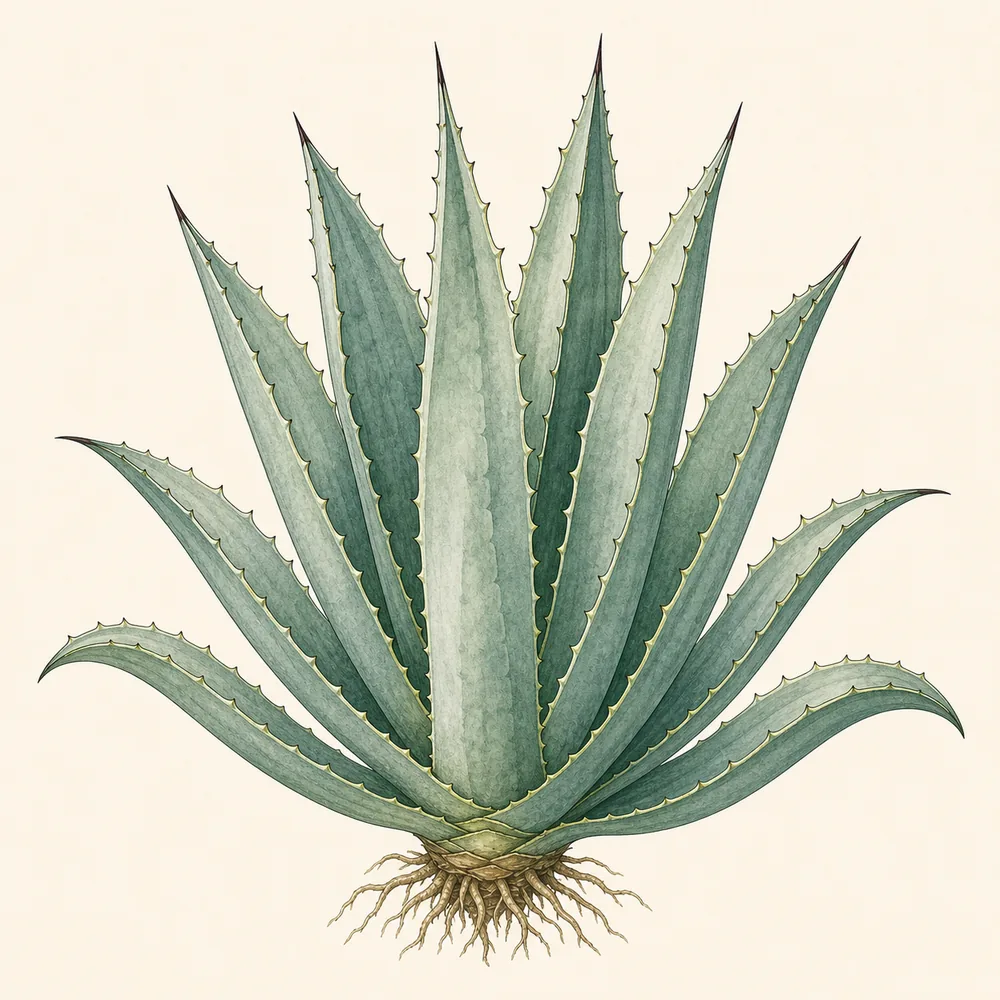
Agave
A bold architectural succulent with thick, sculptural leaves in blue-grey or cream-striped forms, each tipped with a sharp spine. Give it sun and sharp drainage and it will thrive on near-total neglect.
Not listed by ASPCA — but not harmless
The ASPCA doesn't list agave (Agave), so we can't stamp it pet-safe — and it isn't harmless: the sap holds irritant oxalate crystals that can burn skin and mouths, and each leaf ends in a needle-sharp spine. Treat it with real caution around pets and children.
Care at a glance
Everything that matters, in six lines. The detail is further down.
Light
The sunniest spot you have — a south-facing sill indoors, or outside in summer. The more sun, the tighter and stronger the rosette.
Water
Water deeply, then wait until the compost is bone dry. In winter it needs almost nothing. Overwatering is the one real way to kill it.
Temperature
Loves warmth and copes with heat. Agave americana takes a light touch of frost but is safest kept above 5 °C and dry in winter.
Humidity
A desert plant that wants dry air and good ventilation; never mist it.
Feeding
A weak cactus feed once or twice over summer is ample. It grows lean and doesn't want rich feeding.
Soil
A cactus mix with extra grit or perlite, or a good half grit. Fast drainage is everything.
What to do, and when
Growth picks up with the light. Repot now if it's outgrown its pot (wear thick gloves), and start watering a little more.
Its active season — water deeply but infrequently and give it maximum sun. A warm, sheltered patio spot suits it well.
Cut watering right back as growth slows and bring container plants under cover before the first frosts.
Keep it cool, bright and almost completely dry. Wet, cold compost is far more dangerous to it than cold air alone.
The spines are the real hazard
Every leaf ends in a hard, needle-sharp terminal spine, and many forms have toothed edges too. On a large plant these are at eye and ankle height — worth thinking about before you place it near a walkway, a child's play area, or where pets brush past.
The cut sap adds a second issue: it carries irritant crystals that can burn skin and eyes. Wear thick gloves and long sleeves whenever you repot or divide it, and wash your hands afterwards.
The 'century plant' and its pups
The common name is a nice exaggeration: Agave americana doesn't take a century to flower, but it can be many years — and it is monocarpic, meaning the main rosette dies after throwing up its huge flower spike.
That isn't the end of the plant, though. Long before flowering it produces offsets — 'pups' — around its base. Detach a rooted pup, let the cut dry for a day or two, and pot it up as a new plant.
Getting the watering right
Treat it like the desert plant it is: a thorough soak, then nothing until the compost has dried out completely, top to bottom.
Soft, yellowing or translucent lower leaves and a soft base mean water is sitting around the roots. In a gritty mix and a sunny spot that's a hard mistake to make — which is why agave is one of the most forgiving plants you can grow.
Common problems
Soft, mushy base or leaves
Rot from overwatering or poor drainage. Let it dry out completely; if the base has gone soft, salvage a healthy pup instead.
Brown, scorched-looking spots
Usually cold, wet stress rather than sunburn — established plants love sun. Check drainage and warmth.
Stretched, loose rosette
Too little light. Move it to the sunniest spot you have; new growth will tighten up.
Grey or brown scale on leaves
Scale insects. Scrape them off and wipe with dilute alcohol, checking the leaf bases where they hide.
Everything an agave needs
Full sun, a very gritty mix, and a pair of good gloves.
We take no commission on anything in the "save your money" tier — if we don't think you should buy it, we don't link it. How our recommendations work
If you like this, try
Other plants with a similar temperament.
How we checked this
Care cross-checked against the RHS. The ASPCA does not list agave, so its pet-safety is unconfirmed; its sap is irritant and its leaf tips are sharp. If our page and these sources ever disagree, believe them — and tell us.
Sources: RHS · ASPCA — toxic & non-toxic plants
Last reviewed · July 2026