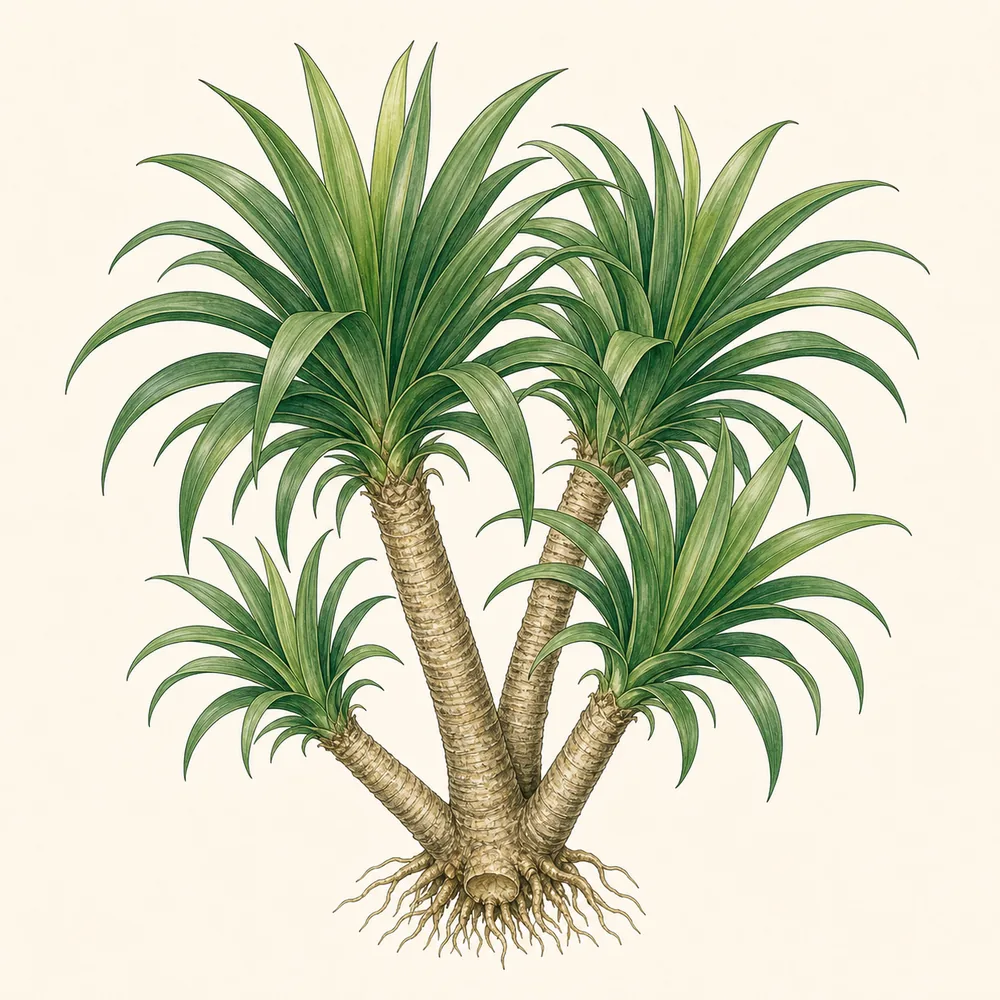
Spineless Yucca
An architectural, tree-like houseplant with a chunky cane and fountains of soft, strappy green leaves. Almost impossible to kill: it wants sun, a good drink now and then, and to be left alone.
Toxic to cats & dogs if eaten
Yucca (Yucca) is listed as toxic to cats and dogs on the ASPCA database. It contains saponins; chewing the leaves causes drooling, vomiting and lethargy. Keep pets from the foliage.
Care at a glance
Everything that matters, in six lines. The detail is further down.
Light
The brightest spot you have — it loves a few hours of direct sun. In poor light it grows leggy and floppy.
Water
Water thoroughly, then wait until the top half of the pot is dry. The thick cane stores water, so under-watering is far safer than over.
Temperature
Ordinary room warmth, and it copes with cool spells. Keep it above about 7 °C in winter.
Humidity
Undemanding. Normal, even dry, room air suits it fine — no misting needed.
Feeding
A balanced feed once a month from spring to late summer is plenty. It is not a hungry plant.
Soil
A peat-free houseplant mix loosened with plenty of grit or perlite so it never sits wet.
What to do, and when
Growth resumes as light returns. Repot only if it is truly root-bound, and start feeding again. A good time to move it back near its sunniest window.
Peak growth. Give it all the light you can — a sheltered patio or balcony spot is ideal — and water when the pot dries out.
Ease off water and feeding as light fades. Bring any plant that summered outdoors back inside before the first cold nights.
Near-rest. Water sparingly, keep it bright, and hold it above about 7 °C, off cold glass and away from draughts.
Light is everything
The spineless yucca is one of the few big houseplants that genuinely wants direct sun. Give it your brightest window and it stays tight and upright; put it in a shady corner and the leaves stretch, pale and flop over the cane.
If a plant has already gone leggy in low light, move it brighter and turn the pot a quarter-turn each week so it straightens up evenly rather than leaning toward the glass.
Watering a water-storing cane
Treat it like a succulent on a stick. The swollen cane and roots hold reserves, so the killer is a pot left standing wet — that rots the base and the whole plant can topple.
Soak it, let every drop drain away, then leave it until the top half of the compost is dry. In winter that might be once a month or less.
Keeping the shape you want
Yuccas are slow but steady, and a happy one will eventually reach the ceiling. If it gets too tall you can cut the cane straight across in spring — it looks brutal, but it resprouts a cluster of new heads just below the cut.
The severed top can be potted up and rooted as a whole new plant, which makes this one of the easiest big houseplants to keep in check.
Common problems
Soft, leaning growth
Too little light. Move it to your brightest spot and turn it regularly so it straightens up.
Yellowing lower leaves
Some loss of the oldest bottom leaves is normal. Widespread yellowing and a soft cane means overwatering — let it dry out fully.
Brown leaf tips
Usually inconsistent watering or a build-up of minerals. Water thoroughly when dry and trim the tips to a point if you like.
Soft, dark, wobbly base
Stem rot from sitting wet, especially in a cold winter. Cut back on water hard; if the cane is mushy the plant may not recover.
Everything a spineless yucca needs
The sunniest spot in the house, a gritty mix, and a pot heavy enough not to topple.
We take no commission on anything in the "save your money" tier — if we don't think you should buy it, we don't link it. How our recommendations work
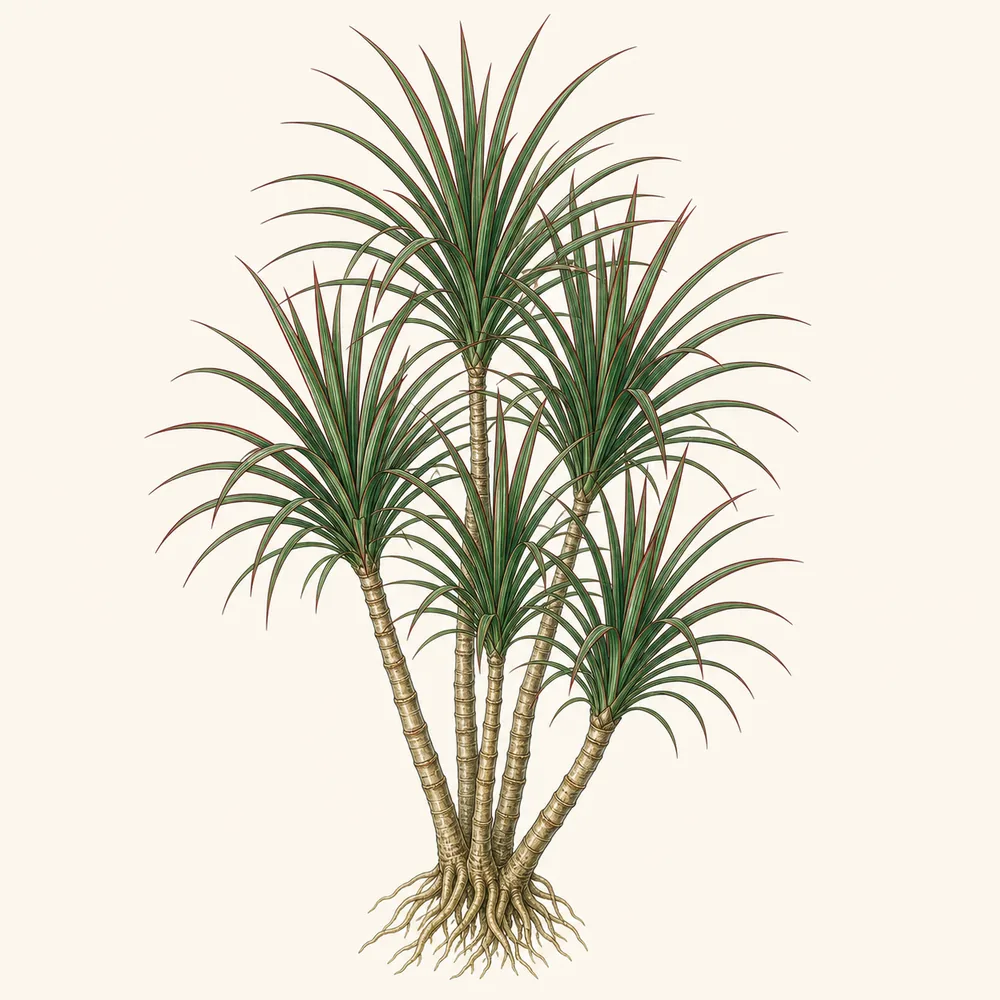
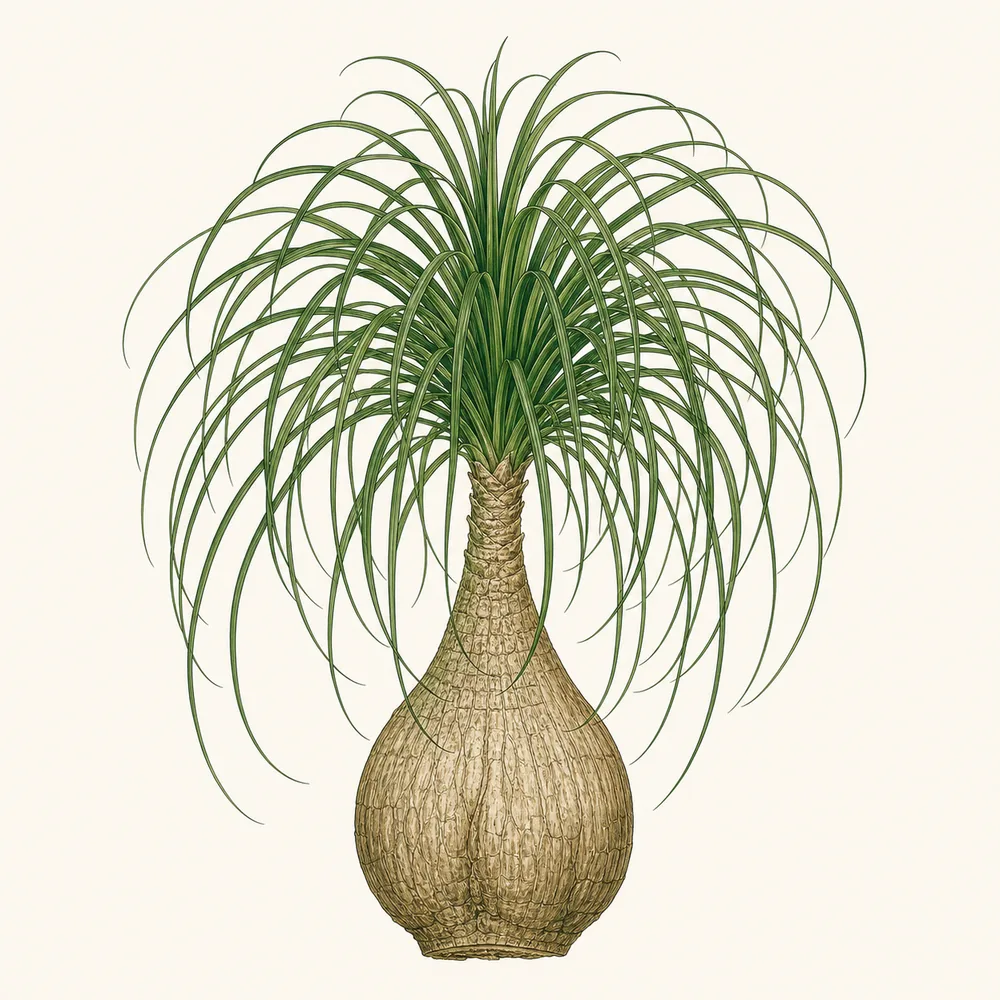
If you like this, try
Other plants with a similar temperament.
How we checked this
Care cross-checked against the RHS. Toxicity taken from the ASPCA database, which lists Yucca as toxic to cats and dogs — saponins. If our page and these sources ever disagree, believe them — and tell us.
Sources: RHS · ASPCA — toxic & non-toxic plants
Last reviewed · July 2026