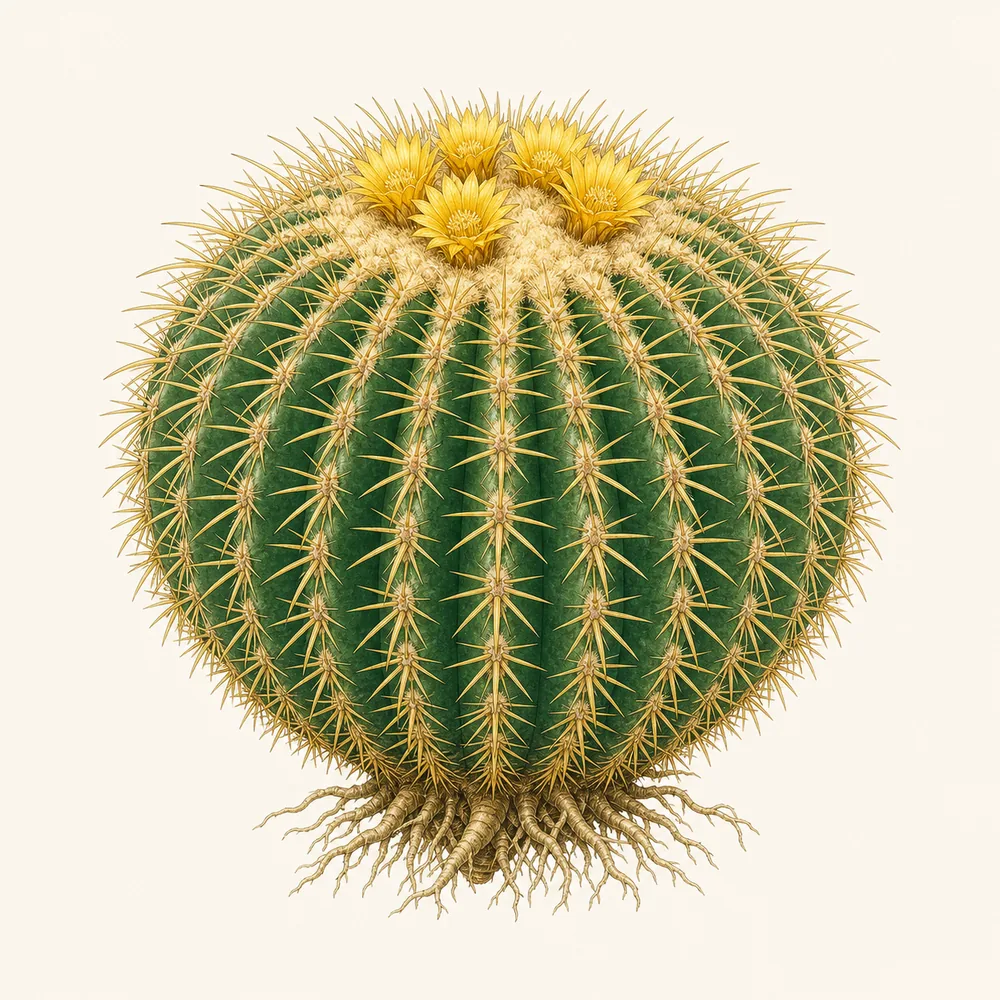
Barrel Cactus
A near-spherical cactus ribbed with golden spines — architectural, slow, and about as low-maintenance as a plant gets. Give it sun and sharp drainage and it will outlive most of your other plants.
Not listed by ASPCA — treat with caution
The ASPCA doesn't list the barrel cactus, so its pet-safety is unconfirmed. There's no evidence it's poisonous, but 'non-toxic' isn't the same as harmless — the stiff spines are a genuine physical hazard to curious pets and children.
Care at a glance
Everything that matters, in six lines. The detail is further down.
Light
The sunniest windowsill you have, ideally south-facing. Strong light keeps it symmetrical and the golden spines bright; too little and it grows lopsided toward the window.
Water
Soak the soil, let it run through, then leave it until bone dry — perhaps fortnightly in summer. Keep it almost completely dry through winter.
Temperature
Warmth suits it. A cool, dry winter rest around 10–12 °C helps, but never let it sit cold and damp together.
Humidity
A desert plant through and through; ordinary dry room air is perfect. Misting does nothing useful and encourages rot.
Feeding
A weak cactus feed a couple of times over the growing season is plenty. It grows slowly and needs little.
Soil
A dedicated cactus mix, or compost cut heavily with grit and sand. Free drainage is the single most important thing.
What to do, and when
Growth wakes as the light strengthens. Water lightly at first, resume occasional feeding, and repot now if it has finally filled its pot.
The active season. Full sun, watering when fully dry, and it may swell noticeably. Turn the pot now and then for even growth.
Growth slows with the light. Taper watering right off to prepare it for a dry winter rest.
Dormant. Keep it cool, bright and almost bone dry — a dry winter rest is what sets up healthy growth and, in time, flowers.
The desert-plant watering rule
Everything about barrel cactus care comes down to water. In the wild it stores months of reserves in that fat body, so it is built to survive drought, not damp. The rule is simple: soak thoroughly, then do nothing until the soil is completely dry.
In winter it wants almost none at all. A cactus that sits in cold, wet compost rots from the base up — and by the time the top looks soft, the roots are usually already gone.
Living with the spines
Those golden spines are handsome but stiff and genuinely sharp. Site the plant well back from where anyone brushes past — a shelf edge, a busy worktop, a spot a cat patrols — and keep it out of reach of small children and pets.
When you do need to move or repot it, don't grip it bare-handed. Wrap a folded strip of newspaper or a thick towel around the body as a handle, or wear stout gloves.
Slow, steady and long-lived
Barrel cactus grows slowly — a few centimetres a year at most — so it rarely needs repotting, and stays a manageable size on a windowsill for years. Patience is part of the deal.
It also flowers only when very mature and given a proper cool, dry winter rest, and even then usually only in strong outdoor summer sun. Grow it for its bold, symmetrical form and treat any flowers as a bonus.
Common problems
Soft, brown, mushy base
Root or basal rot from overwatering, especially in a cold winter. Let it dry right out; if the rot has spread it may not be saveable.
Growing lopsided or pale
Not enough light. Move it to your sunniest window and turn the pot regularly so it fills out evenly.
Narrow, stretched new growth on top
Etiolation from low light. There's no fixing the stretched part, but brighter light returns new growth to normal.
White cottony patches between the ribs
Mealybugs, which hide in the crevices. Dab them off with a cotton bud dipped in dilute alcohol and repeat weekly.
Everything a barrel cactus needs
Full sun, gritty soil, and the discipline to leave the watering can alone.
We take no commission on anything in the "save your money" tier — if we don't think you should buy it, we don't link it. How our recommendations work
If you like this, try
Other plants with a similar temperament.
How we checked this
Care cross-checked against the RHS. The ASPCA does not list the barrel cactus, so its pet-safety is unconfirmed; the spines are a physical hazard. If our page and these sources ever disagree, believe them — and tell us.
Sources: RHS · ASPCA — toxic & non-toxic plants
Last reviewed · July 2026