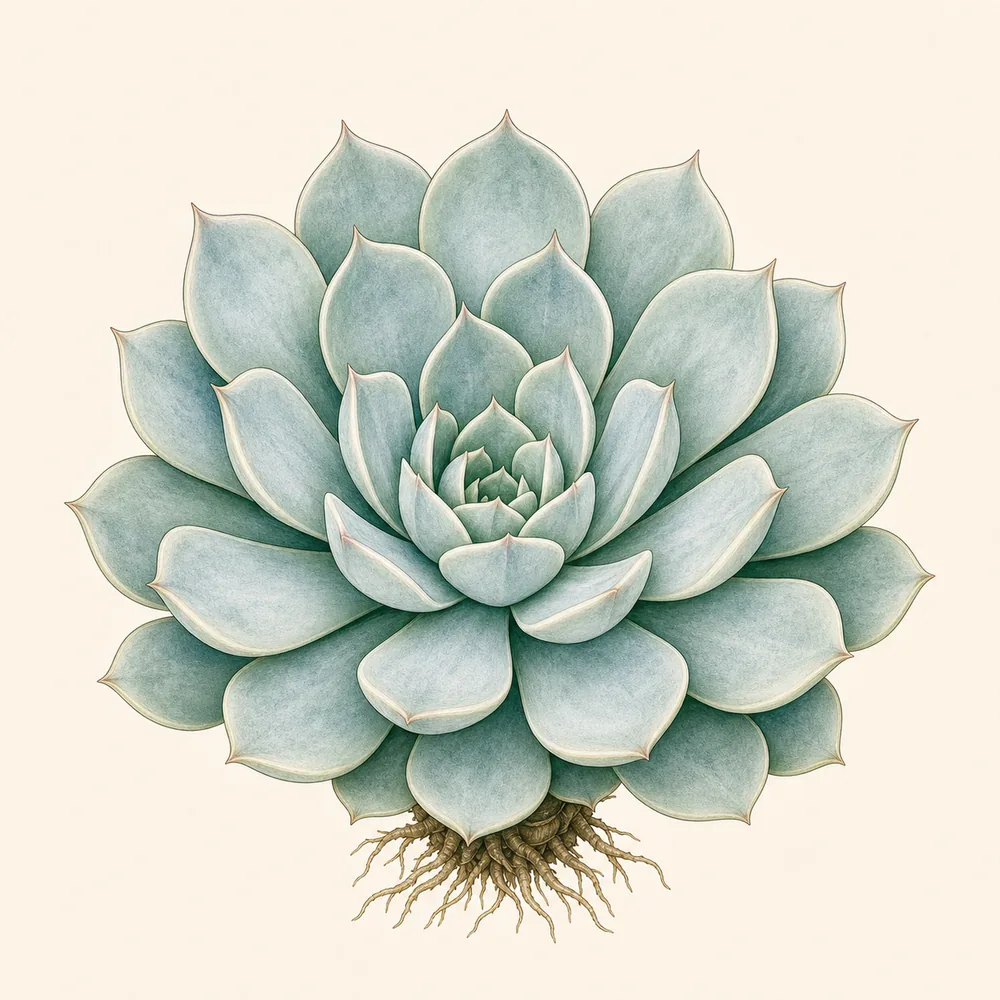
Echeveria
A neat rosette succulent with pale, silvery-blue leaves arranged like an open flower. Undemanding and pet-safe — the whole trick is plenty of sun and very little water.
Safe around cats & dogs
Echeveria (listed by the ASPCA under 'Hens and Chickens') is non-toxic to cats and dogs — a genuinely pet-safe rosette succulent.
Care at a glance
Everything that matters, in six lines. The detail is further down.
Light
The sunniest windowsill you have. Good light keeps the rosette tight and colourful; too little and it stretches and pales.
Water
Water thoroughly, then wait until the compost is completely dry — often a fortnight or more. Water the soil, not the rosette.
Temperature
Ordinary room warmth. It can take a cool, bright winter but keep it above about 5 °C and frost-free.
Humidity
Prefers dry air and good ventilation. Never mist it; damp sitting in the rosette causes rot.
Feeding
A weak, high-potash or cactus feed once or twice over spring and summer is all it needs.
Soil
A proper cactus and succulent mix, or a peat-free mix cut heavily with grit or perlite.
What to do, and when
Growth resumes. Repot if crowded, start watering a little more often, and give it your brightest spot. A good time to remove any offsets to pot up.
Peak growth. Full sun and thorough-but-infrequent watering. If it flowers, it sends up an arching stem of small orange-pink bells — leave it to enjoy.
Ease right back on water as light drops. Bring any plant that summered outdoors back inside before cold, wet nights set in.
Near-dormant. Keep it bright, cool and almost dry — a little water once a month at most — and off cold, damp windowsills.
Sun is what keeps the shape
Everything good about an echeveria — the tight rosette, the silvery bloom, the pink-flushed edges — depends on strong light. On a bright sill it stays compact and colourful.
In a dim spot it does the opposite: the rosette stretches upward, the gaps between leaves open out, and the colour fades to a flat green. This 'etiolation' can't be reversed, but you can behead the stretched rosette and re-root it tighter in better light.
How to water without killing it
Far more echeverias die from kindness than from neglect. The safe rhythm is soak-and-dry: drench the compost, let every drop drain, then leave it bone-dry until the leaves feel slightly soft.
Always water the soil, never over the top — water pooling in the centre of the rosette is the classic cause of a sudden collapse into black mush.
Free plants from a single leaf
Echeveria is one of the most satisfying plants to propagate. Gently twist off a healthy leaf so it comes away clean, let the end callus over for a day or two, then lay it on top of dry, gritty compost.
Within a few weeks tiny roots and a miniature rosette appear at the base. Keep it barely moist and bright, and you have a whole new plant for nothing.
Common problems
Stretched, pale rosette
Too little light. Move it to full sun; behead and re-root the stretched top to start again tighter.
Soft, translucent, mushy leaves
Overwatering, the commonest killer. Let it dry out completely and cut back hard on watering.
Shrivelled, wrinkled leaves
Under-watered and drawing on reserves — easily fixed. Give it a thorough soak and it plumps back up.
Rotten centre or black base
Water sitting in the rosette or a soggy mix. Water the soil only, improve drainage, and salvage healthy offsets if the core is lost.
Everything an echeveria needs
Full sun, a gritty mix, and the discipline to leave the watering can alone.
We take no commission on anything in the "save your money" tier — if we don't think you should buy it, we don't link it. How our recommendations work
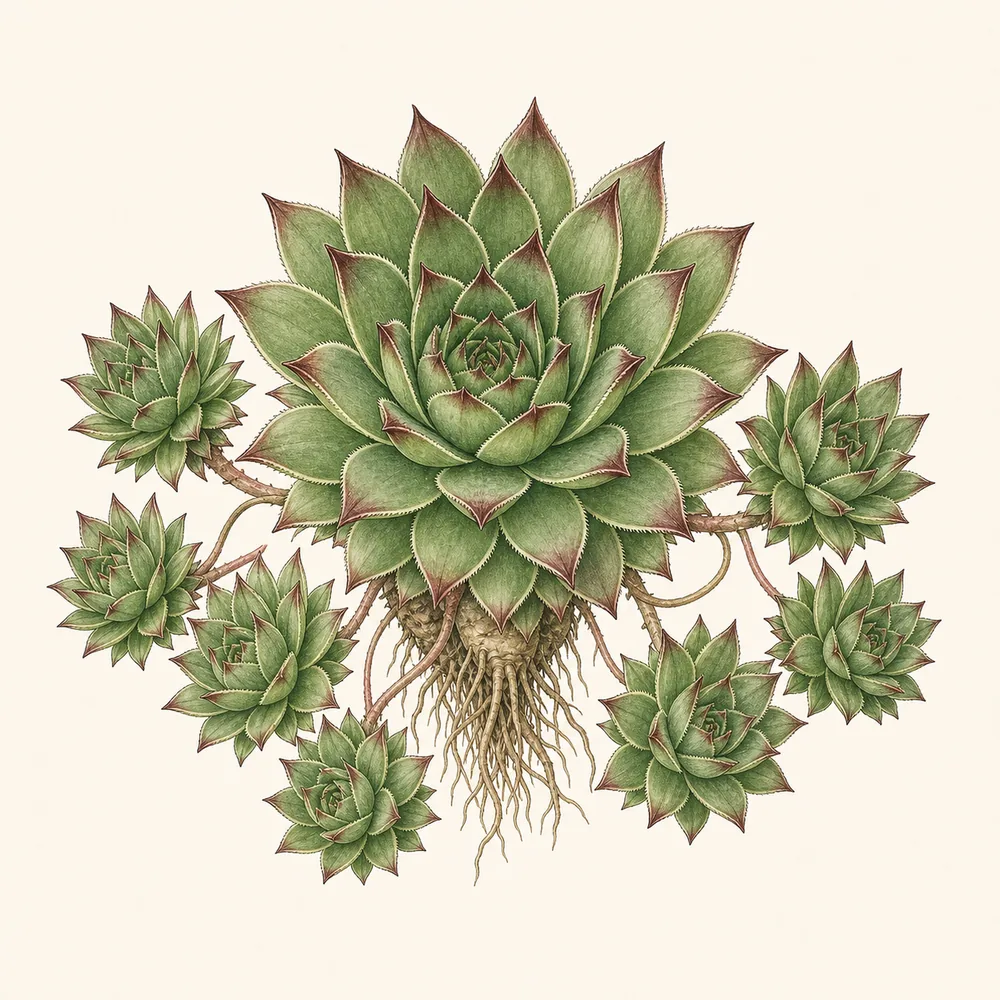
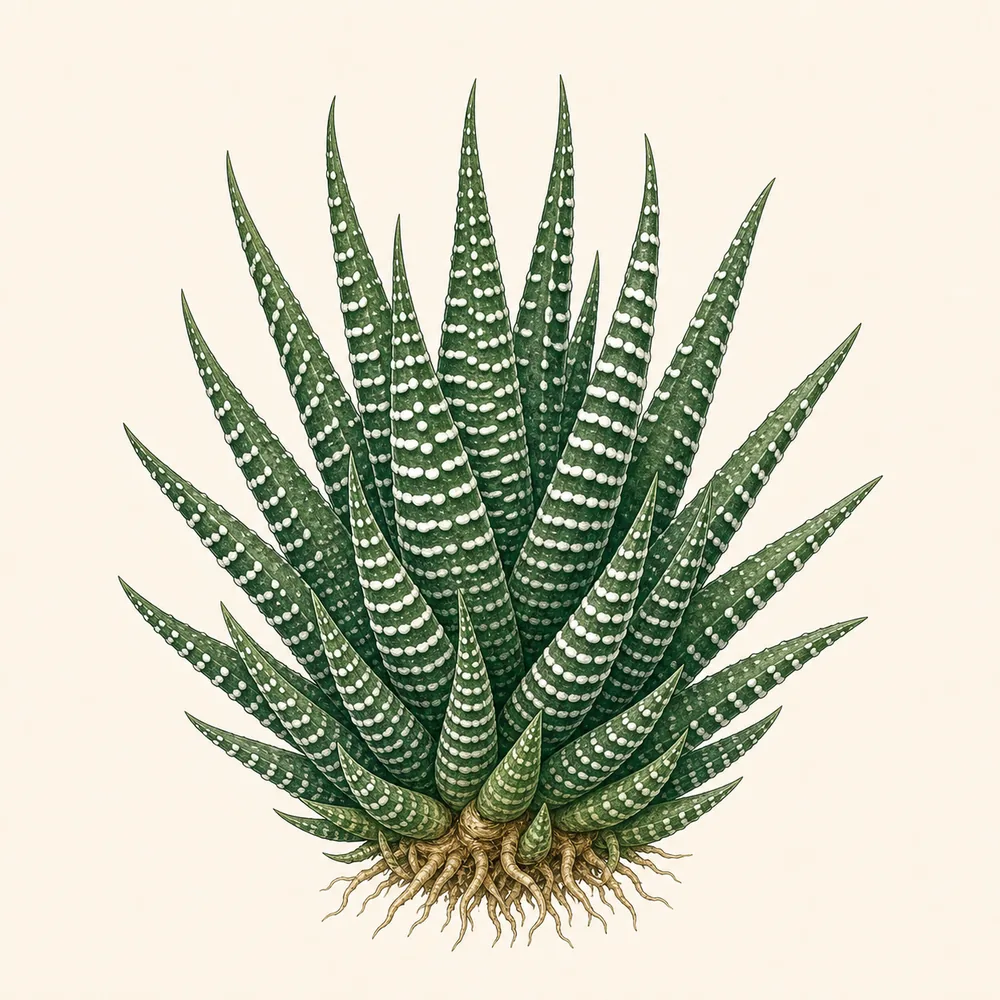
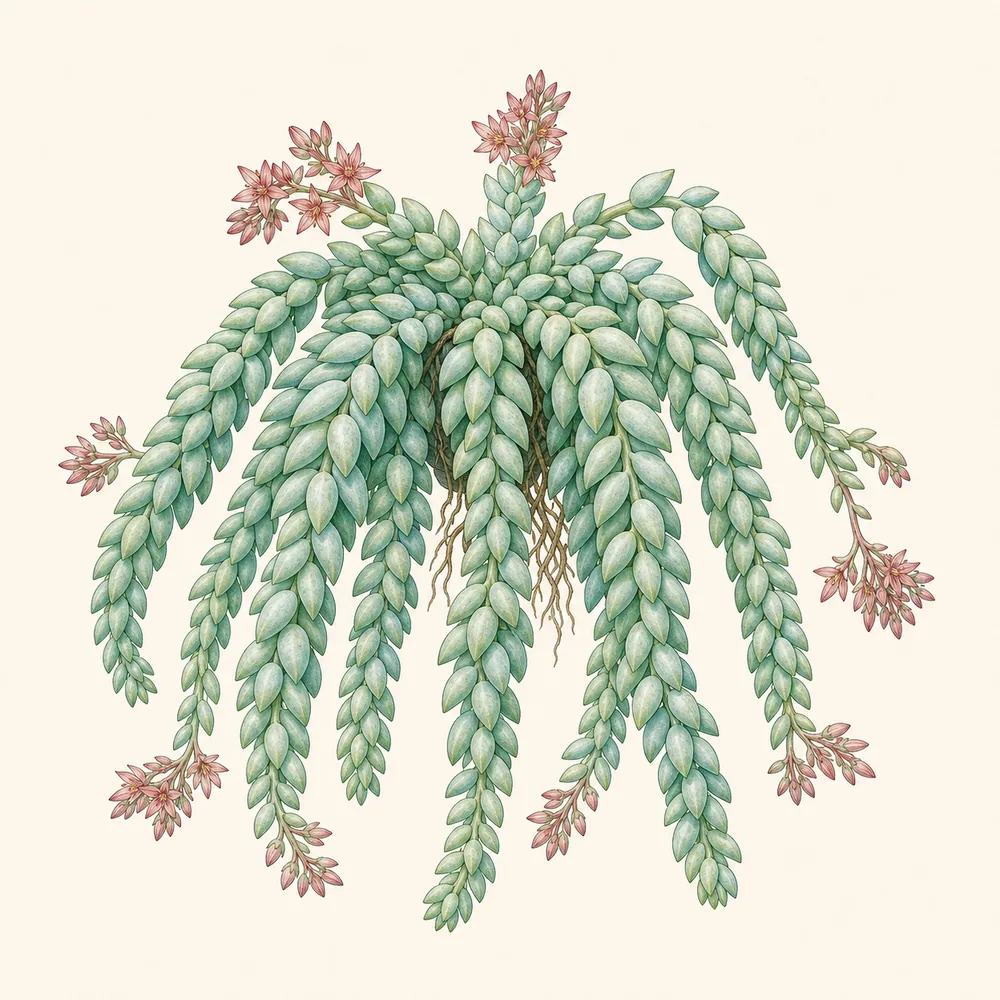
If you like this, try
Other plants with a similar temperament.
How we checked this
Care cross-checked against the RHS. Toxicity confirmed against the ASPCA database, which lists Echeveria (as 'Hens and Chickens') as non-toxic to cats and dogs. If our page and these sources ever disagree, believe them — and tell us.
Sources: RHS · ASPCA — toxic & non-toxic plants
Last reviewed · July 2026