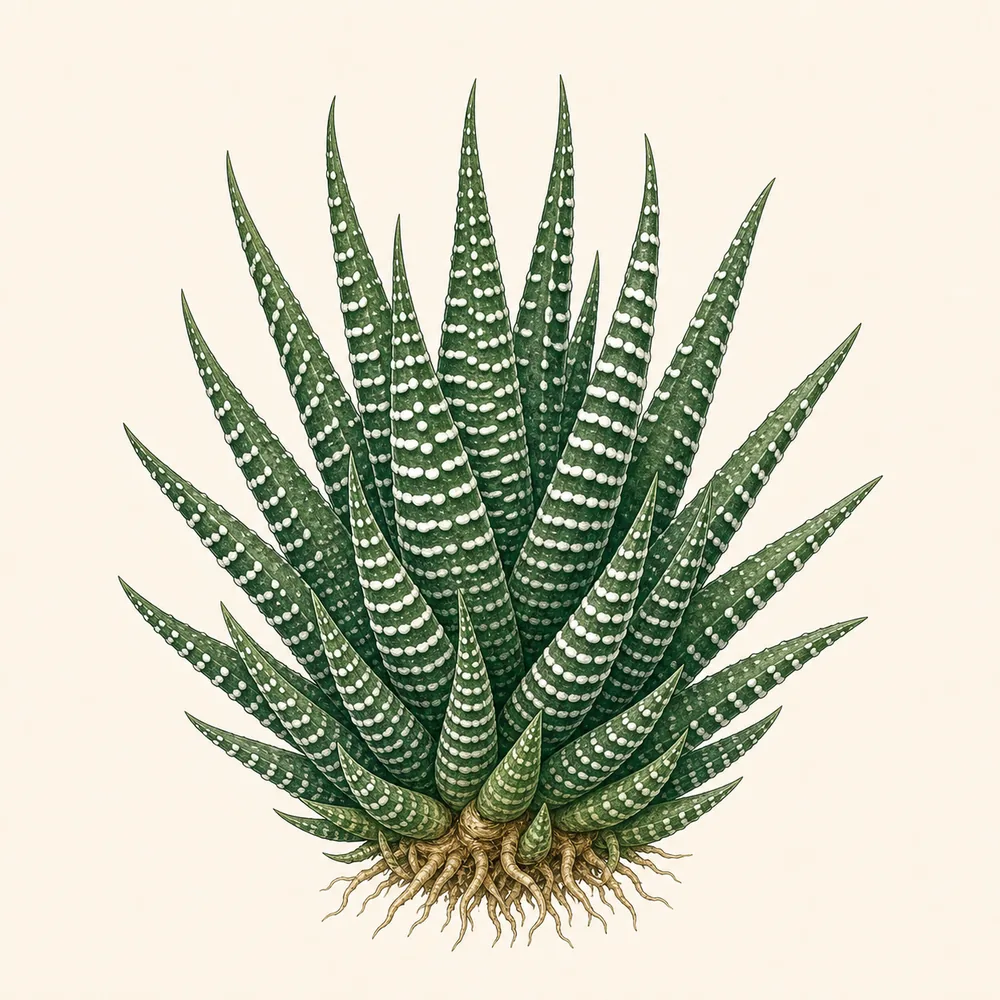
Haworthia
A small, tough rosette succulent with dark, upright leaves banded in white — the zebra markings that give it its name. One of the easiest houseplants there is, and happy to stay pot-sized for years.
Not listed by ASPCA — treat with caution
The ASPCA doesn't list the zebra haworthia (Haworthiopsis), so we can't stamp it pet-safe. It's a small, spineless succulent with no known serious toxicity, but with no database entry we flag it honestly rather than guess.
Care at a glance
Everything that matters, in six lines. The detail is further down.
Light
Bright light without harsh midday sun. Unlike many succulents it takes gentle shade well, which makes it forgiving indoors.
Water
Water thoroughly, then wait until the compost is completely dry. It stores water in its leaves, so infrequent is the rule.
Temperature
Ordinary room warmth. It tolerates a cool, bright winter but keep it above about 5 °C and frost-free.
Humidity
Perfectly happy in normal, dry room air. No misting — moisture sitting in the rosette invites rot.
Feeding
A weak cactus feed once or twice over spring and summer is plenty; it grows slowly and needs little.
Soil
A cactus and succulent mix, or a peat-free mix cut heavily with grit or perlite.
What to do, and when
Growth resumes. Repot if the pot is full of offsets, start watering a little more often, and pot up any pups you remove.
Active growth. Bright light and thorough-but-infrequent watering. It shrugs off summer holidays better than almost any plant.
Ease back on water as light drops. It needs very little through the darker months.
Near-dormant. Keep it bright, cool and almost dry — a small drink once a month at most — and off cold, damp windowsills.
The easiest succulent for real rooms
Where most succulents demand a blazing south-facing sill, the zebra haworthia is unusually tolerant of average indirect light. That makes it one of the few succulents that genuinely thrives on a desk or a bookshelf away from the window.
It stays small, rarely outgrows its pot, and forgives the odd missed watering completely — about as low-maintenance as a living thing gets.
Watering a leaf that stores water
The thick, banded leaves are water tanks, so the plant's whole strategy is to ride out drought. Soak the compost, drain it fully, then leave it completely dry until the leaves feel slightly soft.
Water the soil, not the centre of the rosette. Standing water and a soggy mix are the only reliable ways to kill it — in winter, when in doubt, don't water.
A colony from the offsets
A settled haworthia throws up little clone rosettes — offsets, or pups — around its base. Left alone they form a handsome clump; lifted and potted up, each becomes a free new plant.
In spring, tip the plant out, gently separate a pup with a few roots of its own, let any cut surface dry for a day, then pot it into gritty mix and water lightly.
Common problems
Soft, translucent, mushy leaves
Overwatering, the main risk. Let it dry out fully and water far less often.
Shrivelled, curling leaves
Under-watered and drawing on reserves. A good soak revives it quickly.
Reddish or bleached leaves
Too much harsh direct sun. Move it to bright but indirect light and the colour recovers.
Faded, weak markings
Too little light. Nudge it somewhere brighter (still out of scorching sun) to restore the contrast.
Everything a haworthia needs
Bright indirect light, a gritty mix, and a very light hand with the watering can.
We take no commission on anything in the "save your money" tier — if we don't think you should buy it, we don't link it. How our recommendations work
If you like this, try
Other plants with a similar temperament.
How we checked this
Care cross-checked against the RHS. The ASPCA does not list haworthia, so its pet-safety is unconfirmed and we have not stamped it safe. If our page and these sources ever disagree, believe them — and tell us.
Sources: RHS · ASPCA — toxic & non-toxic plants
Last reviewed · July 2026