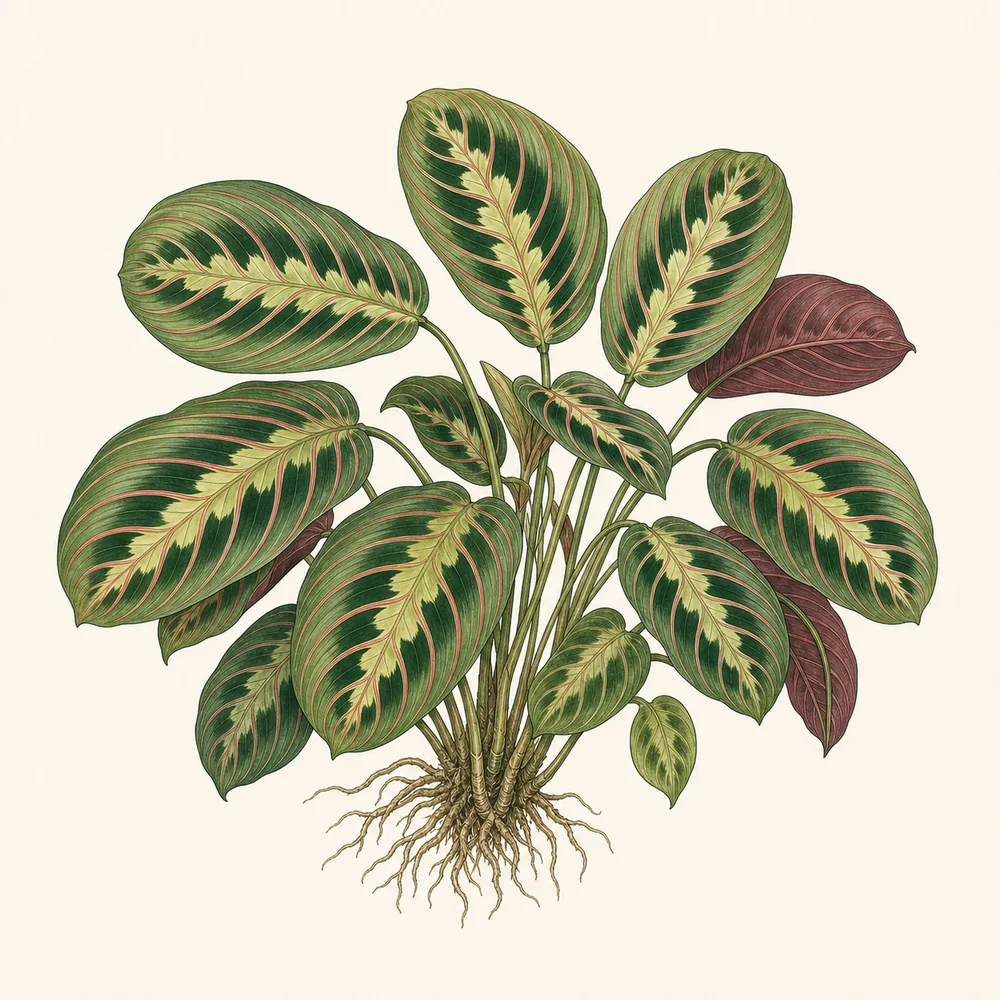
Prayer Plant
Grown for its beautifully patterned leaves that fold up at night like praying hands. It rewards steady warmth, humidity and soft light, and sulks in cold, dry air.
Safe around cats & dogs
The prayer plant (Maranta leuconeura) is listed as non-toxic to cats and dogs on the ASPCA database — one of the genuinely pet-safe patterned houseplants, unlike the superficially similar calathea's toxic look-alikes.
Care at a glance
Everything that matters, in six lines. The detail is further down.
Light
Bright but filtered light. Direct sun scorches and fades the markings; deep shade dulls them.
Water
Water when the top centimetre dries — it likes evenly moist soil, never waterlogged and never bone dry.
Temperature
Warmth-loving. Cold below about 12 °C damages the leaves.
Humidity
Loves humidity. Dry air gives brown, crispy edges; group it with other plants or use a humid room.
Feeding
A weak balanced feed every couple of weeks in spring and summer.
Soil
A rich but free-draining houseplant mix that holds a little moisture.
What to do, and when
Growth restarts — resume feeding and repot if it's crowded. Divide congested clumps now.
Keep it warm, humid and lightly moist; feed fortnightly and keep out of direct sun.
Ease back on water and feed as growth slows.
Slower growth. Keep it warm and humid, water less, and keep it well away from cold windows and radiators.
Humidity and water quality
The prayer plant's two demands are humidity and gentle watering. Dry household air is the usual reason for the brown, crisping leaf edges people struggle with.
It's also sensitive to the fluoride and salts in some tap water, which can brown the tips. If your tap water is hard, rainwater or filtered water noticeably helps.
The night-time fold
Those leaves rise and fold together each evening and open flat again by morning — the movement (nyctinasty) that gives the plant its name. It's normal and a sign of a healthy rhythm.
If the leaves stay curled during the day, though, that's thirst or cold, not sleep.
Common problems
Crispy brown edges
Dry air, or salts in hard tap water. Raise humidity and switch to rain or filtered water.
Faded, washed-out markings
Too much direct sun. Move it to bright, filtered light.
Yellowing lower leaves
Usually overwatering. Let the top dry a little more between drinks.
Leaves curled in daytime
Thirst or cold. Check the soil and move it somewhere warmer.
Everything a prayer plant needs
Warmth, humidity and soft water do most of the work.
We take no commission on anything in the "save your money" tier — if we don't think you should buy it, we don't link it. How our recommendations work
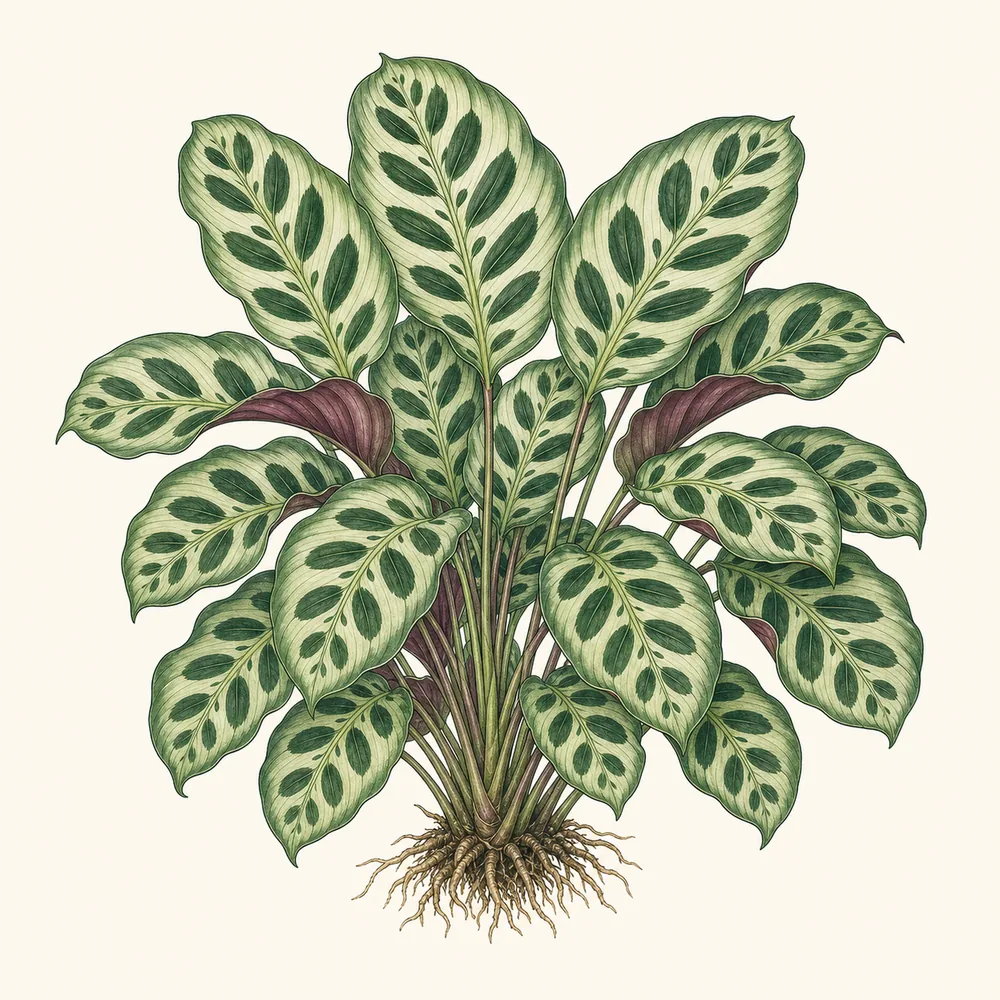
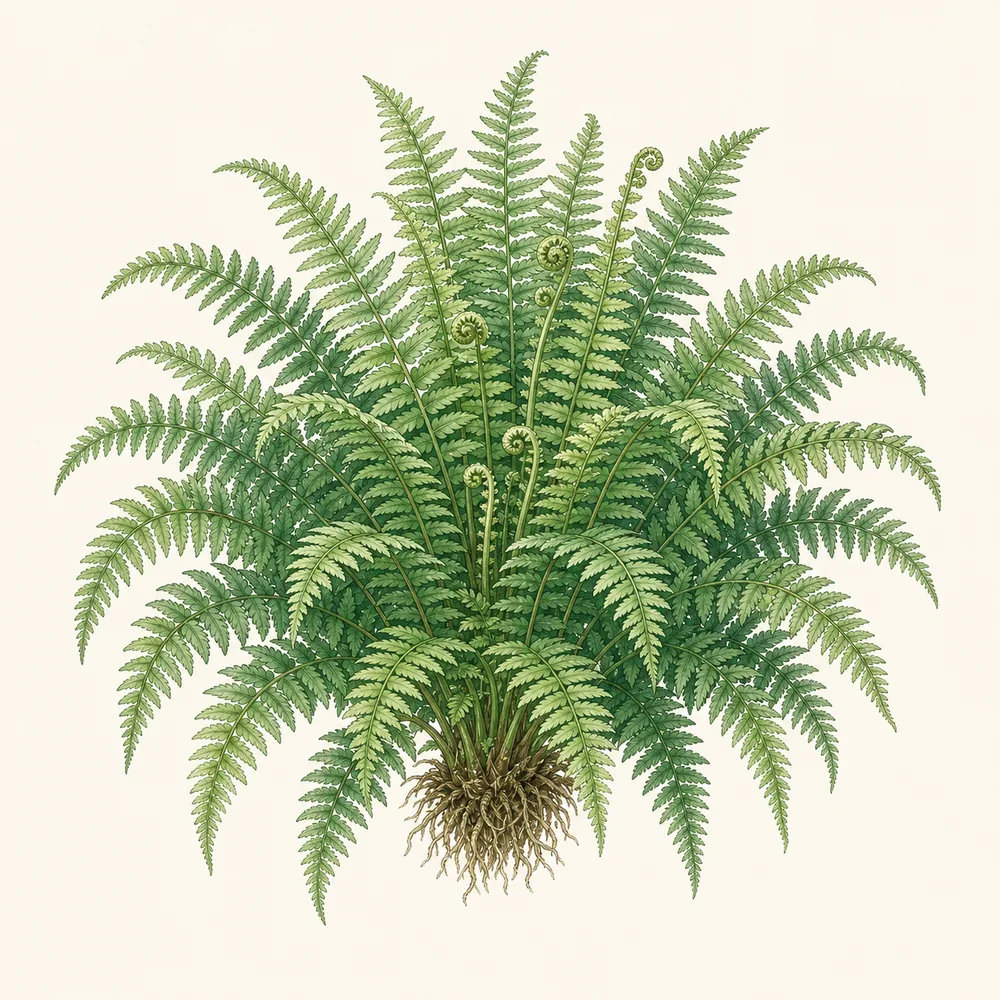
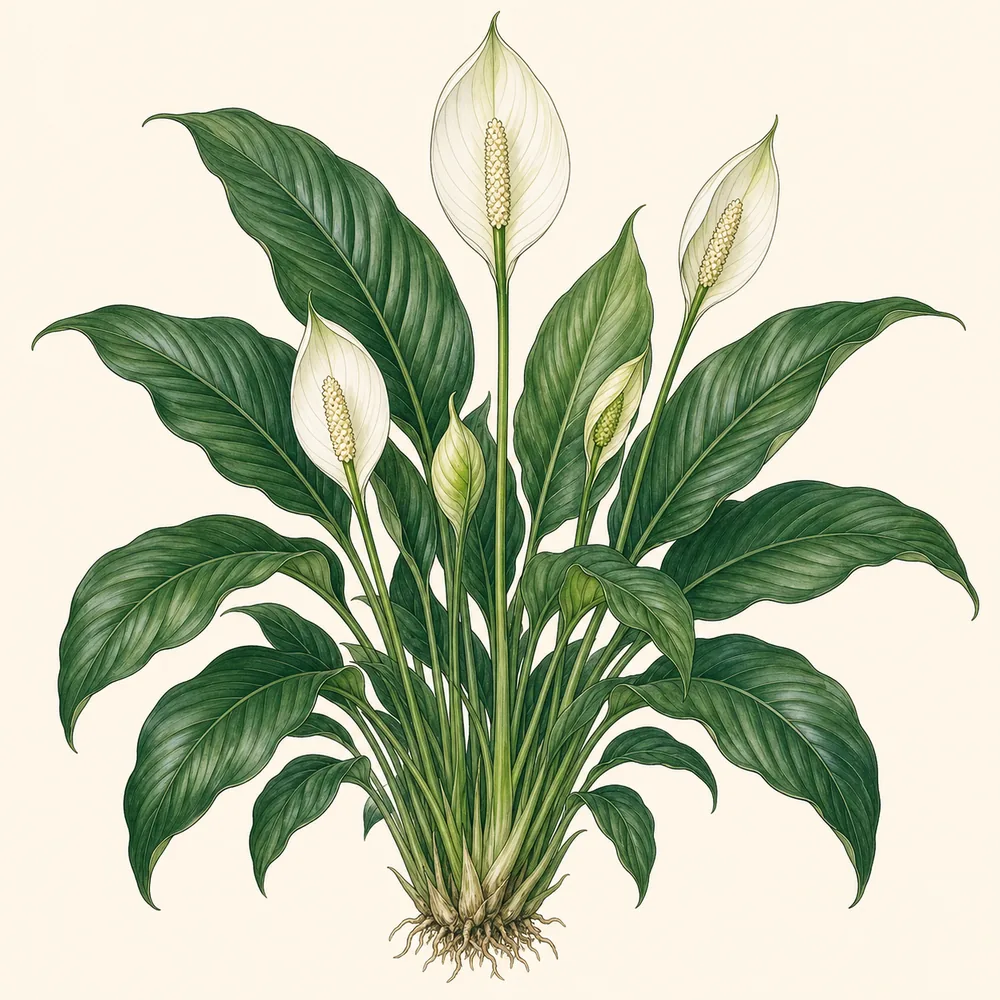
If you like this, try
Other plants with a similar temperament.
How we checked this
Care cross-checked against the RHS. Toxicity confirmed against the ASPCA database, which lists the prayer plant (Maranta leuconeura) as non-toxic to cats and dogs. If our page and these sources ever disagree, believe them — and tell us.
Sources: RHS · ASPCA — toxic & non-toxic plants
Last reviewed · July 2026