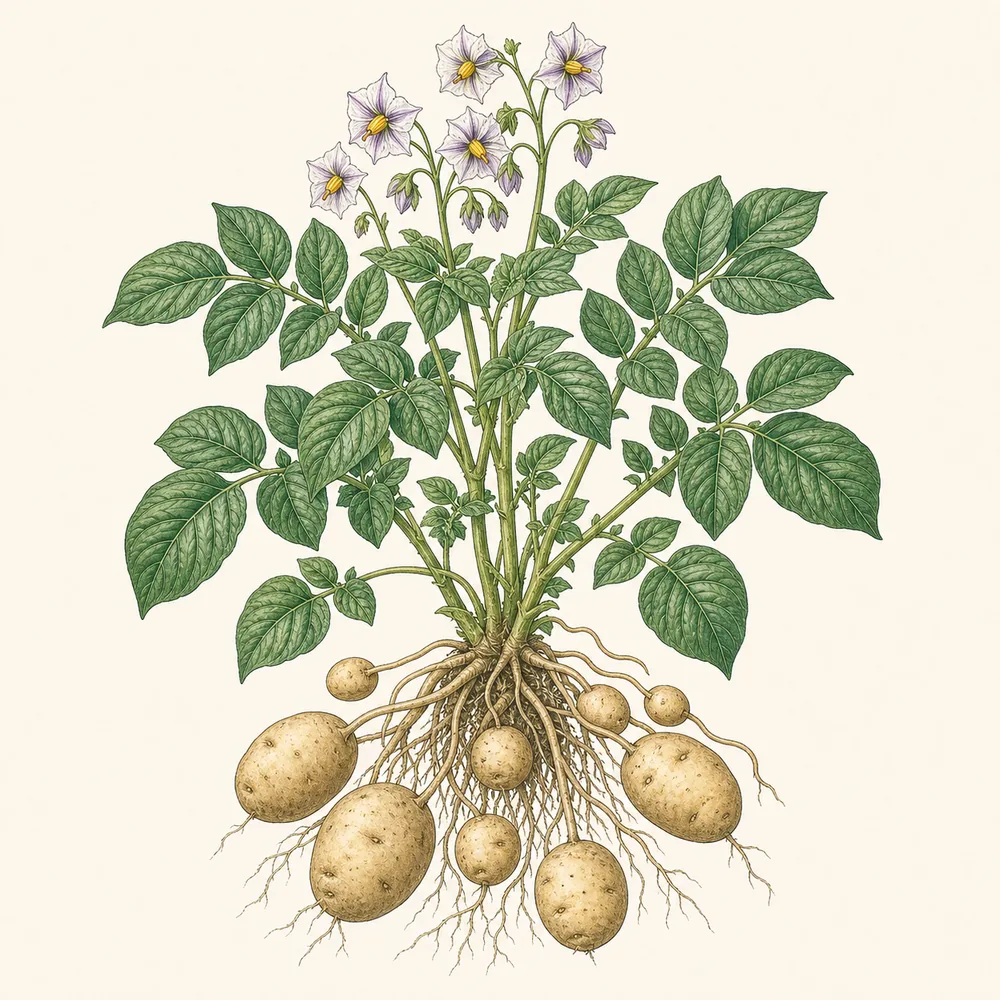
Potato
Few crops give a bigger thrill than tipping a bucket of home-grown potatoes out of the soil. They're forgiving, productive and a brilliant first crop — chit them, plant them, earth them up, and let the plants do the rest.
Toxic in its green parts (leaves, sprouts & green tubers)
Potato is a nightshade: the leaves, stems, sprouts and any green (light-exposed) tubers contain solanine, a glycoalkaloid that causes vomiting, drooling and lethargy if eaten. The cooked, non-green tuber is a food staple and fine — the green parts and foliage are the hazard. Keep pets and children away from haulm and green potatoes.
Care at a glance
Everything that matters, in six lines. The detail is further down.
Light
An open, sunny site gives the biggest crop. The leafy tops need light to feed the tubers swelling in the dark below.
Water
Keep the soil moist once the plants flower and tubers start to bulk — a dry spell then costs you yield. Even watering avoids knobbly, split spuds.
Temperature
The tubers are hardy underground but young shoots are cut down by frost. Earth up or fleece the tops if a late frost threatens.
Spacing
Space earlies about 30 cm apart, maincrops 40 cm, in rows two feet apart. Crowded plants give a lot of small tubers.
Feeding
Potatoes are hungry. Dig in compost or well-rotted manure before planting and a general fertiliser; they crop best on rich ground.
Soil
Almost any deep, fertile soil that isn't waterlogged. They even help break in rough ground — the digging and earthing up work the soil.
What to do, and when
The main planting season. Chit seed potatoes on a windowsill, then plant earlies from March and maincrops in April. Earth up as shoots appear and fleece against late frost.
Keep earthing up, water well once plants flower, and lift the first earlies from June — feel under the plant for a meal's worth. Watch for blight in warm, wet spells.
Lift maincrops as the tops die down. Let them dry a few hours, then store sound, unblemished tubers in paper sacks somewhere cool, dark and frost-free.
Season over outdoors. Order seed potatoes for next year and check stored tubers, removing any that have gone soft. Plant nothing outside now.
Chit first for an earlier crop
"Chitting" just means letting seed potatoes sprout before planting. Stand them eyes-up in an egg box or seed tray on a cool, light windowsill from late winter, and short, sturdy green shoots form over a few weeks.
It gives earlies a head start and a slightly bigger, earlier crop. It matters most for first and second earlies; maincrops benefit less, so don't fret if you plant them straight. Always start with certified seed potatoes, not supermarket ones, which may carry disease.
Plant, then earth up
Plant tubers about 12–15 cm deep, shoots pointing up. As the leafy tops grow, draw soil up around the stems to make a ridge — this is earthing up. Do it two or three times through the season.
Earthing up does two jobs: it gives more depth for tubers to form, and, crucially, it keeps developing potatoes covered and in the dark. Tubers exposed to light turn green — and green potatoes contain solanine and shouldn't be eaten.
Knowing when to lift
First earlies are ready roughly ten weeks after planting, usually from June — lift them once the flowers open and have a rummage for a meal's worth. Earlies don't store; eat them fresh, when they're at their best.
Maincrops are left longer, into autumn, until the foliage yellows and dies back. Lift on a dry day, let the skins dry, and store only sound tubers. Damaged ones rot in store and spoil the rest.
Common problems
Potato blight
Brown patches on leaves in warm, wet summers that rot the whole plant fast. Cut off and bin affected tops immediately, grow blight-resistant varieties, and lift earlies before blight season peaks.
Green tubers
Potatoes exposed to light turn green and toxic (solanine). Earth up well so tubers stay covered, and store lifted potatoes in the dark. Don't eat green spuds — cut away and bin green parts.
Scab on the skins
Rough, corky patches on the surface — cosmetic, and the potato is fine peeled. Worse on dry, limy soil; keep plants watered as tubers form and don't lime the potato bed.
Slug holes in the tubers
Maincrops left in the ground longest suffer most. Lift maincrops promptly once ready, choose slug-resistant varieties, and avoid leaving them in wet soil into autumn.
Everything a potato crop needs
Certified seed potatoes, rich soil, and a spot to earth up.
We take no commission on anything in the "save your money" tier — if we don't think you should buy it, we don't link it. How our recommendations work
If you like this, try
Other plants with a similar temperament.
How we checked this
Care cross-checked against the RHS, which flags potato foliage, sprouts and green tubers as poisonous (solanine). The ripe, cooked tuber is a food staple; the green parts are the hazard. If our page and these sources ever disagree, believe them — and tell us.
Sources: RHS · ASPCA — toxic & non-toxic plants
Last reviewed · July 2026