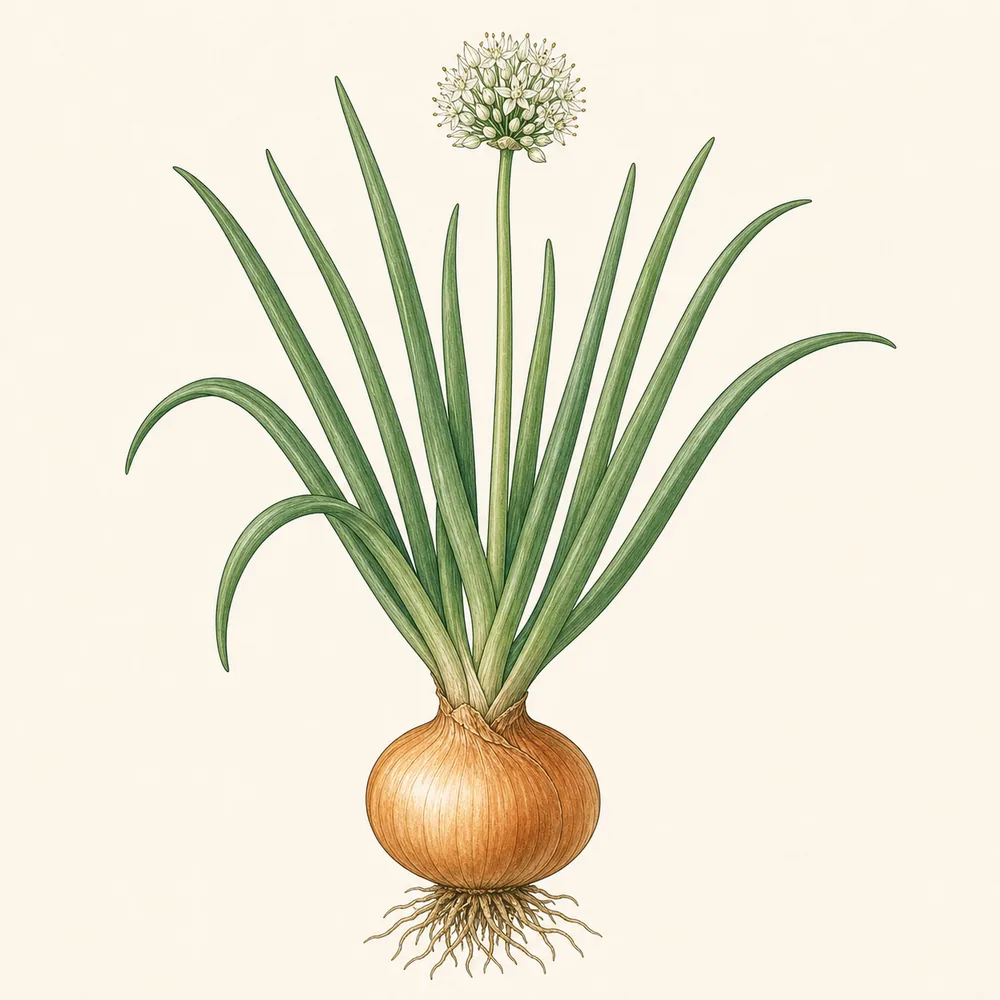
Onion
One of the most forgiving crops to grow, especially from sets. Push them into weed-free ground in spring, keep them clear of competition, and lift a whole summer's supply of storing onions in late summer.
Toxic to cats & dogs — an allium
Onions (Allium) are toxic to cats and dogs (ASPCA). Like all alliums they damage red blood cells and can cause haemolytic anaemia — in any form, cooked or raw — and the signs are often delayed by a day or more. Keep all onions, and the growing plants, away from pets.
Care at a glance
Everything that matters, in six lines. The detail is further down.
Light
Onions need an open, sunny site to bulb up well — shade gives small bulbs and soft, poor-keeping crops.
Water
Water during prolonged drought while bulbs swell, then stop as they mature — dry conditions help them ripen and store.
Temperature
Spring sets go in March–April; autumn (Japanese) sets in September overwinter for an earlier summer crop.
Spacing
Space sets a hand's width apart with the tips just showing; closer spacing gives smaller bulbs.
Feeding
A general feed on poor soil is enough. Avoid high nitrogen and fresh manure, which give soft bulbs that rot in store.
Soil
Light, fertile, free-draining ground suits them; keep it firm and scrupulously free of weeds.
What to do, and when
Main planting time — push spring sets into firm, weed-free soil in March and April, tips just showing. Firm any lifted by birds or frost.
Keep the bed weed-free and water only in drought. Stop watering once bulbs swell; foliage flops over as they ripen.
Plant autumn (Japanese) sets in September for an earlier crop next summer. Finish curing and storing the main crop.
Overwintering sets sit tight in the cold. Check stored onions and remove any that show soft spots or rot.
Sets are the easy way in
You can grow onions from seed, but sets — small immature bulbs — are far quicker and more reliable in the UK's uncertain spring. Push each set into soft, firm soil so just the papery tip shows, a hand's width apart.
Birds love to tug newly planted sets out by the wispy tops. Check the row for the first couple of weeks and simply push back in any that have been lifted.
Knowing when to stop
As summer ends the leaves naturally yellow and topple over — that's the plant telling you the bulbs are done swelling. Resist the old advice to bend the tops over by hand; it can let rot in. Just stop watering and let them ripen.
Lift the bulbs on a dry day once the foliage has flopped and started to brown, easing them up with a fork rather than pulling by the neck.
Curing for a crop that keeps
The difference between onions that store until spring and ones that rot by Christmas is curing. Spread the lifted bulbs in a single layer somewhere warm, dry and airy — a greenhouse bench, a sunny windowsill or a shed with the door open — for two to three weeks until the skins are papery and the necks fully dry.
Store only firm, well-dried bulbs with no thick or soft necks. Rope them up or keep them in netting somewhere cool, dark and airy, and check them over now and then.
Common problems
Onion white rot
Yellowing, wilting foliage and a white fluffy mould on the bulb base. It persists in soil for years — never plant alliums on affected ground again and lift and bin infected plants.
Bolting (running to seed)
A flower stalk shoots up, often after a cold snap. Use heat-treated sets, don't plant too early, and eat bolted bulbs soon as they won't store.
Onion downy mildew
Grey-purple mould on leaves in wet summers. Space widely for airflow, avoid overhead watering, and rotate where you grow alliums.
Rotting in store
Usually poorly cured bulbs or thick, sappy necks from over-feeding. Cure thoroughly, avoid fresh manure, and store only firm, dry bulbs.
Everything an onion bed needs
Firm sunny soil, good sets, and somewhere dry to cure the crop.
We take no commission on anything in the "save your money" tier — if we don't think you should buy it, we don't link it. How our recommendations work
If you like this, try
Other plants with a similar temperament.
How we checked this
Care cross-checked against the RHS. Toxicity taken from the ASPCA database, which lists onion (Allium cepa) as toxic to cats and dogs — haemolytic anaemia, often with delayed onset. If our page and these sources ever disagree, believe them — and tell us.
Sources: RHS · ASPCA — toxic & non-toxic plants
Last reviewed · July 2026