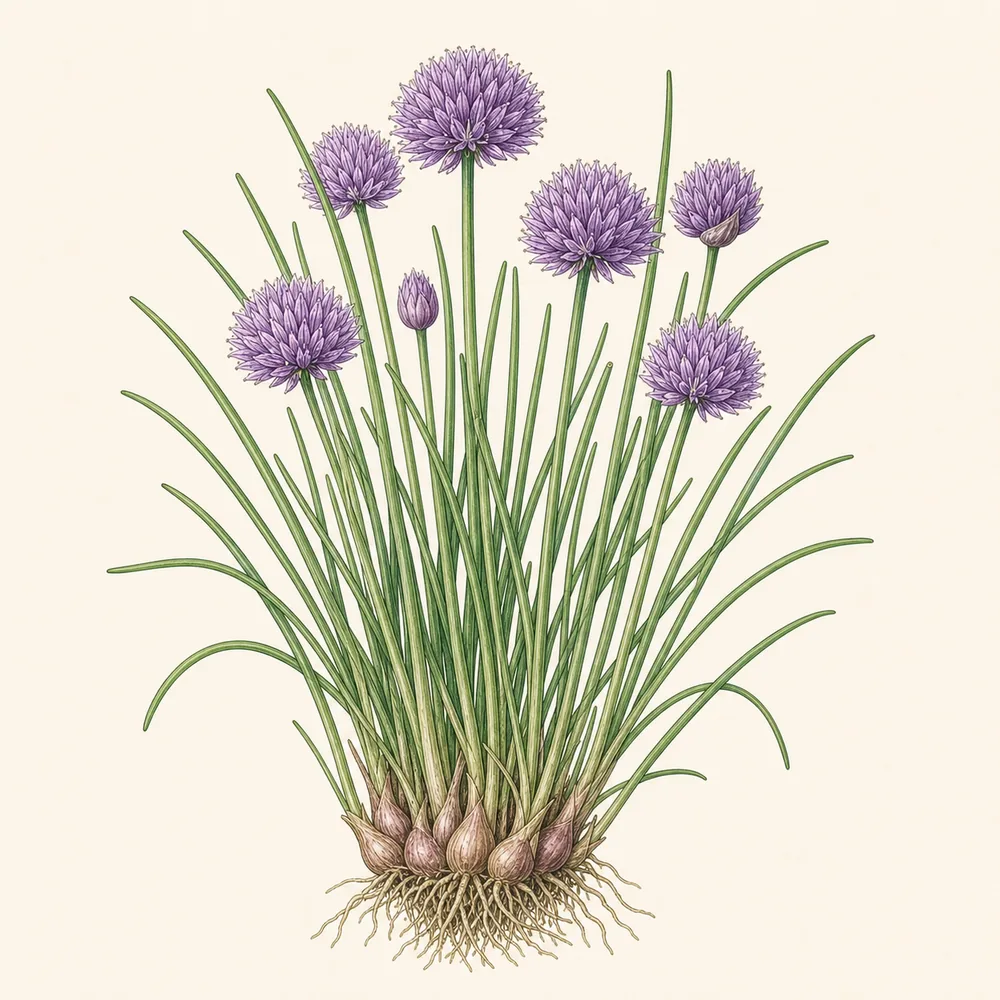
Chives
A tough, clump-forming perennial onion with mild oniony leaves and pretty edible purple pom-pom flowers. Effortless to grow — but, as an allium, genuinely toxic to cats and dogs.
Toxic to cats & dogs — an allium
Chives (Allium schoenoprasum) are in the onion family and are listed as toxic to cats and dogs on the ASPCA database. Alliums damage red blood cells and can cause haemolytic anaemia; crucially, signs are often delayed for a day or more. All parts, in any form, are a risk — keep pets from grazing it.
Care at a glance
Everything that matters, in six lines. The detail is further down.
Position
A sunny spot gives the best leaf and the most flowers; it tolerates light shade.
Water
Water in dry spells for tender leaves; established clumps are fairly drought-tolerant.
Hardiness
Fully hardy. Dies down in winter and returns reliably each spring for years.
Soil
Any reasonable, free-draining soil; not fussy.
Feeding
A little feed in spring keeps it lush; over-feeding isn't needed.
Harvest
Cut handfuls near ground level; it re-grows quickly. Divide clumps every few years.
What to do, and when
Fresh green spears push up. Divide congested clumps now and feed lightly.
Purple flowers open — edible, and loved by bees. Cut plants back for a fresh flush of leaf.
Growth slows; keep snipping while it lasts and let some flowers set seed if you like.
Dies back to the ground and rests; it reappears in spring.
About as easy as herbs get
Chives are one of the most forgiving plants you can grow: a hardy perennial that returns every year, thrives in sun, and asks almost nothing. Snip what you need near the base and it simply grows back.
Every few years, lift and divide a congested clump in spring to keep it vigorous — one plant quickly becomes many.
Pet safety — it's an allium
It's worth being clear: despite being a everyday kitchen herb, chives belong to the onion and garlic family, which is genuinely toxic to cats and dogs. The danger is cumulative and the signs can be delayed by a day or two, so a pet grazing it repeatedly is the real concern.
Growing it in a raised pot or a bed pets don't browse keeps everyone happy.
Common problems
Yellowing tips
Often waterlogging or a hungry clump. Improve drainage and feed lightly in spring.
Congested, thin growth
The clump needs dividing. Lift and split it in spring.
Orange spots (rust)
Fungal rust in damp seasons. Cut affected leaves off; it usually re-grows clean.
Flopping, tired plant
Cut it right back after flowering for fresh new leaves.
Everything for chives
Sun, a little water, and a division every few years.
We take no commission on anything in the "save your money" tier — if we don't think you should buy it, we don't link it. How our recommendations work
If you like this, try
Other plants with a similar temperament.
How we checked this
Care cross-checked against the RHS. Toxicity taken from the ASPCA database, which lists chives (Allium schoenoprasum) as toxic to cats and dogs — an allium causing haemolytic anaemia, often with delayed onset. If our page and these sources ever disagree, believe them — and tell us.
Sources: RHS · ASPCA — toxic & non-toxic plants
Last reviewed · July 2026