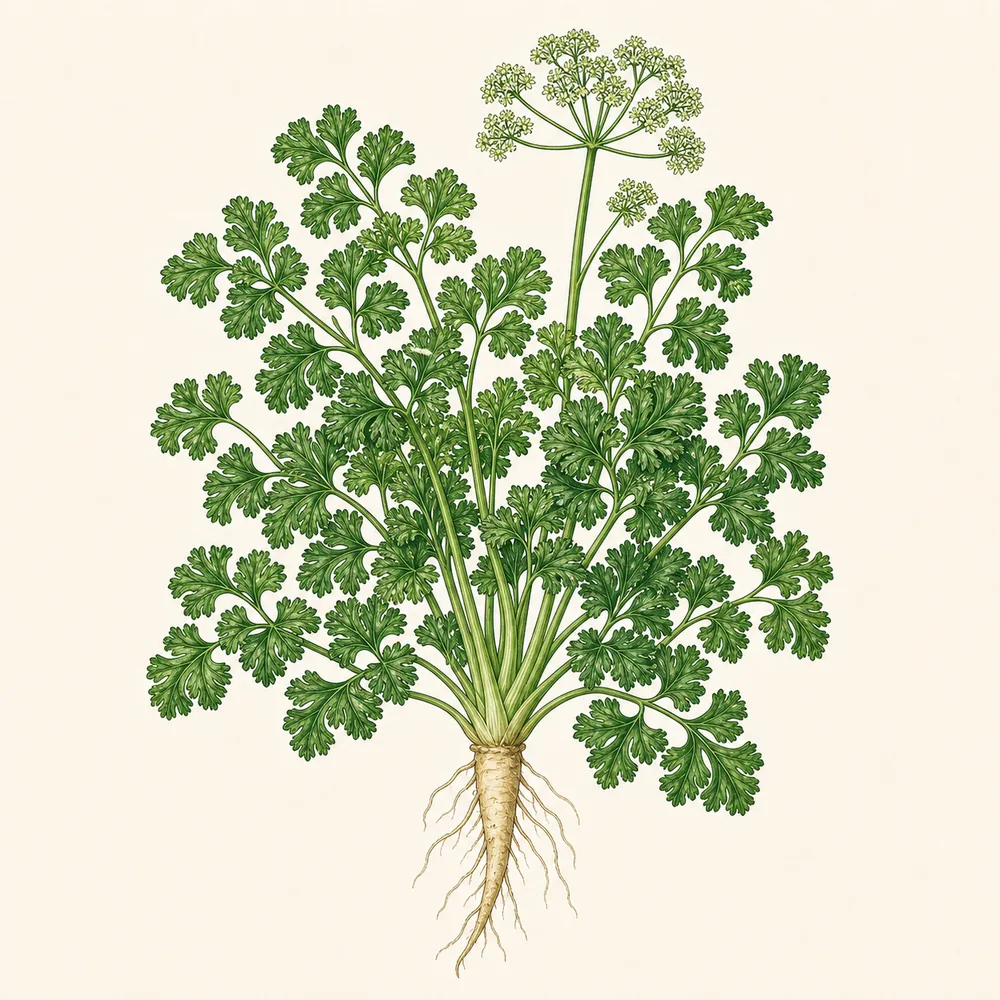
Parsley
The kitchen workhorse — curly or flat-leaf, hardy and productive. Easy to grow and pick for months, but, unlike most people assume, it's actually listed as toxic to pets.
Toxic to cats, dogs & horses if eaten
Garden parsley (Petroselinum crispum) is listed as toxic on the ASPCA database. It contains furanocoumarins, which can cause stomach upset and, with a lot of exposure, photosensitisation (sun-sensitive skin). A nibble is unlikely to harm, but it isn't the harmless herb most assume — keep grazing pets off it.
Care at a glance
Everything that matters, in six lines. The detail is further down.
Position
Happy in sun or a little afternoon shade, which keeps it leafy in summer.
Water
Steady moisture keeps it productive; drought makes it tough and quick to bolt in its second year.
Hardiness
Grown as an annual for leaf. Left in, it flowers and seeds in its second year, then dies.
Soil
A fertile, moisture-retentive but free-draining soil or good compost.
Feeding
A balanced feed now and then keeps the leaves coming.
Harvest
Harvest from the outside; it re-grows from the centre for months.
What to do, and when
Sow now — it's famously slow to germinate, so be patient (warmth and moisture help).
Peak picking. Keep it watered and cut outer stalks regularly; sow a second batch for autumn.
Still cropping; a cloche extends the season. First-year plants often stand through winter.
Hardy — first-year plants keep going in mild spells and under cover.
Patience at sowing
Parsley is notoriously slow and erratic to germinate — two to four weeks is normal, and old folklore blames the devil. Warm, consistently moist compost and a little patience are all it needs; soaking the seed overnight can help.
Once up, it's easy and long-lasting. Pick from the outside and it keeps producing from the centre for the whole season.
A biennial grown as an annual
Parsley is a biennial: it makes leaf in year one, then flowers, sets seed and dies in year two. For the best leaf, sow fresh each spring rather than relying on old plants.
It grows well in a pot on a kitchen windowsill, keeping it handy and off the ground where pets graze.
Common problems
Slow or no germination
Normal for parsley — keep it warm and moist and wait; re-sow if needed.
Bolting to flower
Second-year plants, or heat and drought. Sow fresh and keep watered.
Yellowing leaves
Hungry or waterlogged. Feed lightly and check drainage.
Chewed leaves
Often caterpillars of the swallowtail family. Pick them off if damage is heavy.
Everything for parsley
Patience at sowing, rich moist soil and regular picking.
We take no commission on anything in the "save your money" tier — if we don't think you should buy it, we don't link it. How our recommendations work
If you like this, try
Other plants with a similar temperament.
How we checked this
Care cross-checked against the RHS. Toxicity taken from the ASPCA database, which lists garden parsley (Petroselinum crispum) as toxic — furanocoumarins, with a photosensitisation risk on heavy exposure. If our page and these sources ever disagree, believe them — and tell us.
Sources: RHS · ASPCA — toxic & non-toxic plants
Last reviewed · July 2026