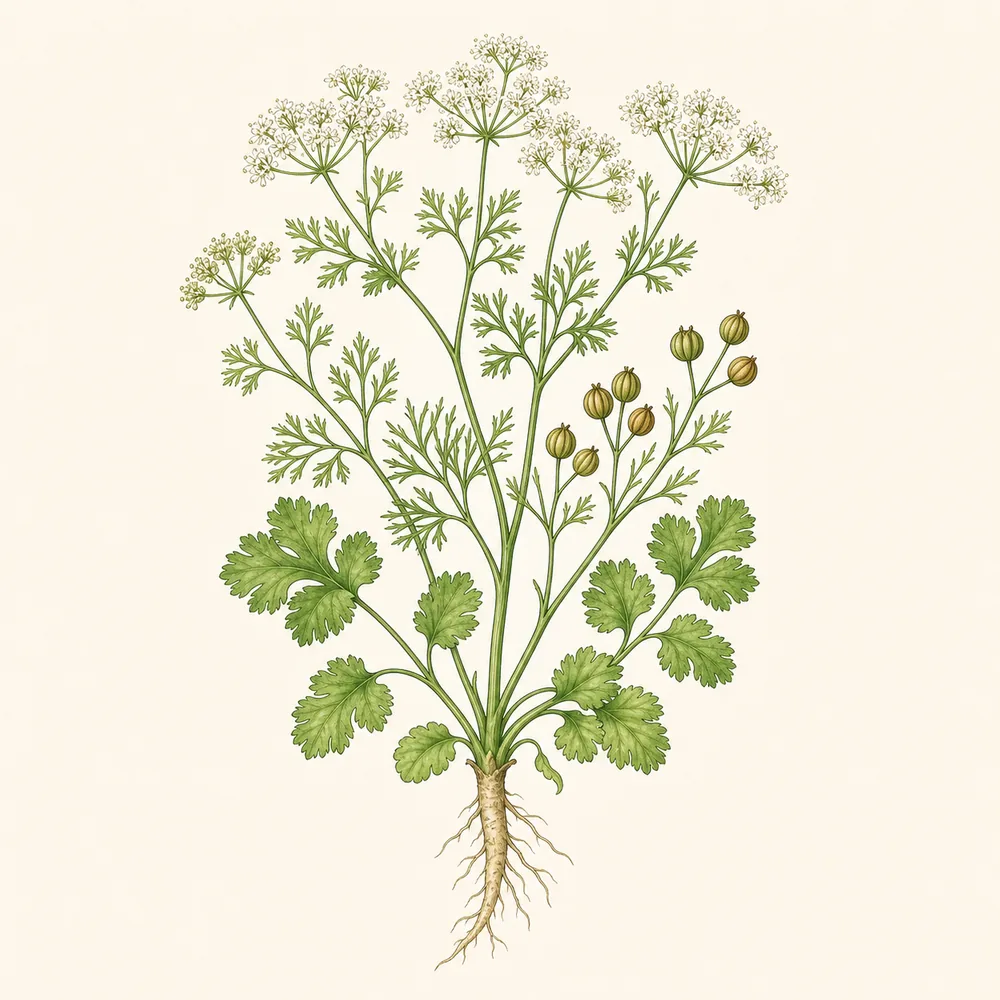
Coriander
Fast, aromatic and famously quick to run to seed. Grown for its leaves (cilantro) and its seeds (the spice), it's pet-safe and best sown little and often for a steady supply.
Safe around cats & dogs
Coriander (Coriandrum sativum) is listed as non-toxic to cats, dogs and horses on the ASPCA database, so it's a safe herb to grow within reach of pets.
Care at a glance
Everything that matters, in six lines. The detail is further down.
Position
Full sun for seed; a little afternoon shade in summer slows the bolting that leaf growers dread.
Water
Steady moisture keeps it in leaf; drought stress makes it bolt to seed almost overnight.
Hardiness
A short-lived annual — sow spring to late summer. Autumn sowings can overwinter under cover.
Soil
Any decent, moisture-retentive but free-draining soil or peat-free compost.
Feeding
Rich soil or heavy feeding pushes soft growth; a general feed is plenty.
Harvest
Snip outer leaves young; let some plants flower and set seed for the spice.
What to do, and when
Start sowing outdoors as it warms. Sow direct — coriander hates root disturbance.
Sow little and often every few weeks; give afternoon shade to slow bolting and keep it watered.
A late sowing under cover gives leaves into winter; let summer plants set seed to collect.
Largely over outdoors; a pot on a cool bright windowsill can tick over.
Beat the bolting
Coriander's whole reputation is for bolting — rushing to flower and going bitter — the moment it's stressed by heat, drought or being transplanted. The answers are simple: sow it direct where it's to grow (it resents root disturbance), keep it evenly watered, and give it a little shade in high summer.
Most importantly, sow a short row every few weeks rather than one big batch, so there's always fresh young leaf coming while older plants run to seed.
Two crops in one
Don't fight every bolt. Let some plants flower and set seed: the round seeds are coriander the spice, and they self-sow readily for next year.
For leaf, choose varieties sold as 'slow-bolting' and keep picking the outer leaves young.
Common problems
Bolting to seed
Heat, drought or transplant shock. Sow direct, keep moist, and give summer shade.
Bitter leaves
Usually the plant is bolting. Pick young and sow fresh batches.
Yellowing seedlings
Overwatering or poor drainage. Ease off and improve the soil.
Sparse, weak growth
Too dry or too shaded. Steady water and good light help.
Everything for coriander
Direct sowing, steady water and successional batches.
We take no commission on anything in the "save your money" tier — if we don't think you should buy it, we don't link it. How our recommendations work
If you like this, try
Other plants with a similar temperament.
How we checked this
Care cross-checked against the RHS. Toxicity confirmed against the ASPCA database, which lists coriander (Coriandrum sativum) as non-toxic to cats, dogs and horses. If our page and these sources ever disagree, believe them — and tell us.
Sources: RHS · ASPCA — toxic & non-toxic plants
Last reviewed · July 2026