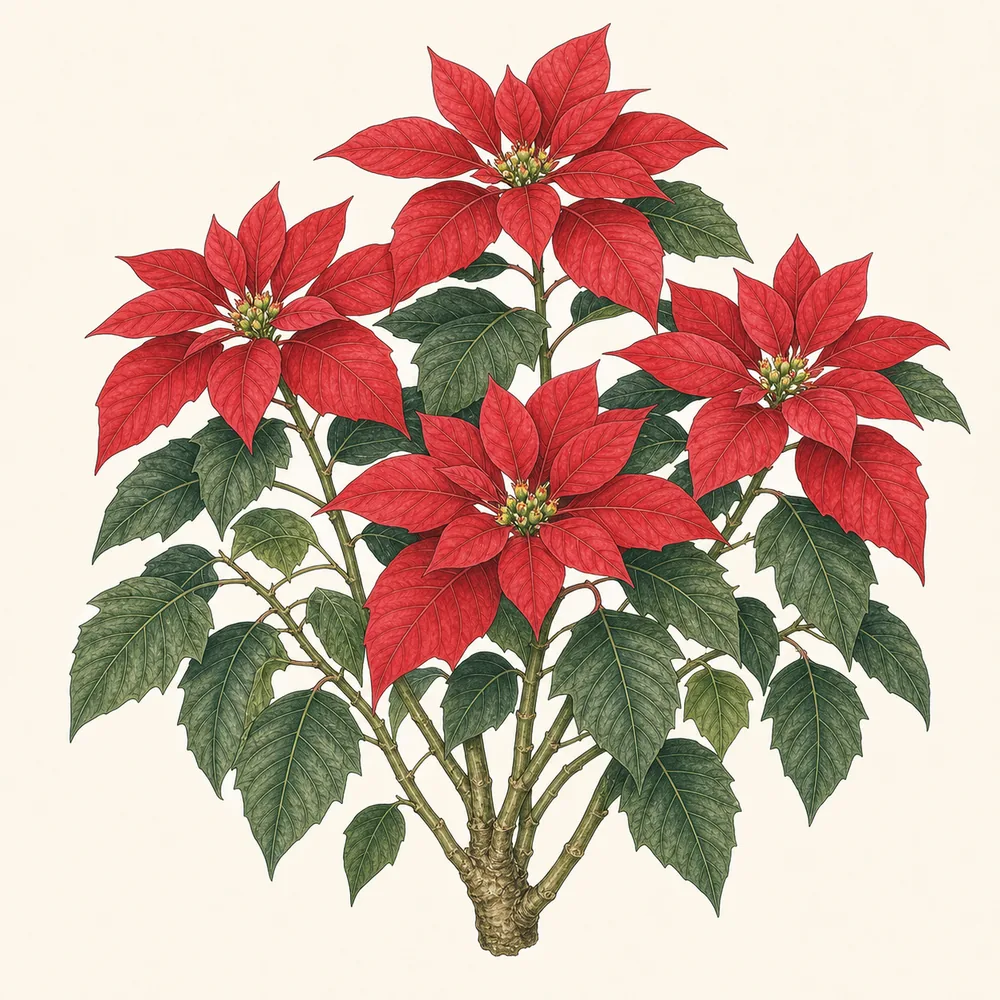
Poinsettia
The classic Christmas plant, its 'flowers' really vivid red bracts. Its toxicity is famously overstated — genuinely only a mild irritant — but it is fussy about warmth and draughts.
Mildly toxic — reputation overstated
Poinsettia (Euphorbia pulcherrima) is listed as toxic on the ASPCA database, but its danger is much exaggerated: the milky sap is a mild irritant that can cause drooling, mild vomiting or skin and eye irritation. Unpleasant rather than dangerous — but still best kept away from pets and washed off skin.
Care at a glance
Everything that matters, in six lines. The detail is further down.
Light
A bright spot out of direct sun keeps the coloured bracts strong.
Water
Water when the surface is dry, then drain fully. Both sogginess and total drought make it drop leaves.
Temperature
Warm and steady. Cold draughts and chilly journeys home are the classic leaf-drop trigger.
Humidity
Dislikes dry, hot air near radiators; a little humidity helps it last.
Feeding
No need to feed while in colour; feed monthly once it's growing again in spring.
Soil
A standard free-draining houseplant compost.
What to do, and when
After the bracts fade, cut it back and repot; feed monthly as new growth appears.
Grow it on in bright light, pinching to keep it bushy; it can go outside in a sheltered spot.
To recolour, give it long, completely dark nights (14 hours) for about eight weeks from October.
In colour for Christmas. Keep it warm, bright and away from draughts, and don't overwater.
The toxicity myth
Poinsettia has a fearsome reputation it doesn't deserve. The reality, backed by poison-control data, is that the milky sap is only a mild irritant — it can cause drooling, mild stomach upset or skin and eye irritation, but it is not the deadly plant folklore suggests.
That said, it is a Euphorbia, so wash the sap off skin and keep it away from pets and small children who might chew it — mild is not the same as harmless.
Keeping it alive past Christmas
Most poinsettias die from cold and draughts — a chilly trip home from the shop is often the culprit. Keep it warm, bright and out of cold blasts and it lasts for months.
Getting it to recolour is possible but demanding: it needs eight weeks of long, uninterrupted dark nights in autumn. Most people simply enjoy it for one season.
Common problems
Dropping leaves
Cold, draughts, or sudden change. Keep it warm and steady, away from doors and windows.
Wilting
Too wet or too dry. Check the compost — it wants evenly moist, well-drained.
Faded bracts
Age, or too little light. Keep it bright while in colour.
Won't recolour
Needs eight weeks of long, unbroken dark nights in autumn to set colour.
Everything a poinsettia needs
Warmth, bright light and no cold draughts.
We take no commission on anything in the "save your money" tier — if we don't think you should buy it, we don't link it. How our recommendations work
If you like this, try
Other plants with a similar temperament.
From the Notebook
Seasonal notes and guides that mention the poinsettia.
How we checked this
Care cross-checked against the RHS. Toxicity taken from the ASPCA database (listed toxic) and poison-control data confirming the effect is mild irritation — the plant's deadly reputation is overstated. If our page and these sources ever disagree, believe them — and tell us.
Sources: RHS · ASPCA — toxic & non-toxic plants
Last reviewed · July 2026