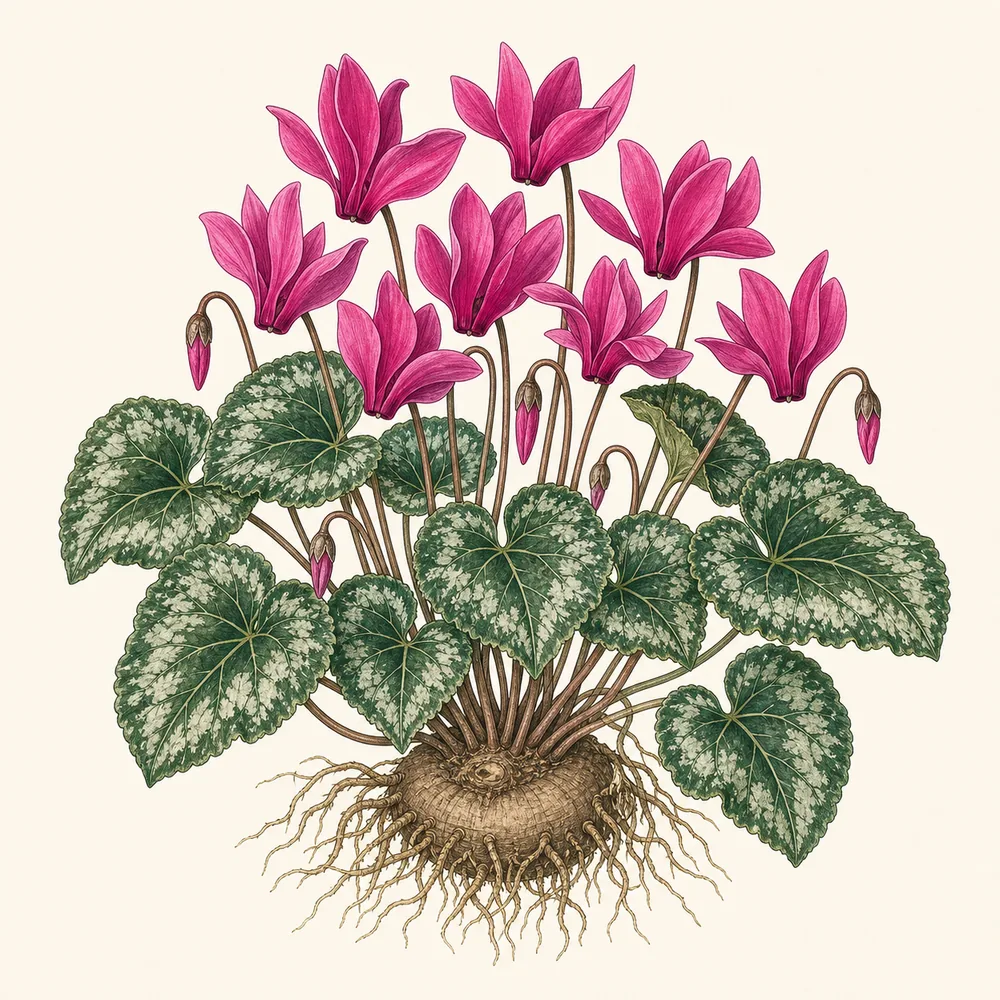
Cyclamen
Jewel-bright, swept-back flowers over patterned heart-shaped leaves — a cool-loving winter bloomer. Beautiful, but toxic, and it wants conditions most warm rooms don't offer.
Toxic to cats & dogs if eaten
Cyclamen is listed as toxic to cats and dogs on the ASPCA database. It contains saponins (most concentrated in the underground tuber); chewing causes drooling, vomiting and diarrhoea, and eating the tuber in quantity can cause more serious effects. Keep it, and especially the tuber, away from pets.
Care at a glance
Everything that matters, in six lines. The detail is further down.
Light
Good light but out of hot direct sun — it's a cool-season plant.
Water
Keep lightly moist while in leaf, watering from the base to keep the tuber crown dry.
Temperature
The key: cyclamen love cool rooms and hate central-heating warmth, which makes them collapse.
Humidity
Normal humidity is fine; cool and airy matters more than humid.
Feeding
A high-potash feed every couple of weeks while it's flowering.
Soil
An open, free-draining compost; the tuber must never sit wet.
What to do, and when
As flowering ends the leaves yellow — reduce watering and let it dry off into dormancy.
Dormant. Keep the tuber cool and dry in its pot, out of the way.
Restart it: begin watering again, and cool bright conditions bring new leaves and buds.
Peak flowering. Keep it cool and bright, water from below, and feed fortnightly.
Keep it cool — this is everything
The commonest way people kill a cyclamen is keeping it too warm. It's a cool-season plant: in a hot living room it wilts, yellows and gives up within weeks. A cool, bright windowsill in an unheated room is exactly right.
Water from below to keep the tuber's crown dry — water sitting in the centre rots it fast.
Dormancy over summer
After flowering, cyclamen naturally die back and rest through summer as a dormant tuber — don't throw it out. Keep it dry and cool, then restart watering in autumn.
The tuber is also where the toxicity is most concentrated, so keep the pot well out of reach of pets.
Common problems
Yellowing, floppy leaves
Almost always too warm. Move it to a cool, bright room.
Rotting crown/tuber
Water sitting in the centre. Always water from below.
Collapse after flowering
Natural dormancy. Dry it off and rest the tuber for summer.
Grey mould on flowers
Damp, stagnant air. Remove affected blooms and improve ventilation.
Everything a cyclamen needs
A cool room, base watering and good drainage.
We take no commission on anything in the "save your money" tier — if we don't think you should buy it, we don't link it. How our recommendations work
If you like this, try
Other plants with a similar temperament.
How we checked this
Care cross-checked against the RHS. Toxicity taken from the ASPCA database, which lists cyclamen as toxic to cats and dogs — saponins concentrated in the tuber. If our page and these sources ever disagree, believe them — and tell us.
Sources: RHS · ASPCA — toxic & non-toxic plants
Last reviewed · July 2026