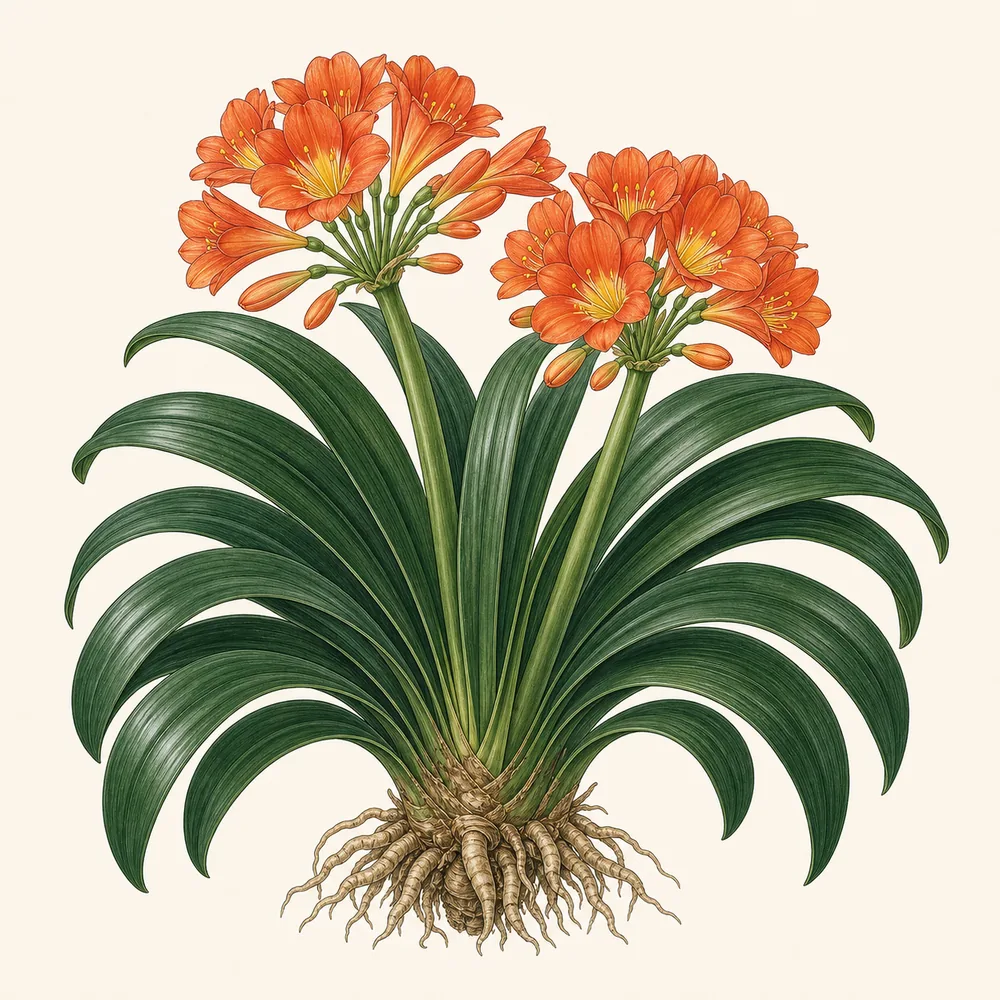
Clivia
Strappy evergreen leaves topped, in late winter, by a bold head of orange trumpet flowers. Long-lived and easy — the one trick is a cool, dry winter rest to make it bloom. Toxic to pets.
Toxic to cats & dogs if eaten
Clivia (Clivia miniata) is listed as toxic to cats and dogs on the ASPCA database. It contains lycorine and related alkaloids (most concentrated in the bulb-like base): chewing causes drooling, vomiting and diarrhoea, and larger amounts can be more serious. Keep it away from pets.
Care at a glance
Everything that matters, in six lines. The detail is further down.
Light
Bright light out of direct sun. It flowers reliably even in a north-facing room.
Water
Water when the top few centimetres are dry in growth; keep it much drier over the winter rest.
Temperature
Ordinary warmth in summer, but a cool spell (about 10 °C) for 6–8 weeks in winter is what triggers flowering.
Humidity
Undemanding about humidity.
Feeding
A balanced feed every couple of weeks from spring until late summer.
Soil
A loam-based mix; clivias flower best left pot-bound.
What to do, and when
The flower spike appears — keep it bright, water and feed, and enjoy the display.
Active growth. Water and feed regularly; it can summer in a shady spot outdoors.
Begin the rest: move it somewhere cool and cut right back on water.
Give it a cool, dry rest (~10 °C) for 6–8 weeks — this is what sets next year's flowers.
The cool winter rest is the secret
Clivia is genuinely easy the whole year except for one deliberate step: to flower, it needs a cool, dry rest of about six to eight weeks in winter, ideally around 10 °C with very little water.
Skip that and you get healthy leaves but no flowers. Give it, and a flower spike pushes up in late winter or early spring.
Leave it pot-bound
Clivias flower better when their roots are crowded, so resist repotting — every few years at most, and only when the pot is truly full.
The thick roots and bulb-like base store water, making it very tolerant of the odd missed watering.
Common problems
No flowers
It didn't get a cool, dry winter rest. Give it 6–8 weeks around 10 °C with little water.
Short flower stalk stuck in the leaves
Too warm during the rest, or watered too early. Keep it cool until the stalk extends.
Yellowing leaves
Usually overwatering. Let it dry more between drinks.
Scorched leaves
Direct sun. Move it to bright, indirect light.
Everything a clivia needs
Bright light, a cool winter rest, and patience with repotting.
We take no commission on anything in the "save your money" tier — if we don't think you should buy it, we don't link it. How our recommendations work
If you like this, try
Other plants with a similar temperament.
How we checked this
Care cross-checked against the RHS. Toxicity taken from the ASPCA database, which lists Clivia as toxic to cats and dogs — lycorine alkaloids concentrated in the base. If our page and these sources ever disagree, believe them — and tell us.
Sources: RHS · ASPCA — toxic & non-toxic plants
Last reviewed · July 2026