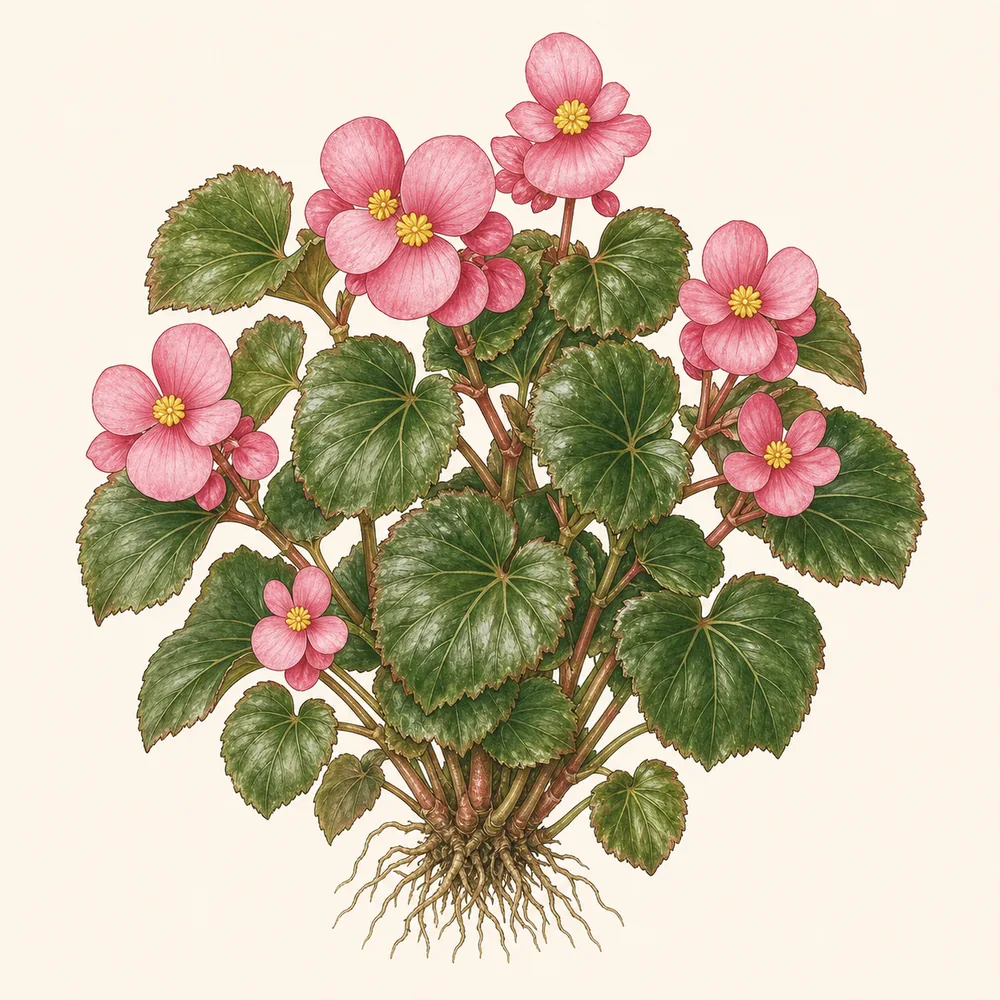
Begonia
A huge, varied group grown for either showy flowers or dramatically patterned leaves. Rewarding and colourful indoors — but toxic to pets, with the tubers the main concern.
Toxic to cats & dogs if eaten
Begonias are listed as toxic to cats and dogs on the ASPCA database. They contain insoluble oxalates (most concentrated underground in the tubers): chewing causes mouth irritation, drooling and vomiting. Keep them away from pets that nibble.
Care at a glance
Everything that matters, in six lines. The detail is further down.
Light
Bright but filtered light suits most begonias; direct sun scorches the leaves. Foliage types tolerate a little less.
Water
Water when the top centimetre is dry, keeping the leaves and crown dry. They rot easily if kept soggy.
Temperature
Warm, steady room temperatures; keep them off cold draughts.
Humidity
Enjoy humidity, but don't mist the leaves — a pebble tray is safer.
Feeding
A balanced or high-potash feed every couple of weeks in spring and summer.
Soil
An open, peat-free mix with added perlite for drainage.
What to do, and when
Growth restarts. Repot if needed, resume feeding, and start tubers of tuberous types into growth.
Peak growth and flowering. Keep them warm, bright, humid and evenly watered.
Growth slows; tuberous begonias yellow and die back — let them dry and store the tubers.
Foliage types tick over in warmth; keep drier. Store dormant tubers cool and dry.
Water and air, not wet leaves
Most begonia problems come from water in the wrong place: soggy compost rots the stems, and water left on the leaves invites powdery mildew. Let the top of the pot dry between drinks and keep the foliage dry.
They like humidity but hate stagnant, still air — good airflow keeps mildew away. A pebble tray raises humidity without wetting the leaves.
Two kinds of begonia
Flowering types (like the bedding and tuberous begonias) are grown for their blooms; foliage types (like rex begonias) for their spectacular patterned leaves. Care is broadly similar, but foliage types take slightly lower light.
Tuberous kinds die back and rest each winter — save the tuber rather than binning the plant.
Common problems
White powdery leaves
Powdery mildew from damp, still air. Improve airflow; keep leaves dry.
Mushy stems
Overwatering. Let the top dry more and improve drainage.
Crispy leaf edges
Dry air or under-watering. Raise humidity with a tray, not misting.
Die-back in autumn
Natural for tuberous types. Store the tuber cool and dry.
Everything a begonia needs
Bright filtered light, good airflow and careful watering.
We take no commission on anything in the "save your money" tier — if we don't think you should buy it, we don't link it. How our recommendations work
If you like this, try
Other plants with a similar temperament.
How we checked this
Care cross-checked against the RHS. Toxicity taken from the ASPCA database, which lists Begonia as toxic to cats and dogs — insoluble oxalates, concentrated in the tubers. If our page and these sources ever disagree, believe them — and tell us.
Sources: RHS · ASPCA — toxic & non-toxic plants
Last reviewed · July 2026